Caribbean Rice and Peas
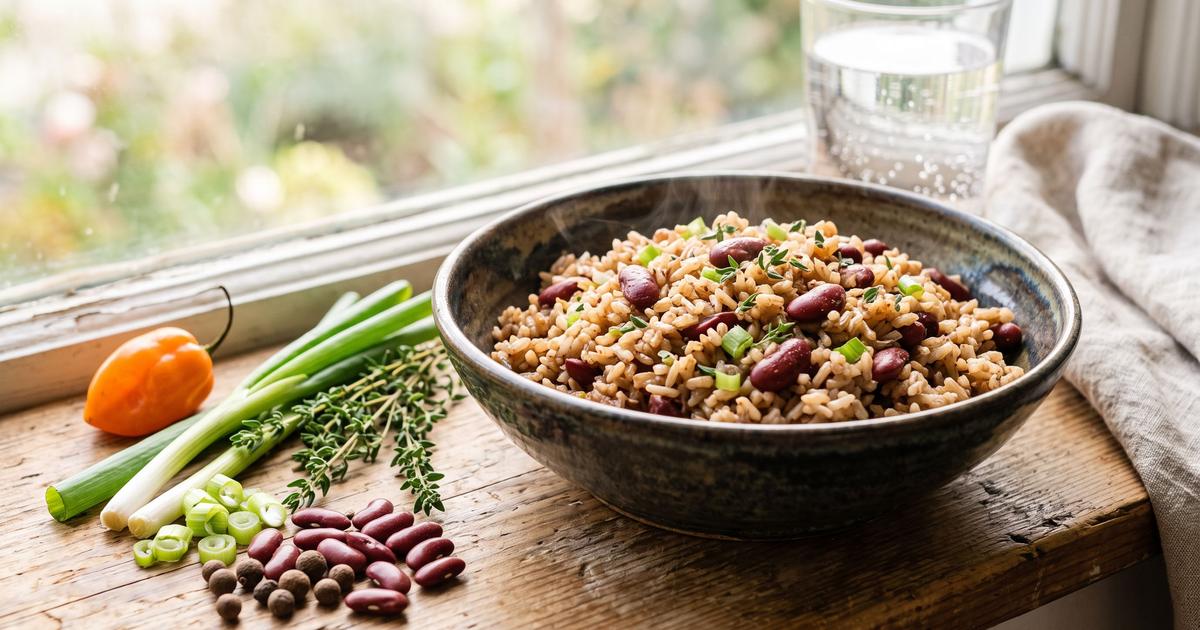
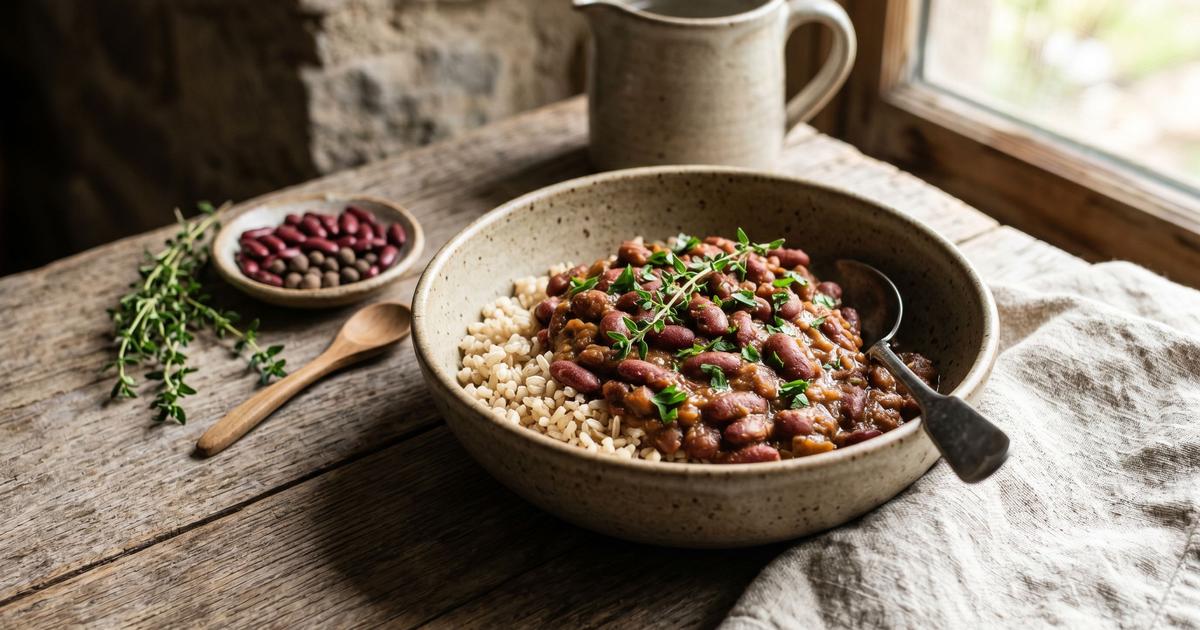
Rice and peas is the Sunday centerpiece across Jamaica and the wider Caribbean, where peas means beans, usually kidney beans or pigeon peas. The classic pot is built on coconut milk, which this version leaves out on purpose, so it stays lighter and leans harder on the aromatics that define the dish: scallion, thyme, allspice, and a whole Scotch bonnet or habanero. That last one is the technique to respect. Nestled whole and unbroken on top of the rice, the chile gives up its remarkable fruity perfume and almost none of its heat, then gets lifted out at the end. Use brown rice, give it the full simmer, and leave the lid alone. It reheats well all week.
Ingredients
- 1 1/2 cups long grain brown rice
- 1 1/2 cups Kidney beans, cooked, drained
- 4 Scallions, whole, lightly crushed
- 3 cloves Garlic, minced
- 1/2 Yellow onions, diced
- 4 sprigs Thyme
- 1/2 tsp Allspice, ground
- 1 Habanero, whole, left intact
Method
- Sweat the diced onion and garlic in the pot with a splash of water until soft, about 5 minutes. Stir in the allspice and thyme sprigs and let them warm for a minute. Allspice is the defining Caribbean spice here, tasting of clove, cinnamon, and nutmeg at once.
- Add the rice, kidney beans, and 3 cups (700 ml) water and stir once.
- Lay the whole scallions and the whole habanero on top. Keeping the chile intact is the whole trick: left unbroken it releases its floral, fruity aroma into the pot without any of its ferocious heat. Do not pierce or stir it, or the dish becomes painfully hot.
- Bring to a boil, then cover and drop to the lowest simmer for 40 to 45 minutes, until the rice is tender and the water is absorbed. Brown rice needs the full time and roughly twice its volume in water, so resist lifting the lid.
- Turn off the heat and let it sit, covered, for 10 minutes. Carefully lift out the habanero, the scallion stalks, and the thyme stems, then fluff with a fork.
Nutrition
Estimated per serving: 300 calories, 11 g protein, 9 g fiber, 25 mg sodium. Computed from USDA FoodData Central reference values for the main ingredients. This is an approximation, not a laboratory measurement. How these are computed.
Cost per serving is estimated from US national-average retail prices for cheap staple forms, using BLS dried-bean prices and USDA produce prices. Prices vary by store and season, so treat it as a guide, not a receipt. How this is computed.