Beetroot and Dill Dip
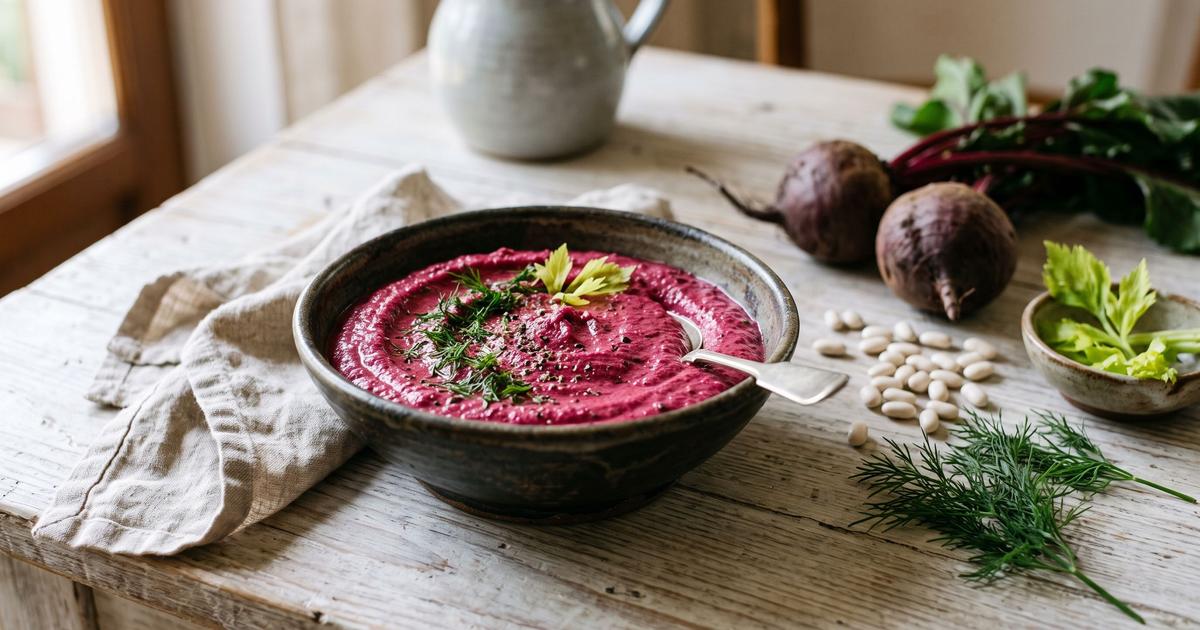
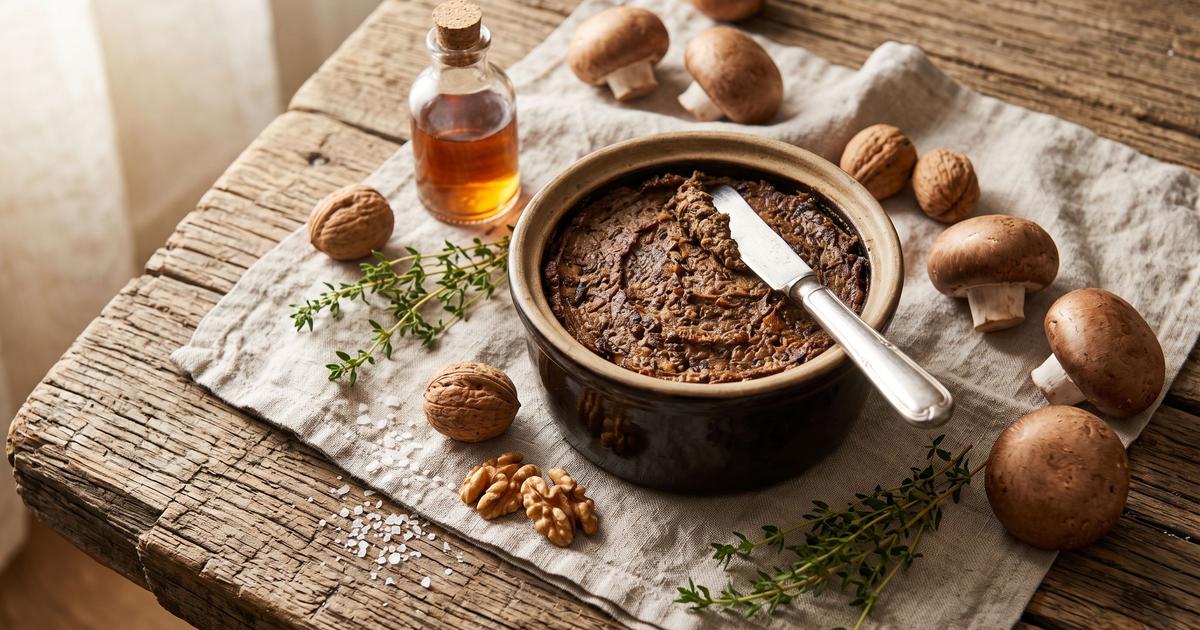
Beetroot and dill are the two flavors that say Nordic more than any others, the colors of a smorgasbord side table. This dip puts them front and center in a shade of magenta no other vegetable produces. Roasting the beets whole in their skins is the one step that matters: it concentrates their sugar and holds in the color that boiling washes away. Blended with white beans, they thicken into something you can stand a cracker in, with the beans quietly adding protein where a traditional version leans on soft cheese. Mustard and cider vinegar sharpen the sweetness so no salt is missed, dill runs through it, and toasted walnuts finish the top. Serve it with rye crispbread or raw vegetables.
Ingredients
- 1 lb Beets, scrubbed
- 1 1/2 cups Cannellini beans, cooked, drained
- 3 tbsp Dill, chopped
- 1 clove Garlic
- 1 tbsp Apple cider vinegar
- 1 tsp Dijon mustard
- 1/2 tsp Black peppercorns, freshly ground
- 2 tbsp Walnuts, chopped
Method
- Heat the oven to 400 F (200 C). Wrap the whole beets in foil and roast until a knife slides in easily, 45 to 55 minutes depending on size. Roasting whole and in their skins concentrates the beets' sugar and keeps their color and earthiness in, where boiling would leach both into the water. Cool, then slip off the skins with your fingers.
- Blend the roasted beets with the cannellini beans, garlic, cider vinegar, and mustard until completely smooth. The white beans are what turn this from a thin puree into a thick, scoopable dip, adding body and protein where a Nordic version would use cream cheese or full-fat yogurt.
- Add the black pepper and two thirds of the dill and pulse just to combine. The mustard and vinegar sharpen the sweet beets and carry the dip without salt, and the raw garlic softens into the beets as it sits.
- Scrape into a bowl and top with the remaining dill and the chopped walnuts. The walnuts add a toasted crunch against the smooth beet, and the dish deepens after a few hours in the fridge. It keeps four days and, if anything, tastes better on day two.
Nutrition
Estimated per serving: 100 calories, 5 g protein, 4 g fiber, 90 mg sodium. Computed from USDA FoodData Central reference values for the main ingredients. This is an approximation, not a laboratory measurement. How these are computed.
Cost per serving is estimated from US national-average retail prices for cheap staple forms, using BLS dried-bean prices and USDA produce prices. Prices vary by store and season, so treat it as a guide, not a receipt. How this is computed.