Batata Harra
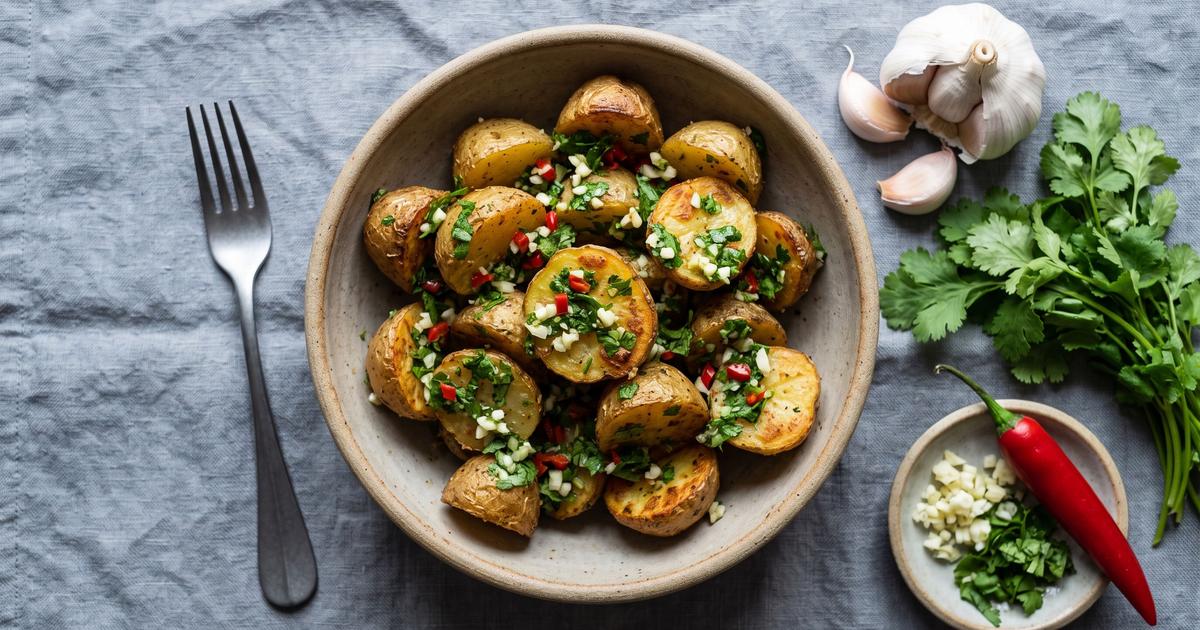
Batata harra means spicy potatoes, and it is the Lebanese answer to the question of what to do with a bag of potatoes and a lot of garlic. The restaurant version is deep-fried, but the flavor is really about the raw garlic, coriander, and chile tossed through at the end, so roasting the potatoes hard and dry loses nothing worth keeping. The trick is the same one that makes good oven fries: parboil, dry, and give them space on the tray so they crisp instead of steam. A generous fistful of cilantro and a squeeze of lemon go on last. Serve it hot as part of a mezze spread or alongside anything from the grill.
Ingredients
- 1 1/2 lb Potatoes, cut into 3/4-inch cubes
- 4 cloves Garlic, minced
- 3/4 cup Cilantro, chopped
- 1 tsp Coriander seed, toasted and ground
- 1 tsp Red pepper flakes
- 1/2 tsp Cumin seed, toasted and ground
- 2 tbsp Lemon juice, fresh
Method
- Heat the oven to 450 F (230 C). Parboil the potato cubes in unsalted water for 6 minutes, then drain and let them steam-dry in the colander for 5 minutes. Parboiling and drying roughs up the surface, which is how you get a crisp crust in the oven with no oil in the pan.
- Spread the potatoes on a lined tray in a single layer and roast for 25 to 30 minutes, turning once, until deeply browned and crisp at the edges. Give them room; crowded potatoes steam instead of crisping.
- While they roast, stir together the garlic, coriander, cumin, and red pepper flakes with a splash of the lemon juice into a loose paste. Mixing the garlic raw keeps its bite sharp, the way batata harra is meant to taste.
- Toss the hot potatoes with the garlic-chile mixture and most of the cilantro right out of the oven. The residual heat cooks the raw edge off the garlic just enough while keeping it pungent, and the herbs wilt without going drab.
- Finish with the rest of the lemon juice and cilantro. The acid is what makes the dish, lifting the potatoes and the garlic so they need no salt to taste finished.
Nutrition
Estimated per serving: 180 calories, 4 g protein, 4 g fiber, 30 mg sodium. Computed from USDA FoodData Central reference values for the main ingredients. This is an approximation, not a laboratory measurement. How these are computed.
Cost per serving is estimated from US national-average retail prices for cheap staple forms, using BLS dried-bean prices and USDA produce prices. Prices vary by store and season, so treat it as a guide, not a receipt. How this is computed.