Banana Peanut Nice Cream
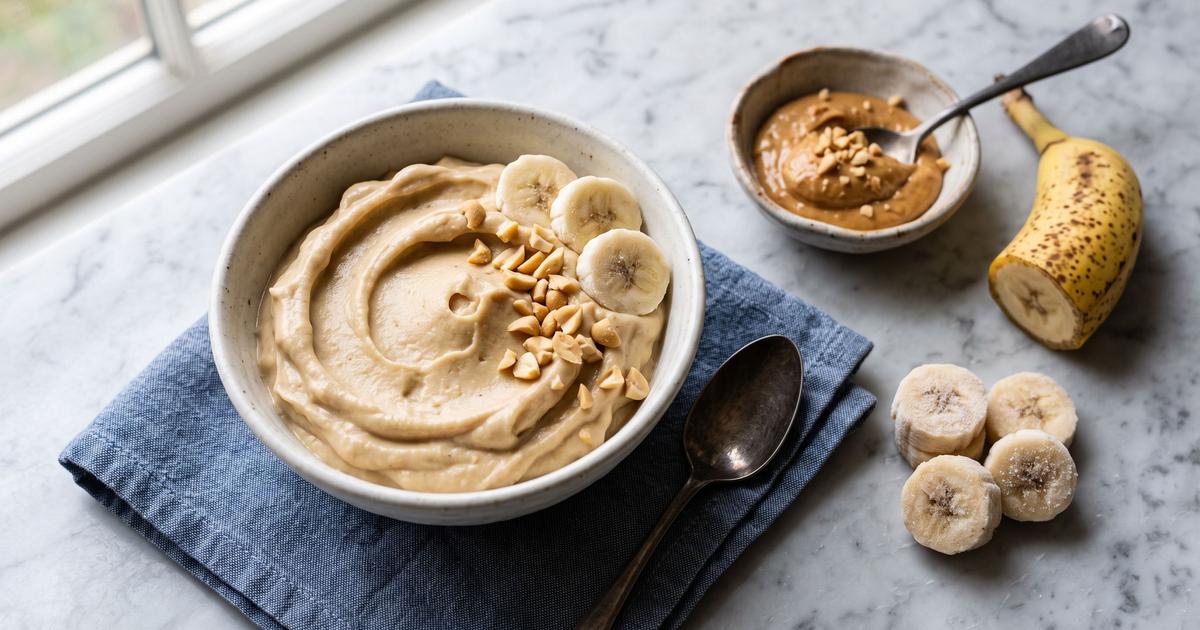
Nice cream is the discovery that a frozen ripe banana, blended, whips into something uncannily like soft-serve, creamy and scoopable, with no cream, no sugar, and no machine. The starch in a very ripe banana is what does it, breaking down under the blade into a smooth, thick base. Everything after that is a flavor you like: a few spoons of peanut butter here, for the fat and salt-free savoriness that pushes it from fruit into dessert. The one rule is to start with genuinely ripe, spotty bananas and freeze them yourself, because that is where all the sweetness comes from. Keep a bag of frozen banana coins on hand and dessert is five minutes away, any night.
Ingredients
- 4 wholes Bananas, very ripe, peeled, frozen in chunks
- 3 tbsp unsweetened peanut butter
- 3 tbsp Unsweetened almond milk
- 1/4 tsp Ceylon cinnamon
Method
- Freeze the bananas ahead: peel very ripe, spotty bananas, break them into coins, and freeze them solid on a tray for at least 4 hours. Ripe is not optional. The brown spots are sugars developing, and they are the difference between sweet nice cream and a bland one.
- Drop the frozen banana into a food processor or a strong blender with the peanut butter, plant milk, and cinnamon.
- Blend, stopping to scrape down the sides, through the crumbly stage and past it. It will look like gravel, then suddenly whip into a smooth, thick soft-serve as the banana's starches and the friction do the work of an ice cream churn. Add plant milk a teaspoon at a time only if it refuses to come together.
- Eat it right away for soft-serve texture, or scrape it into a container and freeze for an hour for something you can scoop. Any longer in the freezer and it sets hard; let it sit out 10 minutes before scooping.
- The peanut butter is the fat that makes it read as ice cream instead of frozen fruit, and it can be swapped for tahini or almond butter.
Nutrition
Estimated per serving: 190 calories, 5 g protein, 4 g fiber, 5 mg sodium. Computed from USDA FoodData Central reference values for the main ingredients. This is an approximation, not a laboratory measurement. How these are computed.
Cost per serving is estimated from US national-average retail prices for cheap staple forms, using BLS dried-bean prices and USDA produce prices. Prices vary by store and season, so treat it as a guide, not a receipt. How this is computed.