Baghali Polo, Persian Dill and Fava Rice
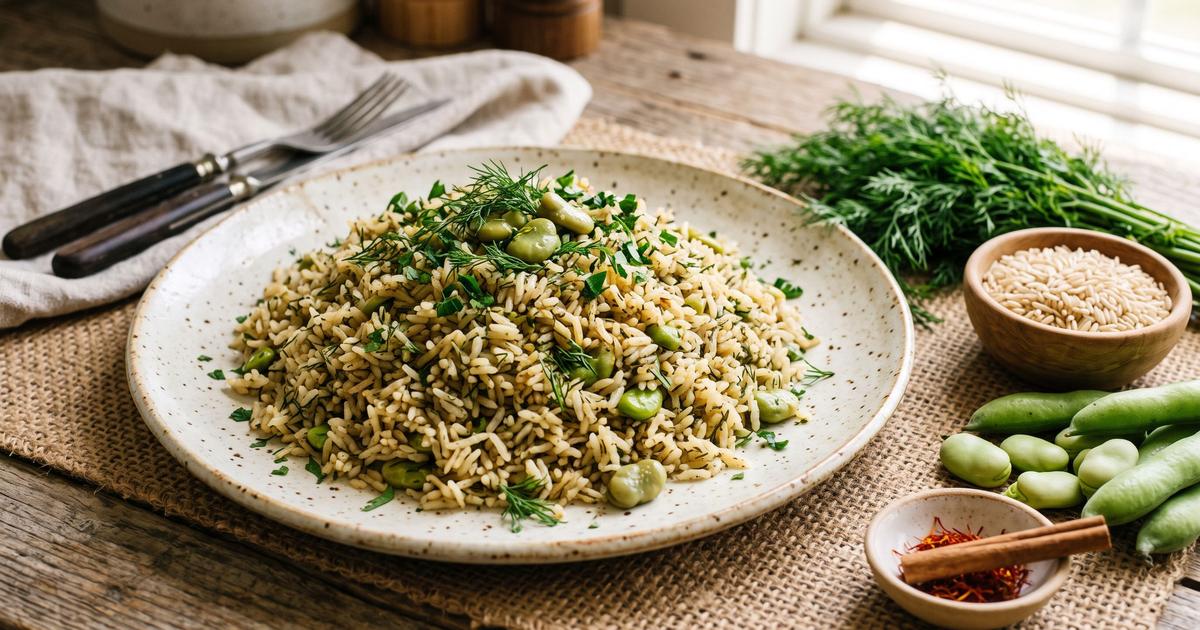
Baghali polo is the rice Iranians serve at a spring table, green with dill and studded with favas that come into season at the same moment. The technique is the point: parboil the rice, drain it, then steam it gently under a towel so the grains stay long and loose. Saffron does double duty, coloring the finished platter and perfuming it, while a small amount of cinnamon adds warmth without sweetness. Skip the traditional pat of butter entirely, since the dill, the favas, and a last squeeze of lemon carry it on their own.
Ingredients
- 1 cup Brown basmati rice, rinsed until the water runs clear
- 1 1/2 cups Fava beans, frozen, thawed, or shelled fresh
- 1 cup Dill, fresh, finely chopped, packed
- 1 pinch Saffron, ground and steeped in 2 tbsp hot water
- 1/4 tsp cassia cinnamon, ground
- 2 cloves Garlic, thinly sliced
- 1 tbsp Lemon juice, fresh, to finish
Method
- Boil the rinsed rice in a large pot of unsalted water for 6 to 7 minutes, until the grains are bendy but still firm in the center, then drain. Parboiling and draining is the Persian method that keeps each grain separate instead of gluey, which matters more here than salt ever would.
- Peel the fava beans if their jackets are thick and gray; the bright green bean underneath is sweeter and cooks faster. Frozen favas usually slip out of their skins with a pinch once thawed.
- Return the drained rice to the warm pot off the heat and fold in the favas, dill, sliced garlic, and cinnamon, layering as you go so the dill is distributed top to bottom. Fresh dill loses its grassy lift if it stews too long, so it goes in only for the final steam.
- Drizzle in half the saffron water, cover the pot with a clean towel under the lid, and steam over the lowest heat for 25 minutes. The towel traps the moisture that finishes cooking the rice and the beans without any oil in the pot.
- Spoon the rice onto a platter, drizzle the remaining saffron water over the top for color and aroma, and finish with the lemon juice. The acid sharpens the dill and stands in for the salt the dish is built to skip.
Nutrition
Estimated per serving: 270 calories, 10 g protein, 9 g fiber, 20 mg sodium. Computed from USDA FoodData Central reference values for the main ingredients. This is an approximation, not a laboratory measurement. How these are computed.
Cost per serving is estimated from US national-average retail prices for cheap staple forms, using BLS dried-bean prices and USDA produce prices. Prices vary by store and season, so treat it as a guide, not a receipt. How this is computed.