Ajad, Thai Cucumber Relish

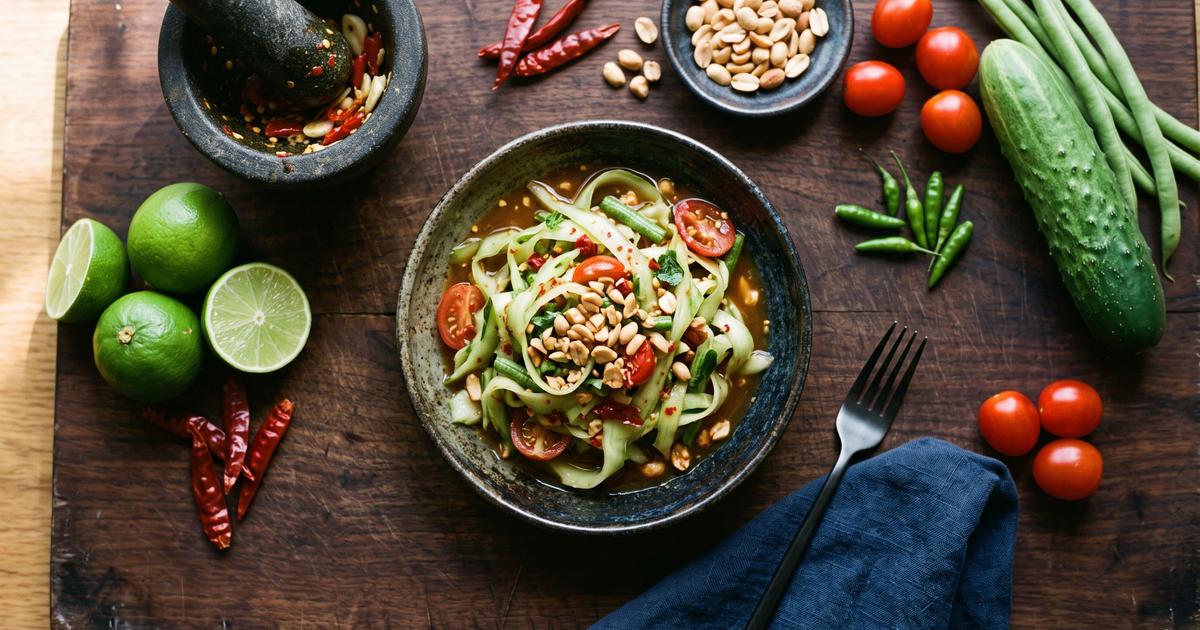
Ajad is the small dish of cucumber that arrives next to satay, tod mun fish cakes, and other fried Thai snacks. Its whole purpose is contrast: cold, sharp, and crunchy against something hot and rich. The traditional brine is a quick syrup of palm sugar, salt, and vinegar, and here rice vinegar and a spoonful of date paste stand in for the first two. Keep it loose and serve it fresh, because a relish built on acid and crunch has nothing to gain from sitting.
Ingredients
- 2 Cucumbers, quartered lengthwise, seeded, and sliced thin
- 2 Shallots, halved and sliced paper-thin
- 1 Fresno, seeded and slivered
- 1/3 cup unseasoned rice vinegar
- 2 Medjool dates, pitted and blended with 2 tbsp (30 ml) warm water into a paste
- 2 tbsp Cilantro, chopped
- 2 tbsp Peanuts, toasted and coarsely crushed
Method
- Whisk the rice vinegar, date paste, and 2 tablespoons (30 ml) water into a thin brine. Rice vinegar is softer than the white vinegar the classic uses, and blended dates rebuild the syrupy sweetness palm sugar would carry, so nothing here needs refined sugar to taste balanced.
- Scrape the watery seeds out of the cucumber before slicing. That seed core is what makes a salt-free relish turn slack and puddled within the hour, so removing it keeps the pieces crisp.
- Combine the cucumber, shallot, and chile in a bowl and pour the brine over them no more than 10 minutes before serving. The vinegar softens the shallot's bite while the cucumber still snaps.
- Scatter the cilantro and crushed peanuts on top just before it goes to the table. The peanuts are the crunch and the fat, and they go soft if they sit in the brine, so add them last.
Nutrition
Estimated per serving: 60 calories, 2 g protein, 2 g fiber, 10 mg sodium. Computed from USDA FoodData Central reference values for the main ingredients. This is an approximation, not a laboratory measurement. How these are computed.
Cost per serving is estimated from US national-average retail prices for cheap staple forms, using BLS dried-bean prices and USDA produce prices. Prices vary by store and season, so treat it as a guide, not a receipt. How this is computed.