Zeytinyagli Bakla, Braised Fava Beans with Dill
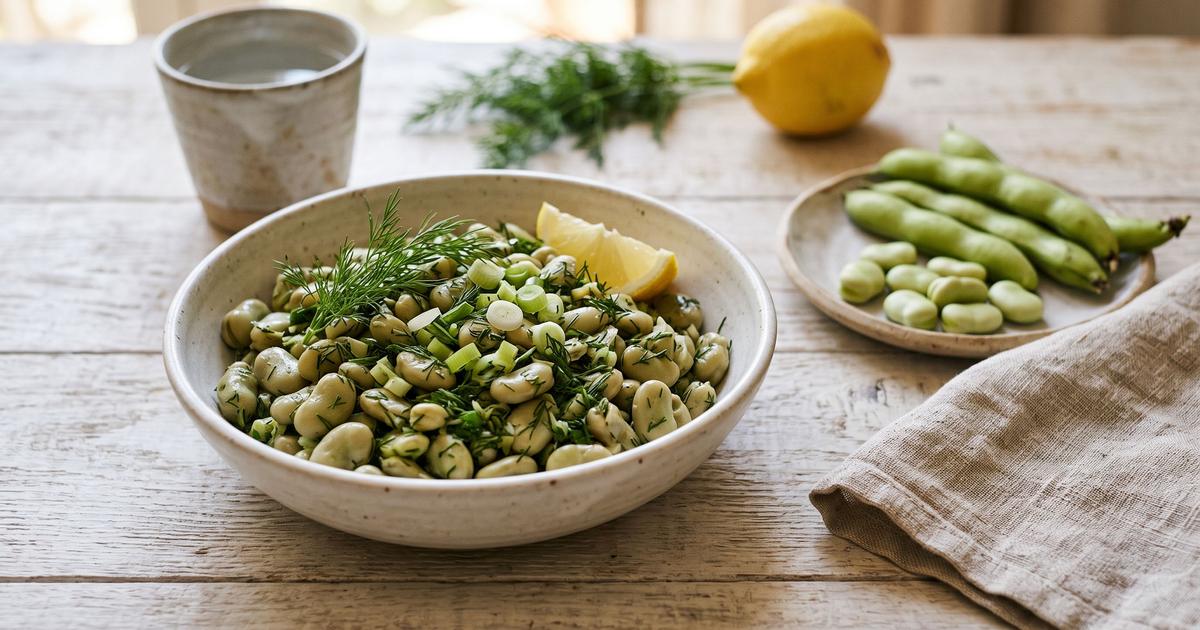
Zeytinyagli means cooked in olive oil, the family of Aegean vegetable dishes braised gently and served cool, and bakla, fava beans, is one of the classics. The oil is usually the point, but the technique underneath it, a slow braise in a little liquid with a great deal of dill and lemon, stands perfectly well without it. Fresh young fava pods are traditional; frozen shelled favas are far less work and available year round, so they are what this uses. A spoonful of blended potato gives the pan juices the light gloss the oil would have. It is a spring meze, meant to sit until room temperature, and it only tastes better after a few hours in the fridge.
Ingredients
- 1 lb Fava beans, frozen, shelled, thawed
- 5 wholes Scallions, sliced, white and green kept separate
- 2 cloves Garlic, sliced
- 1 cup Dill, chopped, a little reserved
- 1 whole Lemons, half juiced, half in wedges
- 2 tbsp Blended potato
- 1/2 tsp Black peppercorns, freshly ground
Method
- Sweat the white parts of the scallions and the garlic in 3 tablespoons water in a wide pan over medium heat until soft, about 4 minutes. This gentle start builds a sweet allium base, and in a dish this bare it matters, so keep it just at a simmer and do not let it color.
- Add the fava beans, the scallion greens, and enough water to come halfway up the beans, about 0.5 cup (120 ml). Cover and simmer until the favas are tender, 8 to 12 minutes depending on their size. Braising them in a little water, not oil, is the whole idea behind rebuilding a zeytinyagli dish, and it keeps the beans bright green.
- Stir in the blended potato and let it bubble for a minute to thicken the pan juices into a light, glossy sauce. Traditional zeytinyagli beans are bound by olive oil and sometimes a little flour; a spoon of blended potato does that job with neither.
- Turn off the heat and fold in most of the chopped dill and the lemon juice. Zeytinyagli bakla is nearly as much dill as bean, so use it by the cupful, and add it at the end where it stays green and grassy.
- Let it cool to room temperature, then scatter the reserved dill over the top and serve with lemon wedges. Like all zeytinyagli mezes it is eaten cool, and resting lets the lemon and dill settle into the beans in place of salt.
Nutrition
Estimated per serving: 130 calories, 9 g protein, 8 g fiber, 30 mg sodium. Computed from USDA FoodData Central reference values for the main ingredients. This is an approximation, not a laboratory measurement. How these are computed.
Cost per serving is estimated from US national-average retail prices for cheap staple forms, using BLS dried-bean prices and USDA produce prices. Prices vary by store and season, so treat it as a guide, not a receipt. How this is computed.