Trollkrem, Norwegian Whipped Berry Cream
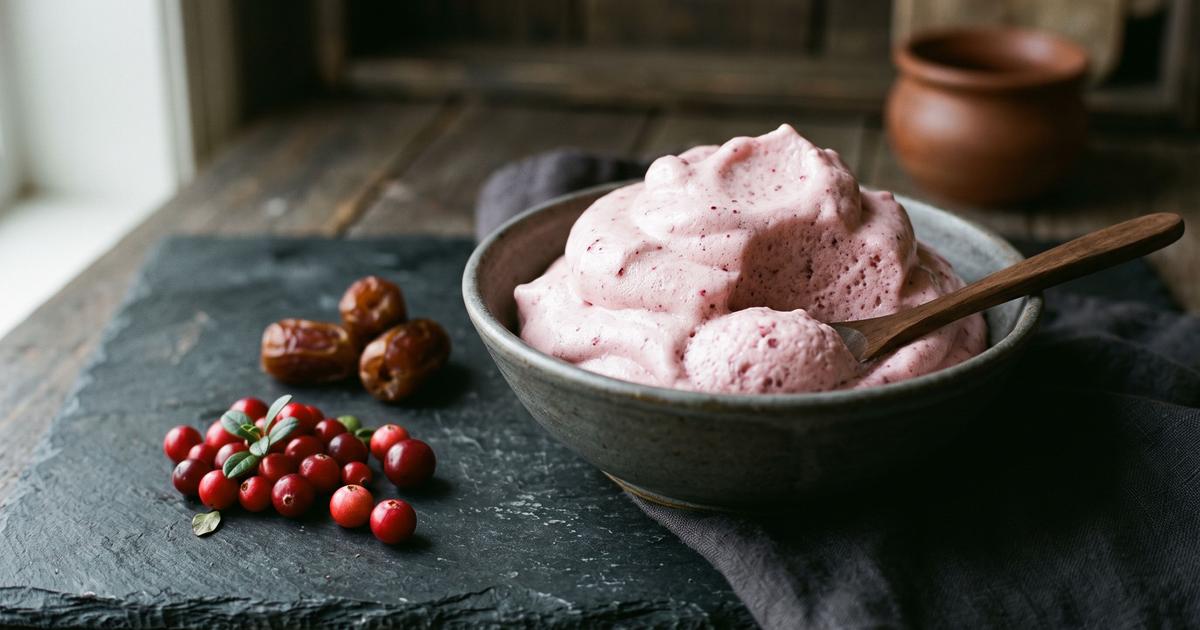
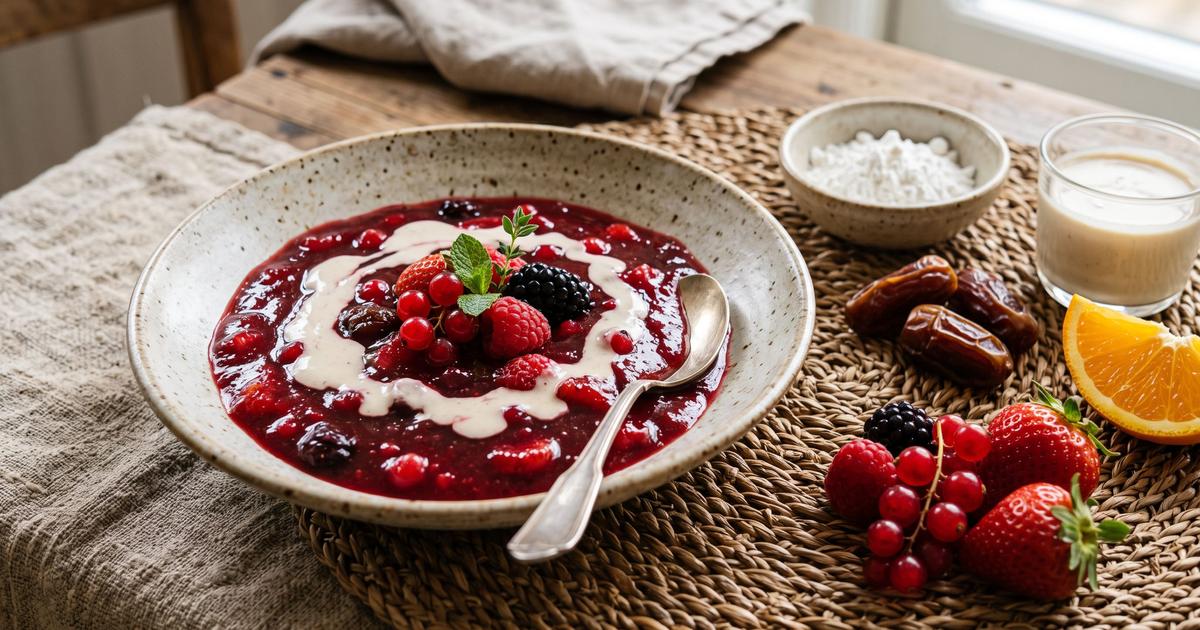
Trollkrem, troll cream, is a Norwegian dessert that is mostly air: tart berries whipped into stiffened egg white until the whole thing swells into a pale, billowing foam that children are told the trolls make in the forest. Traditionally it uses lingonberries and a lot of sugar; here thawed mixed berries carry the tartness and blended dates the sweetness, while aquafaba, the liquid from a can of chickpeas, does what the egg white did. It whips into peaks that hold, and folded with berry puree it triples in volume into something between a mousse and a cloud. The only rules are a spotlessly clean bowl, since fat kills the foam, and a gentle hand folding, since force kills the air. Eat it the same day.
Ingredients
- 1/2 cup Aquafaba
- 1 1/2 cups Frozen mixed berries, thawed
- 3 wholes Medjool dates, pitted
- 1 tsp Lemon juice
Method
- Blend the thawed berries with the dates into a thick puree, then press it through a sieve if you want it seedless. The dates replace the mound of sugar troll cream is usually built on, and keeping the puree thick stops the finished foam from weeping into a puddle.
- In a clean, grease-free bowl, whip the aquafaba with the lemon juice until it holds stiff, glossy peaks, 5 to 8 minutes with a hand mixer. The liquid from a can of chickpeas whips exactly like egg white, which is what the original folds in; the lemon's acid stabilizes the foam, and any trace of fat will keep it from stiffening.
- Fold the berry puree into the foam a spoonful at a time. Fold gently and stop as soon as it is streaky pink; stirring hard knocks the air out and collapses the cloud back into sauce.
- Spoon into glasses and chill. Trollkrem is best within a few hours while it still stands tall, so make it the morning of, not the day before.
Nutrition
Estimated per serving: 90 calories, 2 g protein, 3 g fiber, 20 mg sodium. Computed from USDA FoodData Central reference values for the main ingredients. This is an approximation, not a laboratory measurement. How these are computed.
Cost per serving is estimated from US national-average retail prices for cheap staple forms, using BLS dried-bean prices and USDA produce prices. Prices vary by store and season, so treat it as a guide, not a receipt. How this is computed.