Trini Spinach Bhaji
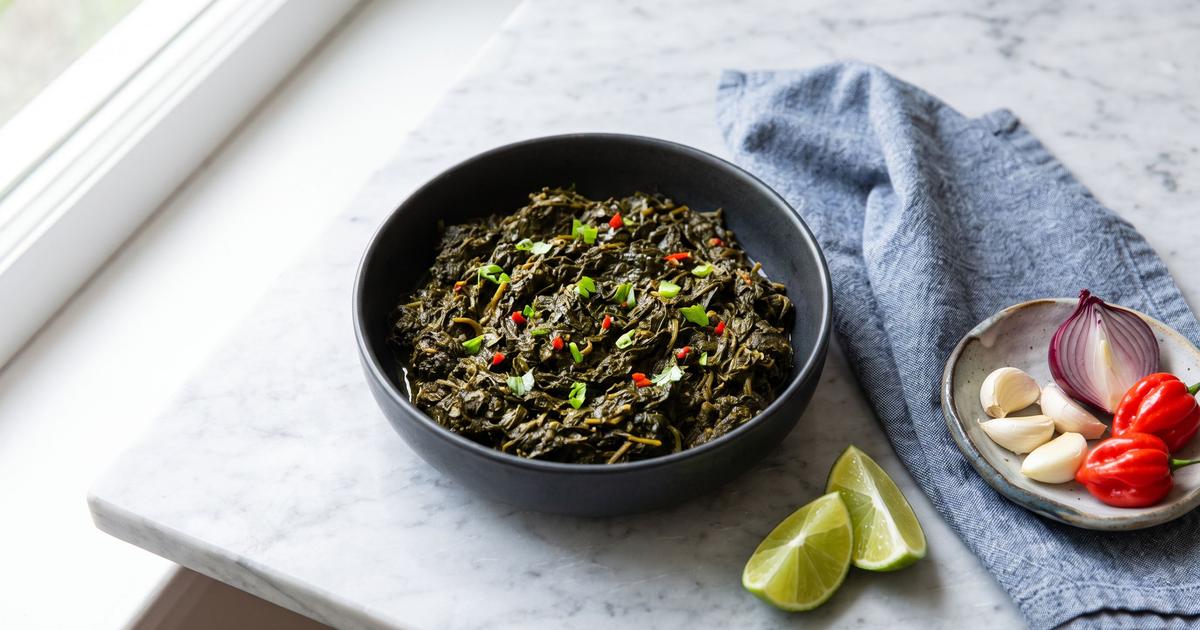
Bhaji is the Trinidadian word for cooked leafy greens, brought to the islands by indentured laborers from India and made local. In Trinidad it is often the dasheen bush or a broad-leaf amaranth called chorai, but spinach is the easy everyday substitute and behaves the same way, cooking down to a dark, savory tangle. There is no oil here: the onions sweat in water and the greens finish in the moisture they give up themselves. Toasted cumin, garlic, thyme, and a sliver of scotch bonnet carry all the flavor, and a squeeze of lime at the end stands in for salt. Serve it as a side with rice, dal, or roti.
Ingredients
- 1 1/2 lb Spinach, washed, roughly chopped
- 1 whole Yellow onions, finely diced
- 5 cloves Garlic, minced
- 1 tsp Cumin seed
- 1/4 whole Habanero, seeded and minced
- 3 sprigs Thyme, leaves stripped
- 1/2 tsp Black peppercorns, freshly ground
- 1 tbsp Lime juice
Method
- Toast the cumin seed in a dry wide pot over medium heat until it darkens a shade and smells nutty, about 1 minute, then push it aside. Toasting the geera first is the step Trinidadian cooks never skip: raw cumin tastes flat, toasted cumin tastes like the dish.
- Add the onion and 3 tablespoons water and sweat until soft and translucent, about 6 minutes, then stir in the garlic, thyme, and minced habanero and cook 1 minute more. A quarter of a scotch bonnet is plenty here; it is meant to warm the greens, not to burn them.
- Add the spinach in big handfuls, letting each batch collapse before adding the next. It looks like far too much and cooks down to a fraction, which is why bhaji always starts with what seems like an absurd amount of leaves.
- Once all the spinach is wilted, raise the heat and cook uncovered, stirring, until the water the greens release has boiled off and the bhaji is dark and almost dry, about 5 minutes. Cooking off that liquid concentrates the flavor and keeps the dish from turning into soup.
- Off the heat, grind in the black pepper and stir in the lime juice. The acid brightens the iron-heavy greens and does the work of salt. Serve alongside rice and peas or dal.
Nutrition
Estimated per serving: 80 calories, 5 g protein, 4 g fiber, 85 mg sodium. Computed from USDA FoodData Central reference values for the main ingredients. This is an approximation, not a laboratory measurement. How these are computed.
Cost per serving is estimated from US national-average retail prices for cheap staple forms, using BLS dried-bean prices and USDA produce prices. Prices vary by store and season, so treat it as a guide, not a receipt. How this is computed.