Tex-Mex Restaurant-Style Salsa Roja
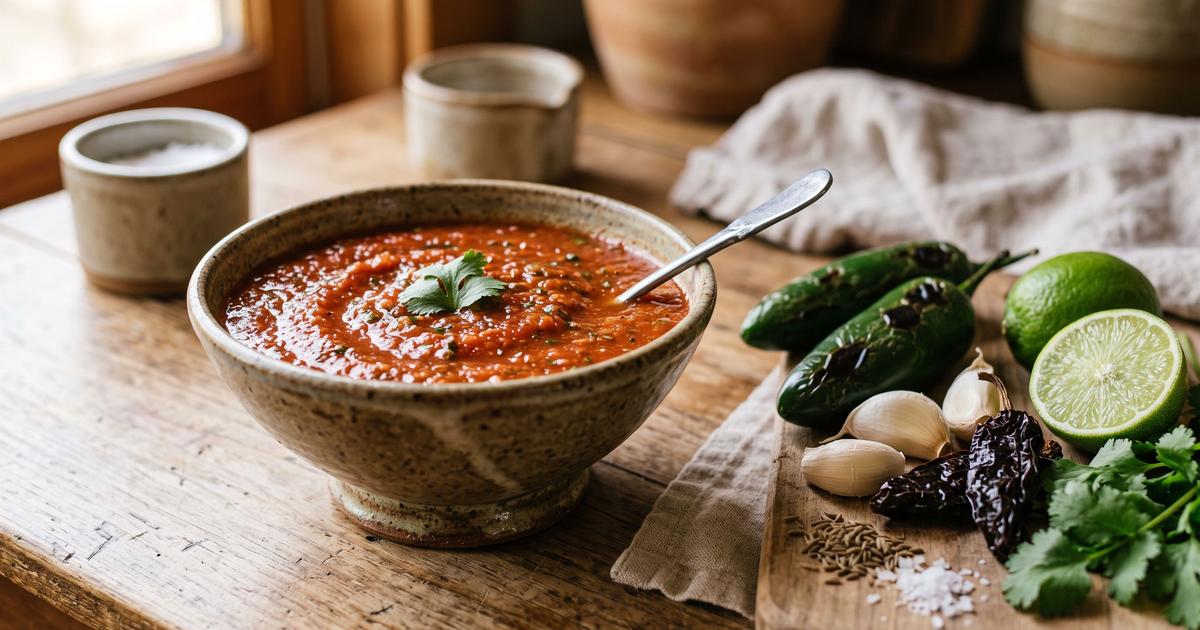
This is the bowl of red salsa that lands on the table with a basket of chips before you have ordered anything, thinner and smoother than a chunky pico, built to be scooped or poured. The flavor comes from fire and time. The fresh chiles and garlic get charred black in a dry pan, a soaked chipotle adds smoke and a low, round heat, and cumin grounds it. Then it rests. Thirty minutes on the counter is what turns a sharp, raw blend into the mellow salsa you remember, the onion softening and the tomato pulling everything together. Lime and chile carry it, so the salt shaker stays in the cupboard.
Ingredients
- 1 can Canned whole peeled tomatoes, 28 oz (800 g), drained
- 2 Jalapeños, stemmed
- 3 cloves Garlic
- 1/2 Yellow onions, chopped
- 1 Chipotle, stemmed and seeded
- 1/2 tsp Cumin seed, toasted and ground
- 1/2 cup Cilantro
- 2 tbsp Lime juice
Method
- Char the jalapenos and the unpeeled garlic cloves in a dry skillet over high heat, turning, until blistered and blackened in spots, about 6 minutes. The char is where a restaurant salsa gets its depth, a stand-in for the smoke of a comal.
- Soak the chipotle in hot water for 10 minutes until soft, then drain. Peel the charred garlic.
- Put the drained tomatoes, charred chiles and garlic, onion, softened chipotle, and cumin in a blender. Pulse, do not puree: restaurant salsa has a loose, slightly chunky body, not a smooth sauce.
- Stir in the cilantro and lime juice by hand so the herb stays in green flecks. Taste for heat, and leave the jalapeno seeds in if you want it hotter.
- Rest the salsa at least 30 minutes before serving. This wait is not optional: the raw onion mellows and the flavors marry into the round taste that fresh-from-the-blender salsa lacks. It keeps a week in the fridge and only improves.
Nutrition
Estimated per serving: 30 calories, 1 g protein, 2 g fiber, 20 mg sodium. Computed from USDA FoodData Central reference values for the main ingredients. This is an approximation, not a laboratory measurement. How these are computed.
Cost per serving is estimated from US national-average retail prices for cheap staple forms, using BLS dried-bean prices and USDA produce prices. Prices vary by store and season, so treat it as a guide, not a receipt. How this is computed.