Tex-Mex Chili-Lime Sweet Potato Wedges
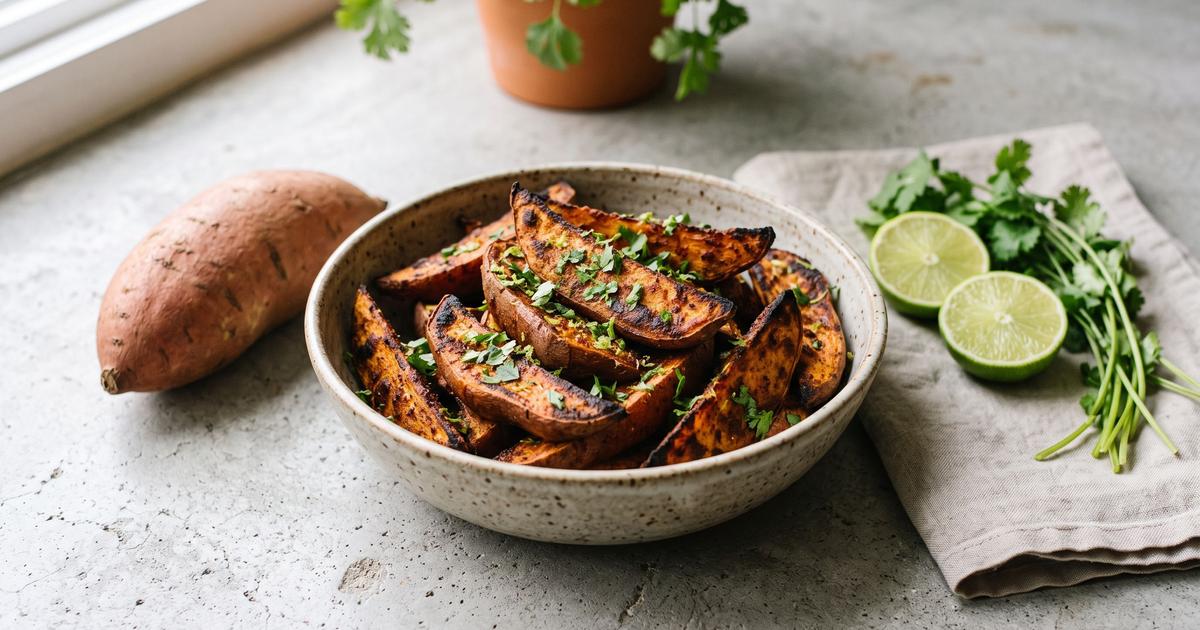
These are the wedges that come alongside a Tex-Mex plate, the ones usually deep-fried and salted. Roasted instead, sweet potatoes do something a white potato cannot: their sugars caramelize against a hot pan into a brown, almost candied crust, so the oil that fries a wedge turns out to be optional. The trick is dry heat and space. Cut the wedges evenly, lay them cut-side down on parchment, and leave them alone until they brown. The chile, cumin, and smoked paprika go on at the end, tossed onto the hot wedges so they bloom without scorching, and lime and cilantro finish the plate in place of salt.
Ingredients
- 2 lb Sweet potatoes, cut into wedges
- 1 1/2 tsp pure chile powder
- 1 tsp Cumin seed, toasted and ground
- 1 tsp Smoked paprika
- 2 cloves Garlic, grated
- 1 Lime, zested and juiced
- 1/3 cup Cilantro, chopped
Method
- Heat the oven to 425F (220C). Cut the sweet potatoes into even wedges about an inch (2.5 cm) thick so they cook at the same rate.
- Spread them cut-side down on a parchment-lined sheet pan in a single layer, not touching. Contact with the hot pan is what browns them, and crowding steams them instead.
- Roast undisturbed for 20 minutes, then flip each wedge and roast 10 to 15 minutes more, until the cut faces are deep brown and the flesh is soft. The natural sugars caramelize in dry heat and build the crust that oil is usually there to create.
- Stir the chile, cumin, and smoked paprika together. Tip the hot wedges into a bowl, add the grated garlic, and dust with the spice mix, tossing so it clings to the steamy surface and blooms in the heat.
- Finish with the lime zest, a squeeze of lime juice, and the cilantro. The acid and the smoke carry the wedges without salt. Serve at once, before the crust softens.
Nutrition
Estimated per serving: 200 calories, 4 g protein, 6 g fiber, 75 mg sodium. Computed from USDA FoodData Central reference values for the main ingredients. This is an approximation, not a laboratory measurement. How these are computed.
Cost per serving is estimated from US national-average retail prices for cheap staple forms, using BLS dried-bean prices and USDA produce prices. Prices vary by store and season, so treat it as a guide, not a receipt. How this is computed.