Tex-Mex Breakfast Bean and Potato Skillet
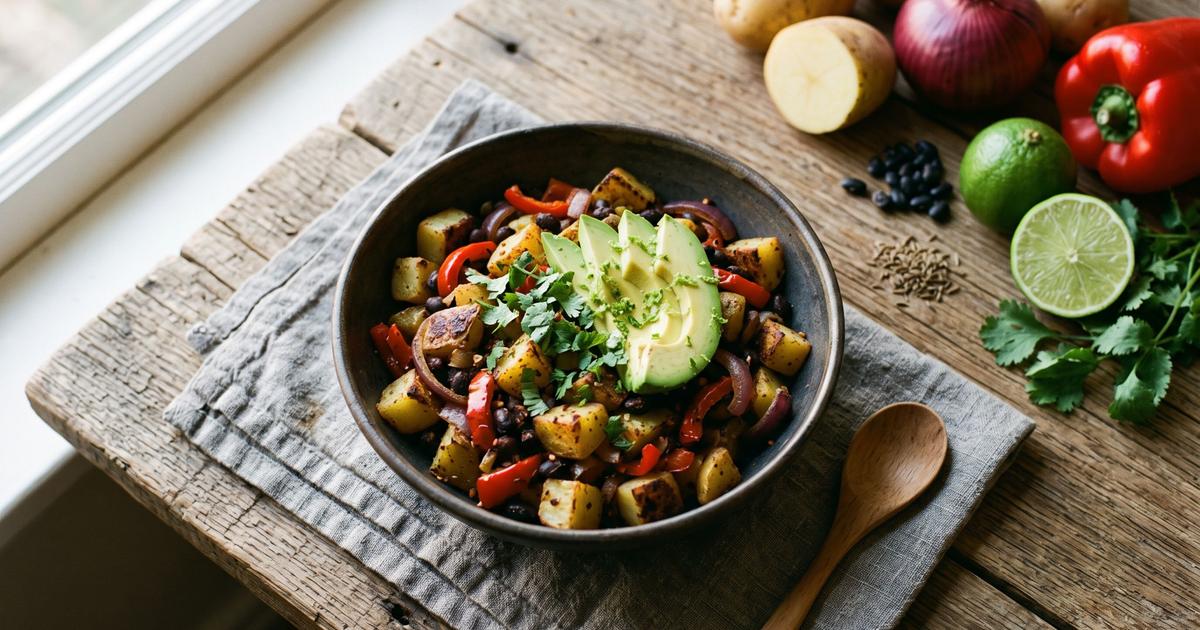
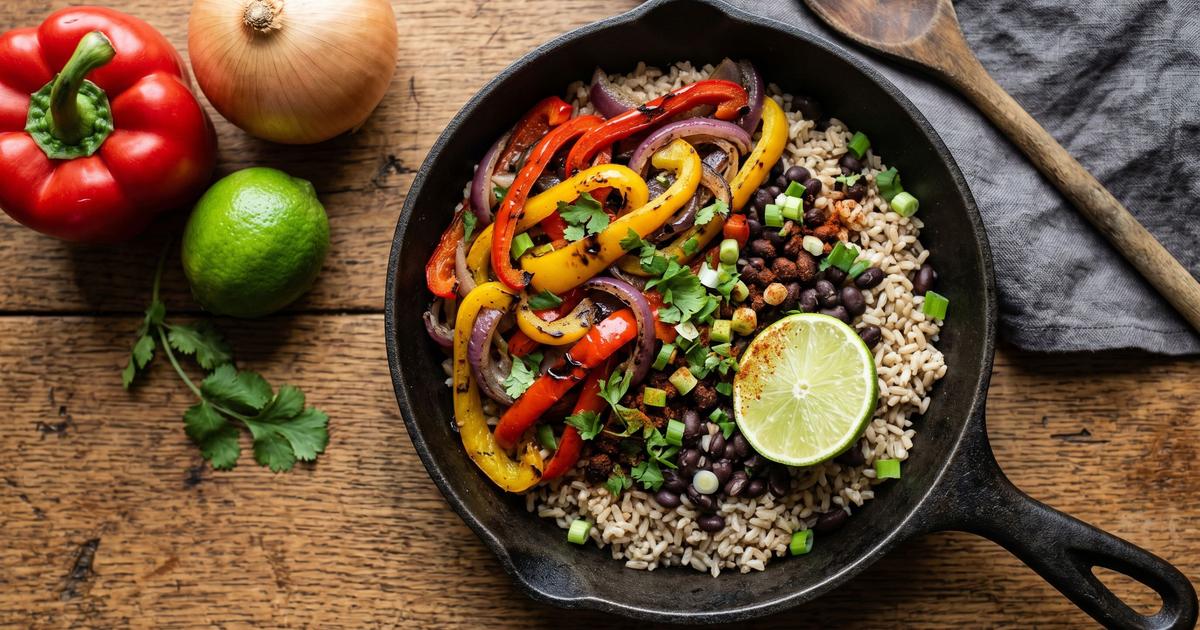
This is the plate of a Tex-Mex breakfast taqueria, minus the eggs, cheese, and griddle grease. Potatoes and black beans make it filling enough to carry you to lunch, and the seasoning is pure border pantry: toasted cumin, pure chile powder, and smoked paprika for the smoke a diner would get from bacon. The technique worth learning is the steam-then-sear for the potatoes: a covered start cooks them through, then a dry, undisturbed finish crisps them, so you get a browned exterior with no oil. Avocado stands in for the richness, and a hard squeeze of lime at the end means it never misses the salt. Wrap the leftovers in a whole-grain tortilla for a breakfast taco.
Ingredients
- 1 lb Potatoes, diced small
- 1 1/2 cups Black beans, cooked, drained
- 1 Bell pepper, diced
- 1 Yellow onion, diced
- 3 cloves Garlic, minced
- 1 tsp Cumin seed, toasted and ground
- 1 tsp pure chile powder
- 1/2 tsp Smoked paprika
- 1 Avocado, sliced
- 1/4 cup Cilantro, chopped
- 2 tbsp Lime juice
Method
- Put the diced potatoes in a hot nonstick pan with a few tablespoons of water and cover. Let them steam for 6 to 8 minutes, until a fork goes in easily. Trapping the steam cooks the potatoes through so that the dry heat afterward can brown the outsides without any oil.
- Uncover, let the water cook off, and leave the potatoes to sit undisturbed against the hot pan until they take on color. Move them only every couple of minutes so they crisp instead of steam.
- Push the potatoes aside, add the onion and pepper, and cook until soft, about 5 minutes. Stir in the garlic, cumin, chile powder, and smoked paprika. The smoked paprika brings the campfire note that bacon or chorizo would give a diner skillet.
- Fold in the black beans with a splash of water and heat through, scraping up anything stuck to the pan.
- Off the heat, add the lime juice. Top with sliced avocado and cilantro and serve straight from the pan.
Nutrition
Estimated per serving: 290 calories, 12 g protein, 11 g fiber, 45 mg sodium. Computed from USDA FoodData Central reference values for the main ingredients. This is an approximation, not a laboratory measurement. How these are computed.
Cost per serving is estimated from US national-average retail prices for cheap staple forms, using BLS dried-bean prices and USDA produce prices. Prices vary by store and season, so treat it as a guide, not a receipt. How this is computed.