Teff Pudding with Dates and Cinnamon
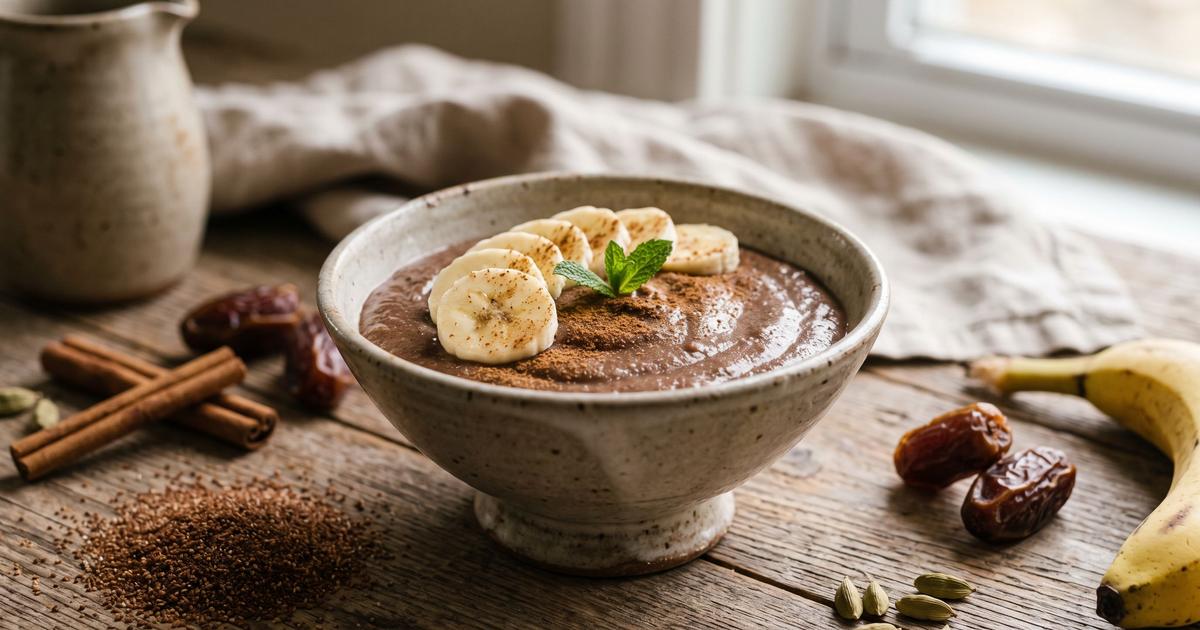
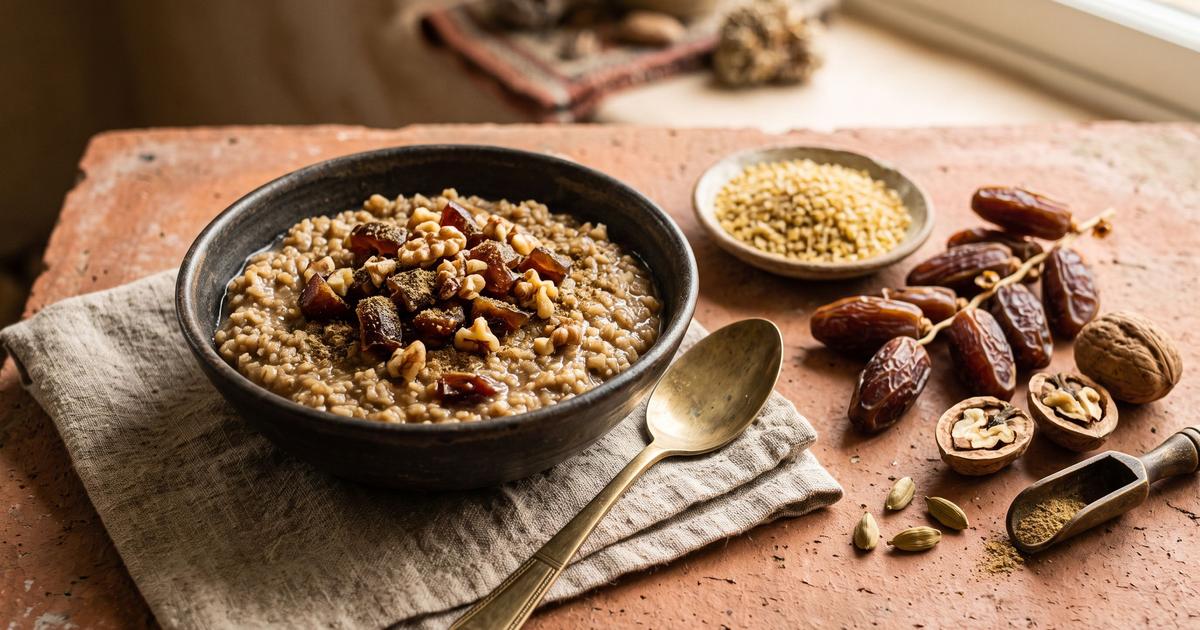
Teff is the grain of the Ethiopian highlands, best known as the flour behind injera but just as good cooked whole into porridge. Savory teff porridge with a well of spiced fat is a breakfast staple; this takes the same grain in the other direction. Simmered in soy milk with cinnamon and cardamom and sweetened only with blended dates, it sets into a dark, malty pudding once chilled. The grain carries real fiber and protein for something this soft, and it needs no sugar, since a few Medjool dates do the whole job. Banana on top adds a fresh note against the deep, almost molasses flavor of the teff.
Ingredients
- 1/2 cup Teff
- 2 cups Unsweetened soy milk
- 4 wholes Medjool dates, pitted
- 1 tsp Ceylon cinnamon
- 1/4 tsp Green cardamom, seeds ground
- 3 tbsp Raisins
- 1 whole Bananas, sliced
Method
- Blend the pitted dates with 0.5 cup (120 ml) of the soy milk until completely smooth. Teff is a tiny grain that sets fast, so the sweetener has to go in as a liquid; whole date pieces would never break down once the porridge thickens.
- Whisk the teff into the remaining 1.5 cups (360 ml) soy milk plus 1 cup (240 ml) water in a saucepan with the cinnamon and cardamom, then bring to a bare simmer. Starting the grain in cold liquid and stirring keeps it from clumping into lumps the way it does when dropped into hot milk.
- Cook over low heat for 12 to 15 minutes, stirring often, until it is thick enough to mound on the spoon. Teff wants to catch and scorch on the bottom, so keep the heat gentle and the spoon moving.
- Stir in the date blend and the raisins off the heat. Adding the sweetener at the end means it flavors the pudding rather than cooking down and dulling, and the raisins plump in the residual warmth.
- Divide into cups and chill at least 2 hours, until set. Teff firms up dramatically as it cools, turning porridge into a sliceable pudding, so serve it cold and top each with banana just before eating.
Nutrition
Estimated per serving: 250 calories, 9 g protein, 7 g fiber, 95 mg sodium. Computed from USDA FoodData Central reference values for the main ingredients. This is an approximation, not a laboratory measurement. How these are computed.
Cost per serving is estimated from US national-average retail prices for cheap staple forms, using BLS dried-bean prices and USDA produce prices. Prices vary by store and season, so treat it as a guide, not a receipt. How this is computed.