Succotash
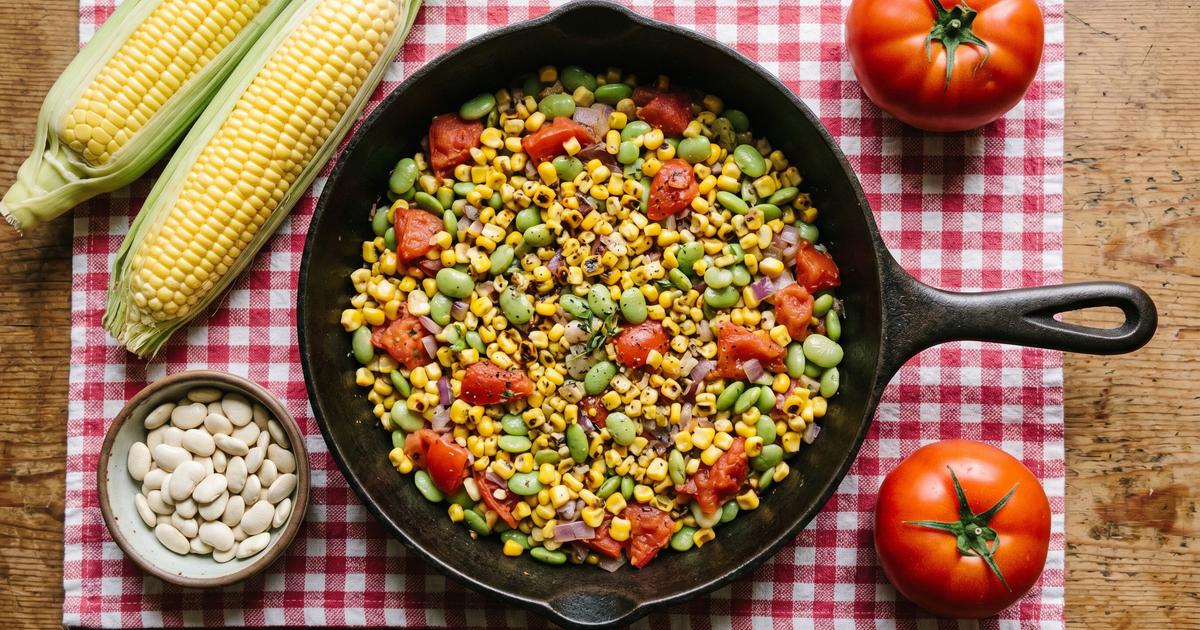
Succotash takes its name from msíckquatash, a Narragansett word for boiled corn, and pairing corn with beans echoes the corn-and-bean interplanting that Northeastern Indigenous farmers practiced long before either vegetable met butter in a skillet. This version skips the butter: corn and lima beans go into a bare, scorching hot pan first, so their surface starches blister and caramelize on contact instead of steaming in fat, and the diced tomato goes in last so it stays a bright vegetable rather than cooking down into sauce. A last-minute splash of cider vinegar off the heat wakes up the sweetness of the corn the way salt is usually asked to.
Ingredients
- 1 piece Yellow onions, small, diced
- 2 cloves Garlic, minced
- 1 1/2 cups Lima beans, frozen, thawed
- 1 1/4 cups Frozen corn, thawed
- 1 piece Fresh tomatoes, large, diced
- 1/2 tsp Smoked paprika
- 4 sprigs Thyme, leaves only
- 1/4 tsp Red pepper flakes, optional
- 1 tbsp Apple cider vinegar
- 2 pieces Scallions, thinly sliced
- 1/4 tsp Black peppercorns, freshly ground
Method
- Thaw the lima beans and corn if frozen and pat them dry with a towel. Dice the onion, mince the garlic, and dice the tomato, keeping the tomato separate since it goes in last.
- Heat a dry cast iron or stainless skillet over high heat until a kernel of corn dropped in sizzles on contact, about 2 minutes. Add the lima beans and corn in a single layer and leave them alone for 3 to 4 minutes, until the undersides blister and char in spots. No oil goes in the pan: the bare, scorching metal is what caramelizes the surface starches and gives the vegetables their sweetness.
- Push the corn and lima beans to one side of the pan, or tip them onto a plate. Add the onion to the bare spot with 3 tablespoons (45 ml) water and sweat, scraping up the browned bits as they loosen, until the onion turns translucent, 5 to 6 minutes. Stir in the garlic, smoked paprika, thyme, and red pepper flakes and cook for 1 minute, until fragrant.
- Return the corn and lima beans to the pan and stir to combine. Add the diced tomato and cook for 2 to 3 minutes, just until it softens and releases its juice. Stop there: a longer simmer turns the tomato to sauce, and this dish wants a saute of distinct vegetables, not a stew.
- Take the pan off the heat and stir in the cider vinegar and the black pepper. Taste: the vinegar is doing the job salt usually would, so add a splash more if the dish tastes flat instead of reaching for the shaker. Scatter the scallions over the top and serve warm.
Nutrition
Estimated per serving: 145 calories, 8 g protein, 7 g fiber, 20 mg sodium. Computed from USDA FoodData Central reference values for the main ingredients. This is an approximation, not a laboratory measurement. How these are computed.
Cost per serving is estimated from US national-average retail prices for cheap staple forms, using BLS dried-bean prices and USDA produce prices. Prices vary by store and season, so treat it as a guide, not a receipt. How this is computed.