Smoky Slow Baked Beans
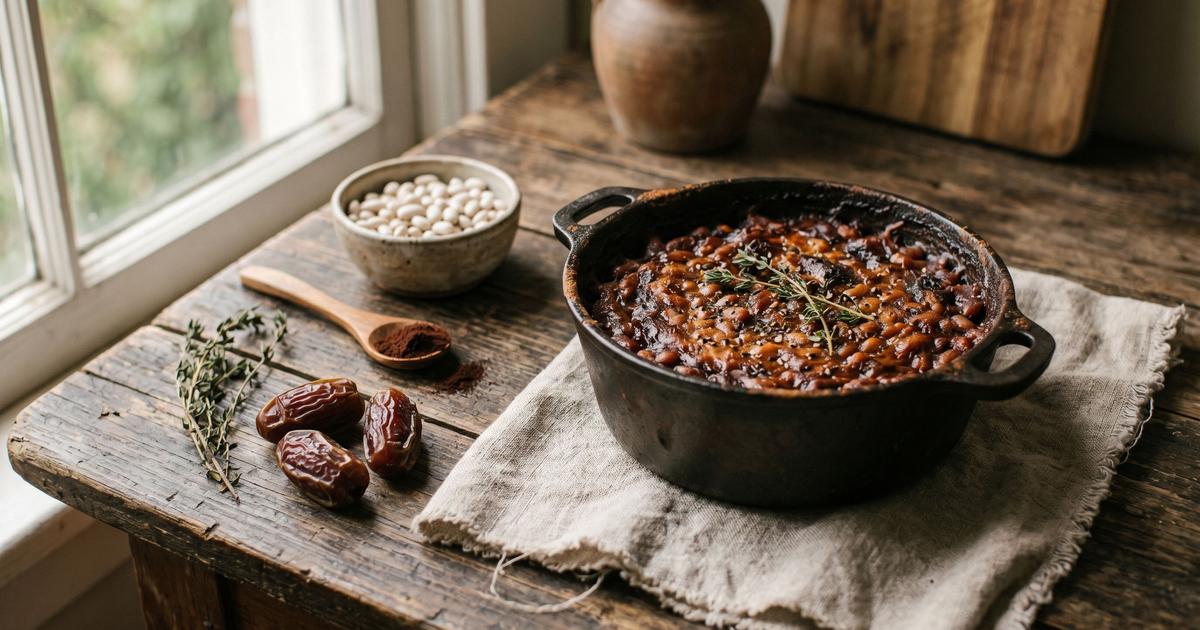
Baked beans are usually a delivery system for brown sugar, molasses, and bacon. This version gets its dark sweetness from blended dates and its smoke from smoked paprika and a few drops of liquid smoke, so the beans stay the point. Low and slow in the oven is what turns them creamy and gives the sauce its body.
Ingredients
- 1 1/2 cups Navy beans, dried, soaked overnight
- 1 Yellow onion, finely diced
- 4 cloves Garlic, minced
- 5 dates Medjool dates, pitted
- 1 1/2 cups Canned crushed tomatoes
- 2 tbsp Tomato paste
- 1 tbsp Smoked paprika
- 1 tbsp Dijon mustard
- 2 tbsp Apple cider vinegar
- 1/2 tsp Smoked salt or liquid smoke, liquid smoke
- 2 Bay leaves
- 1/2 tsp Black peppercorns, freshly ground
For no added salt, leave out the mustard and the liquid smoke. A spoon of smoked paprika keeps the smoky note, and a splash of vinegar keeps the beans tangy.
Method
- Drain the soaked beans, cover with fresh water by 2 inches, and simmer with one bay leaf until just tender, 45 to 60 minutes. Do not season the water yet. Drain, saving 2 cups of the bean liquid. Heat the oven to 300 F (150 C).
- Blend the dates with 1 cup of the reserved bean liquid into a smooth paste. This is the sweetener, and it carries the same dark, caramel note molasses would, with the fiber still attached.
- Sweat the onion in an ovenproof pot with 3 tablespoons (45 ml) water until soft, about 8 minutes. Add the garlic and the tomato paste and cook for 2 minutes, until the paste turns brick red.
- Stir in the crushed tomatoes, the date paste, smoked paprika, mustard, liquid smoke, black pepper, and the second bay leaf. Add the beans and enough reserved bean liquid to just cover them.
- Bring to a simmer on the stove, then cover and move the pot to the oven. Bake for 90 minutes, stirring once at the halfway mark and adding a splash of bean liquid if it looks dry.
- Uncover and bake for a final 20 to 30 minutes, until the top darkens and the sauce is thick and glossy. This last uncovered stretch is where the flavor concentrates.
- Stir in the cider vinegar off the heat. Discard the bay leaves. Rest for 10 minutes. The vinegar lifts the whole pot, so taste and add a splash more if it reads flat rather than reaching for salt.
Nutrition
Estimated per serving: 255 calories, 13 g protein, 15 g fiber, 150 mg sodium. Computed from USDA FoodData Central reference values for the main ingredients. This is an approximation, not a laboratory measurement. How these are computed.
Cost per serving is estimated from US national-average retail prices for cheap staple forms, using BLS dried-bean prices and USDA produce prices. Prices vary by store and season, so treat it as a guide, not a receipt. How this is computed.