Sopa de Milpa, Mexican Cornfield Soup
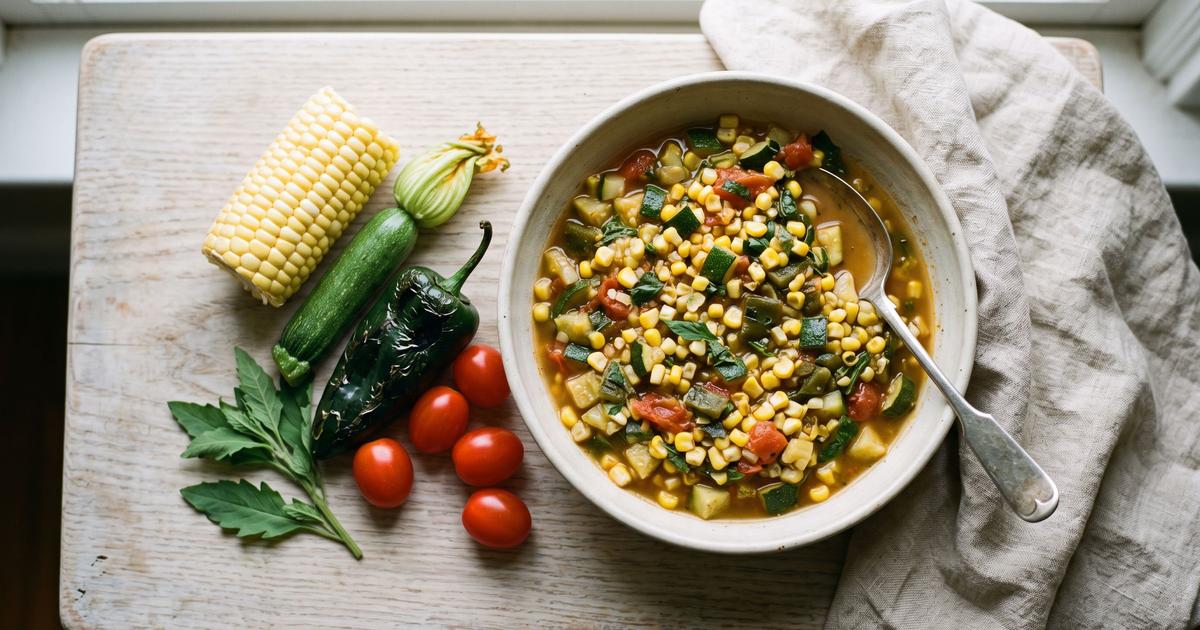
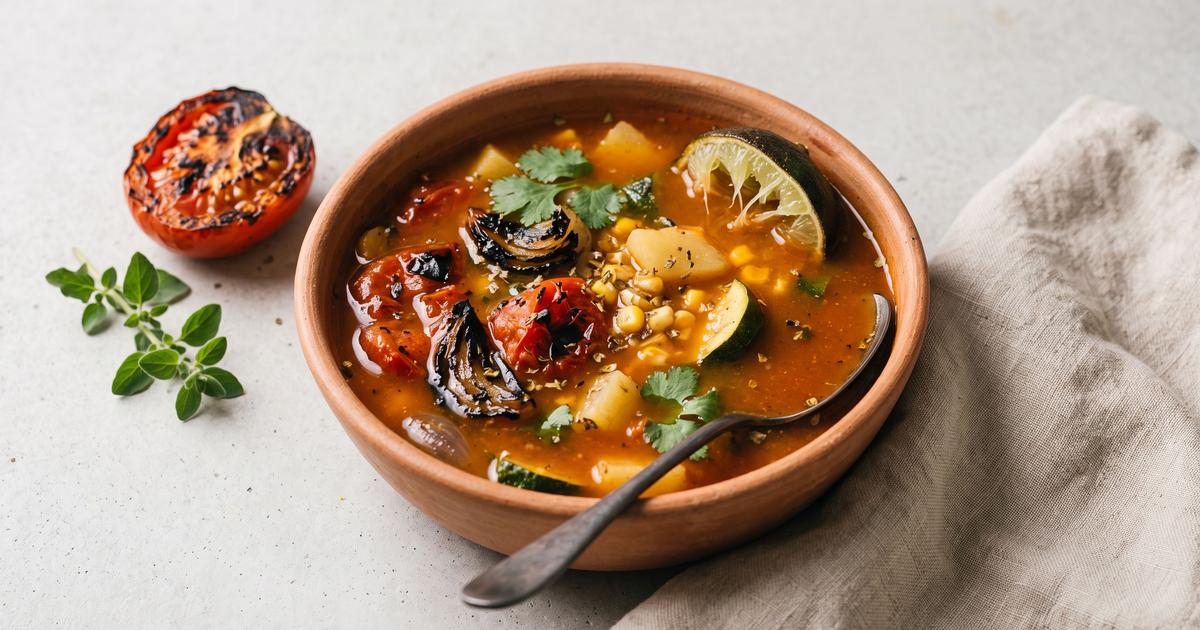
Milpa is the old intercropped field where corn, squash, and beans grow together, and sopa de milpa is that field turned into a summer soup. The classic version leans on whatever the plot gives up at once: fresh corn, tender squash or zucchini, a roasted poblano for smoke, tomato for body, and epazote, the pungent herb that tastes of nothing else and belongs with corn. It is a light, brothy soup rather than a heavy one, thickened only by a little corn blended into the pot. Roasting the poblano first is worth the few minutes it takes, since the char is most of the flavor. There is no oil and no salt here: the vegetables are sweet on their own, and a squeeze of lime at the end sharpens everything into focus.
Ingredients
- 3 cups Frozen corn
- 2 Zucchinis, diced
- 2 Poblanos, roasted, peeled, and sliced
- 3 Fresh tomatoes, chopped
- 1 Yellow onion, diced
- 3 cloves Garlic, minced
- 1 Serrano, minced
- 2 sprigs Epazote, fresh, or 2 tsp dried
- 1 tsp no-salt vegetable bouillon
- 1 tbsp Lime juice
Method
- Char the poblanos directly over a flame or under the broiler until the skins blacken, then steam them covered in a bowl for 10 minutes and rub the skins off. Charring builds a smoky sweetness and removes the tough, bitter skin so the flesh stays silky.
- Sweat the onion, garlic, and serrano in 3 tablespoons (45 ml) water until soft, about 6 minutes. Water does the job oil would here, softening the aromatics without frying them.
- Blend 1 cup of the corn with 1 cup (240 ml) water into a rough puree and add it to the pot with the rest of the corn, the tomatoes, bouillon, and 4 cups (960 ml) water. The corn puree thickens the broth and makes it taste of corn twice, with no cream.
- Simmer 10 minutes, then add the zucchini and poblano and cook 8 minutes more, until the zucchini is tender but still holds its shape. Adding it late keeps it from going to mush.
- Stir in the epazote at the very end and finish with lime. Epazote fades if you boil it long, and the lime does the seasoning that salt would.
Nutrition
Estimated per serving: 140 calories, 5 g protein, 6 g fiber, 40 mg sodium. Computed from USDA FoodData Central reference values for the main ingredients. This is an approximation, not a laboratory measurement. How these are computed.
Cost per serving is estimated from US national-average retail prices for cheap staple forms, using BLS dried-bean prices and USDA produce prices. Prices vary by store and season, so treat it as a guide, not a receipt. How this is computed.