Rotmos, Swedish Root Vegetable Mash
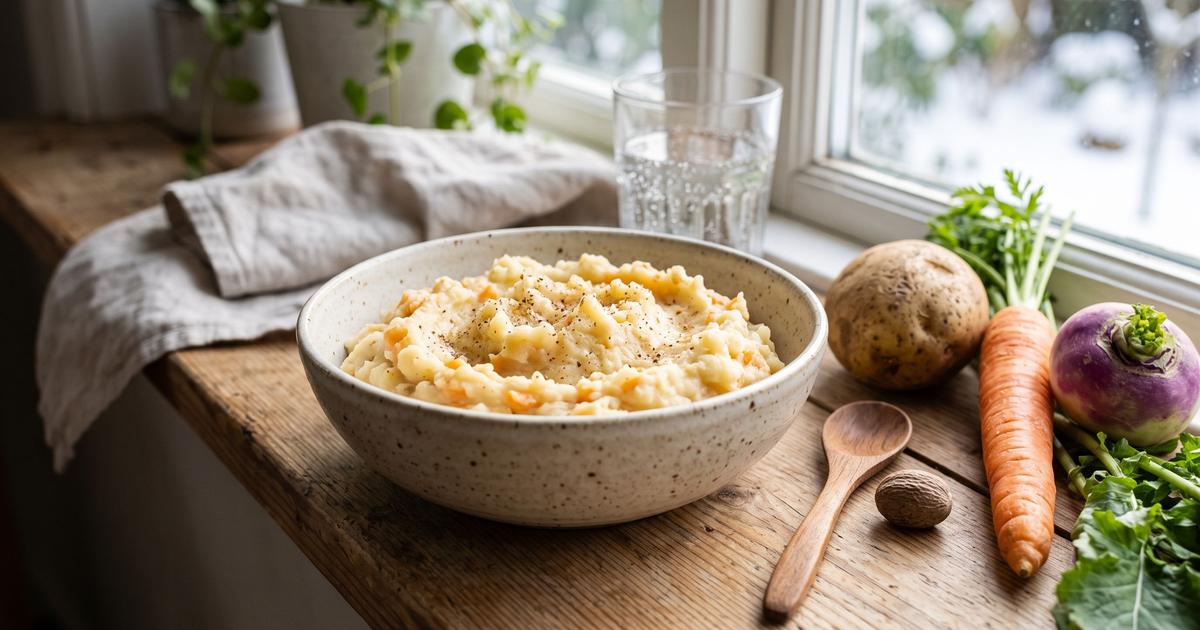
Rotmos, literally root mash, is the Swedish mash that sits under sausages and boiled dinners through the cold months, traditionally built on rutabaga, the big yellow swede. Use rutabaga if you can find it, in place of or alongside the turnip here, for the most authentic sweet, faintly bitter edge. What makes rotmos different from plain mashed potato is the mix of roots and the warm trio of white pepper, allspice, and nutmeg, and the fact that the vegetables themselves are sweet enough that no butter or cream is missed. Mash it by hand to keep it from going gummy, loosen it with the cooking water, and it reheats through the week without complaint.
Ingredients
- 1 lb Turnips, peeled, cut into chunks
- 2 wholes Carrots (cooking), peeled, cut into chunks
- 1 lb Potatoes, peeled, cut into chunks
- 1/2 cup Unsweetened oat milk
- 1/2 tsp White pepper, freshly ground
- 1/4 tsp Allspice, ground
- 1/4 tsp Nutmeg, freshly grated
Method
- Put the turnip and carrot into a pot of unsalted water and bring to a boil, then add the potato after 10 minutes. The turnip and carrot are denser and cook slower, so giving them a head start means everything reaches soft at the same moment.
- Simmer until all the roots are fully tender to a knife, about 20 minutes more, then reserve a cup of the cooking water and drain. That starchy water is the trick to loosening the mash without cream, so do not pour it all away.
- Crush the roots with a masher or fork, not a blender or mixer. Potato worked in a machine turns to glue, while a hand masher keeps the mash light and a little rustic, which is how rotmos is meant to be.
- Beat in the oat milk and enough of the reserved water to reach a soft, spoonable mash, then work in the white pepper, allspice, and nutmeg. Those three warm spices are the Swedish signature, and the natural sweetness of turnip and carrot means it needs no butter to taste rich.
Nutrition
Estimated per serving: 140 calories, 3 g protein, 5 g fiber, 40 mg sodium. Computed from USDA FoodData Central reference values for the main ingredients. This is an approximation, not a laboratory measurement. How these are computed.
Cost per serving is estimated from US national-average retail prices for cheap staple forms, using BLS dried-bean prices and USDA produce prices. Prices vary by store and season, so treat it as a guide, not a receipt. How this is computed.