Rizogalo, Greek Rice Pudding
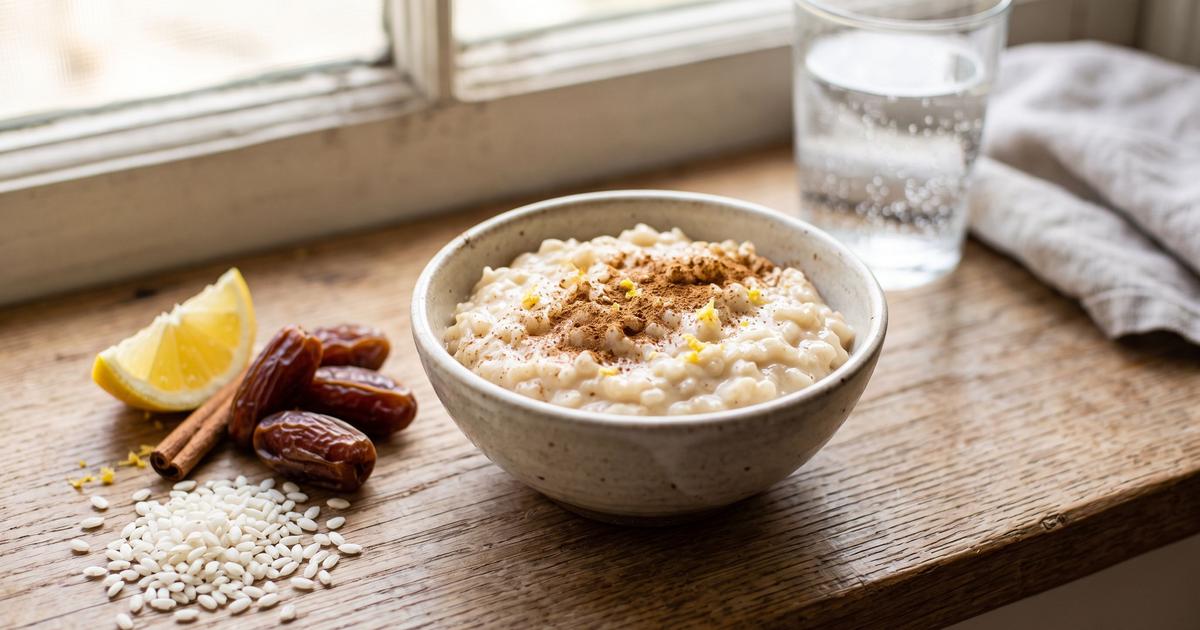
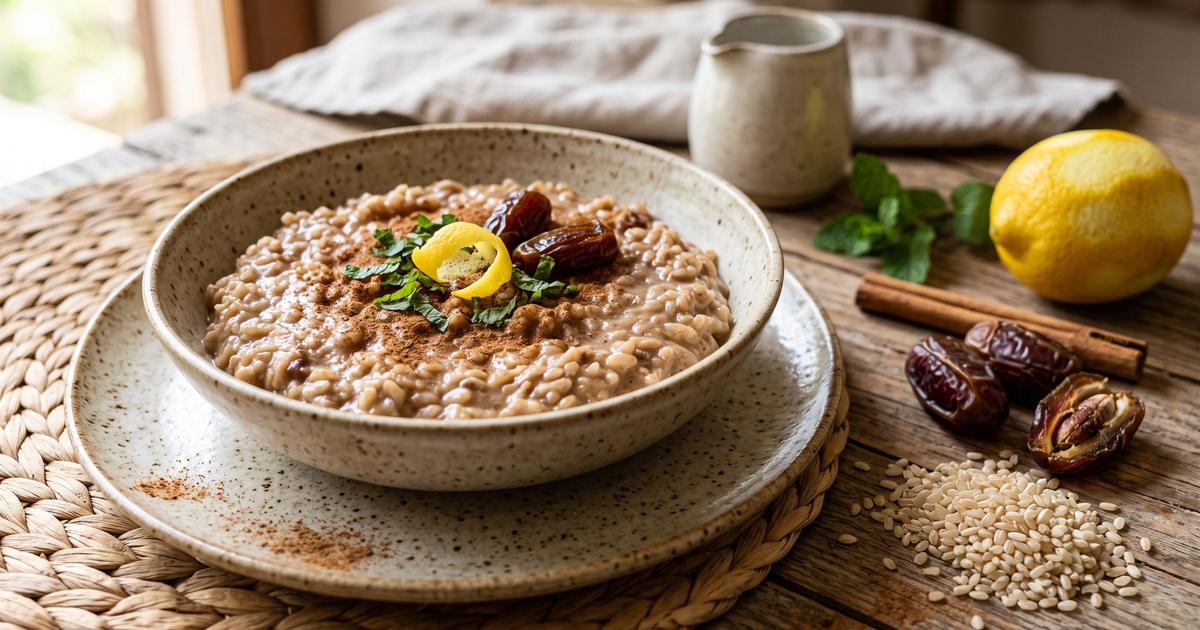
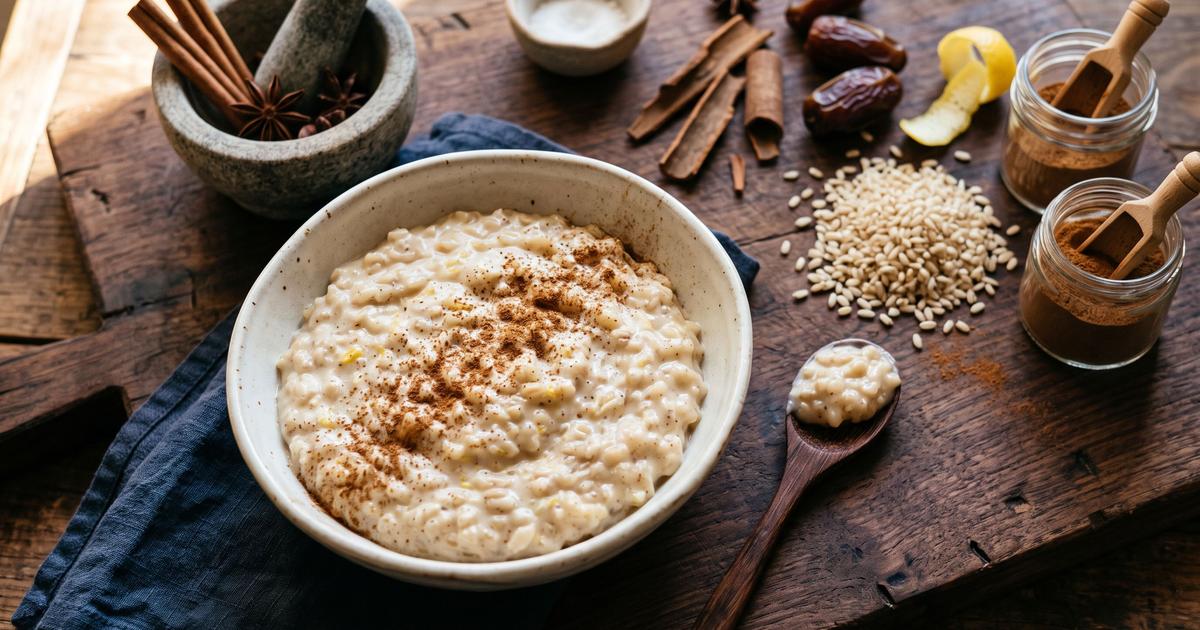
Rizogalo, literally rice and milk, is the everyday Greek dessert, sold in tubs at every bakery and made at home whenever there is leftover rice. The traditional pot is white rice, cow's milk, sugar, and a strip of lemon or a cinnamon stick. Swapping in soy milk keeps the protein and the creaminess, and short-grain brown rice gives the same starchy body while staying a whole grain. The sweetness comes entirely from blended dates, which suit the caramel note that sweetened condensed versions chase. The thick dusting of cinnamon on top is not optional. It is the whole finish.
Ingredients
- 1/2 cup short grain brown rice
- 4 cups Unsweetened soy milk
- 5 Medjool dates, pitted
- 1/2 tsp Ceylon cinnamon, ground, plus more to finish
- 1 Lemon, a wide strip of zest
- 1 tbsp Cornstarch
Method
- Simmer the rice in 1.5 cups (360 ml) water with the strip of lemon zest until the water is absorbed and the rice is nearly tender, about 25 minutes. Short-grain rice releases the most starch, which is what makes rice pudding creamy rather than soupy. Starting it in water lets the brown grain soften before the milk goes in.
- Blend the dates with 1/2 cup (120 ml) of the soy milk until completely smooth. This is the only sweetener, and blending it means the sweetness runs all the way through instead of sitting in chewy lumps.
- Add the remaining soy milk, the date paste, and the cinnamon to the rice. Simmer gently, stirring often so it does not catch on the bottom, until thickened and the rice is soft, about 20 minutes. Keep the heat low. Milk scorches fast.
- Slurry the cornstarch with 2 tablespoons cold water and stir it in. Cook two minutes more until it coats the spoon. It will still look loose, but it sets as it cools, so pull it before it turns stiff.
- Fish out the lemon zest. Spoon into bowls and dust the tops heavily with cinnamon, the way it is always served in Greece. Eat it warm, or chill it, which is how most Greeks actually prefer it.
Nutrition
Estimated per serving: 210 calories, 8 g protein, 4 g fiber, 60 mg sodium. Computed from USDA FoodData Central reference values for the main ingredients. This is an approximation, not a laboratory measurement. How these are computed.
Cost per serving is estimated from US national-average retail prices for cheap staple forms, using BLS dried-bean prices and USDA produce prices. Prices vary by store and season, so treat it as a guide, not a receipt. How this is computed.