Purrusalda, Basque Leek and Potato Soup
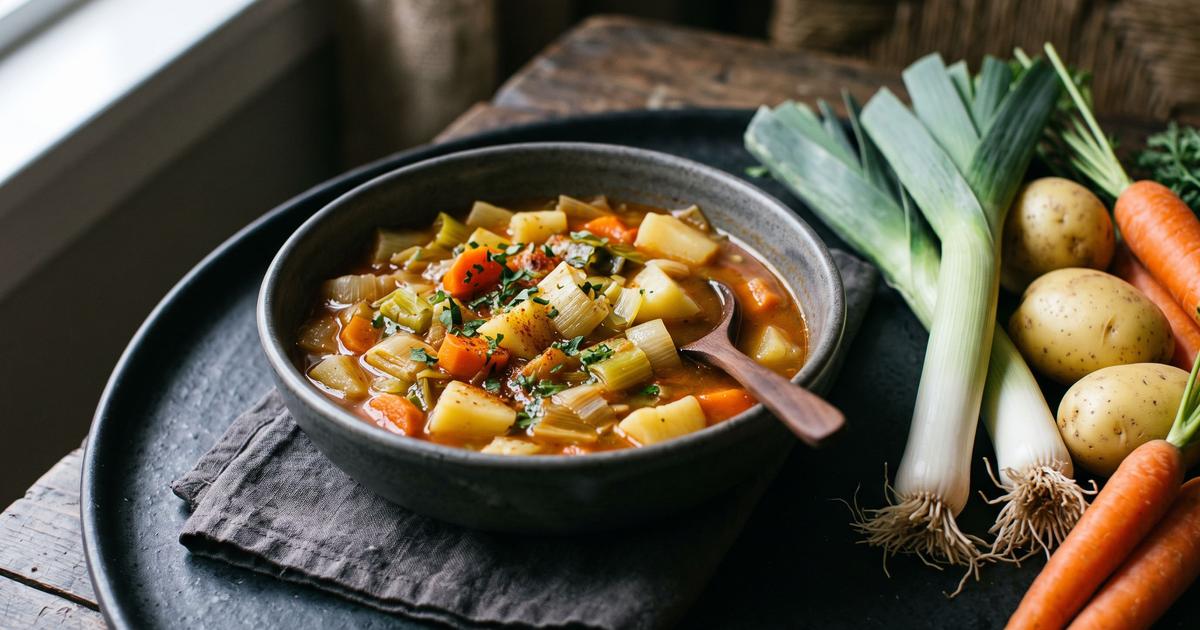
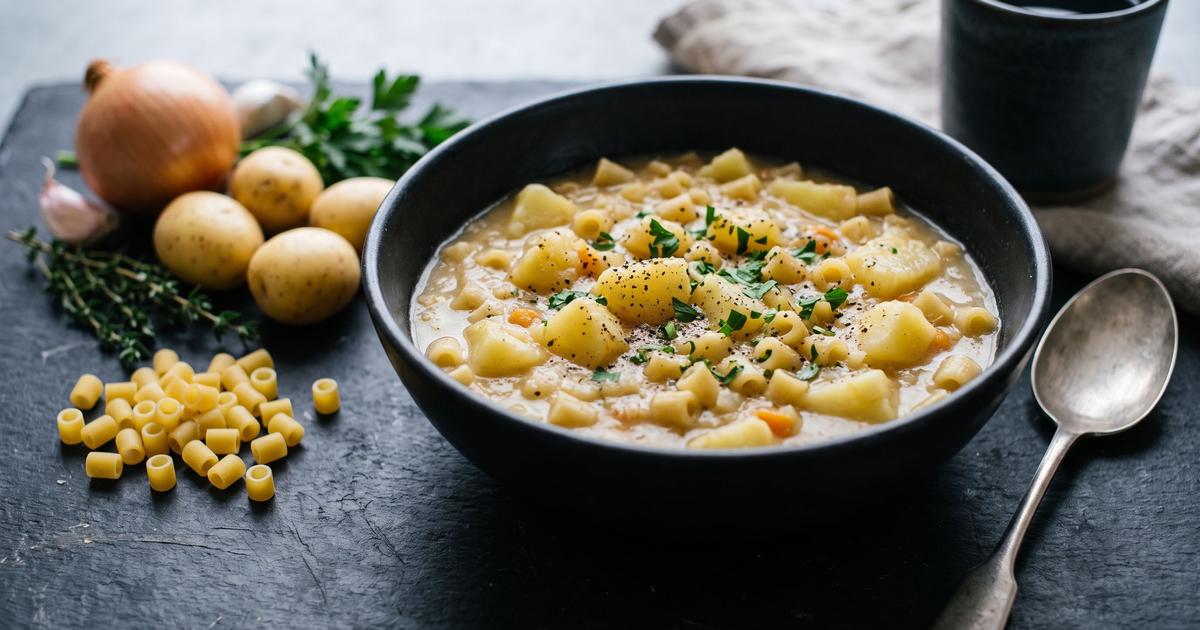
Purrusalda is the everyday winter soup of the Basque Country, built on the trinity of leeks, potatoes, and carrots and almost nothing else. Traditionally it sometimes carries salt cod, but the vegetable version is the older, humbler one, and it stands on its own. The leeks are sweated slow so they turn sweet rather than brown, the potato is simmered soft and partly crushed so it gives the broth body, and a spoonful of smoked paprika lends the smoke that a piece of cod or a slick of oil would otherwise bring. A splash of sherry vinegar at the end wakes the whole pot. It costs almost nothing and reheats even better the next day.
Ingredients
- 3 wholes Leeks, white and pale green parts sliced
- 1 lb Potatoes, peeled and cut in rough chunks
- 2 wholes Carrots, sliced
- 3 cloves Garlic, sliced
- 1 tsp Smoked paprika
- 2 wholes Bay leaves
- 1 tbsp no-salt vegetable bouillon
- 2 tbsp Flat-leaf parsley, chopped
- 1/2 tsp Black peppercorns, freshly ground
- 1 tsp Sherry vinegar
Method
- Sweat the leeks and garlic in 0.25 cup (60 ml) water in a covered pot over medium heat until soft and sweet, about 8 minutes, adding a splash more if the pot dries. Leeks are milder and sweeter than onion, and gentle covered heat coaxes that sweetness out without browning them, which keeps the broth clean and pale.
- Stir in the smoked paprika for 30 seconds, then add the potatoes, carrots, bay, bouillon, and 4 cups (950 ml) water. Blooming the pimenton in the hot pan for a moment wakes its oils, so its smoke spreads through the whole pot instead of sitting on top.
- Simmer until the potatoes are completely soft, about 20 minutes. Fish out the bay leaves and mash a few potato chunks against the side of the pot. Purrusalda stays brothy and chunky, but the crushed potato thickens the liquid into something that tastes of cream with no cream in it.
- Take it off the heat and add the black pepper, parsley, and a splash of sherry vinegar. The acid lifts the sweet vegetables and sharpens the smoke, doing the work the soup carries no salt to do.
Nutrition
Estimated per serving: 180 calories, 5 g protein, 6 g fiber, 120 mg sodium. Computed from USDA FoodData Central reference values for the main ingredients. This is an approximation, not a laboratory measurement. How these are computed.
Cost per serving is estimated from US national-average retail prices for cheap staple forms, using BLS dried-bean prices and USDA produce prices. Prices vary by store and season, so treat it as a guide, not a receipt. How this is computed.