Politiki Salata, Greek Cabbage Salad
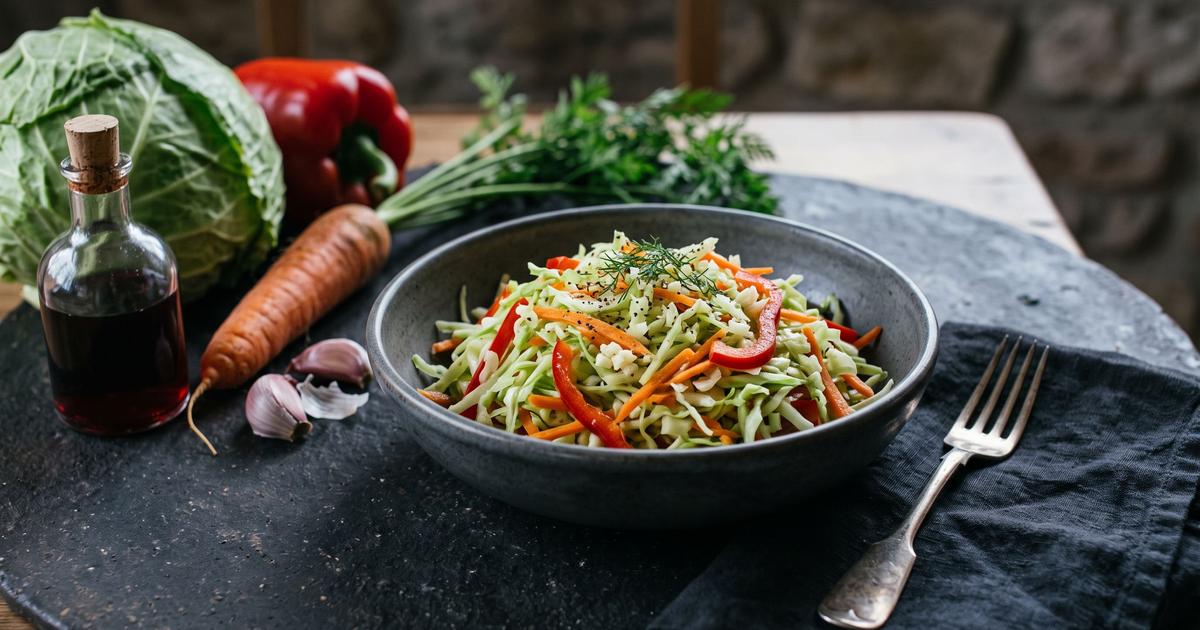
Politiki salata takes its name from Constantinople, and it is the winter salad Greek tavernas set out when the tomatoes are gone and the cabbages are cheap and heavy. It is built for keeping, dressed with vinegar rather than anything perishable, so a big bowl made on Sunday is still crisp on Thursday. The usual pour of olive oil is easy to leave out once the garlic and oregano are steeping in the vinegar. Cut the cabbage thin, give it time to soften, and let it sit. Slice the pepper and carrot into long thin strips for the color and the sweet crunch they add against the sharp dressing.
Ingredients
- 1/2 head green cabbage, cored and shredded thin
- 2 Carrots, grated
- 1 Bell pepper, red, sliced thin
- 2 stalks Celery, sliced thin on the bias
- 2 cloves Garlic, grated
- 3 tbsp Red wine vinegar
- 3 tbsp Flat-leaf parsley, chopped
- 1 tsp Dried oregano
- 1/4 tsp Black peppercorns, ground
Method
- Shred the cabbage as thin as you can, ideally on a mandoline or with a sharp knife. Thin ribbons take the dressing and soften evenly; thick shreds stay tough and taste raw.
- Grate the garlic straight into the red wine vinegar and let it stand while you cut everything else. This is a five-minute quick infusion that rounds off the garlic's raw edge without cooking it.
- Toss the cabbage, carrot, pepper, and celery with the garlic vinegar and the oregano, working it through with your hands for a minute. Massaging the vinegar in does the softening job salt usually does, wilting the cabbage just enough while keeping its crunch.
- Let the bowl rest at least 15 minutes before serving so the flavors marry and the cabbage relaxes. Rubbing the dried oregano between your fingers as you add it releases more of its oil than dropping it in whole.
- Finish with parsley and black pepper. This is a salad built to keep: it holds a week in the fridge and only gets better for the first few days, which makes it the one to bring to a table full of people.
Nutrition
Estimated per serving: 70 calories, 2 g protein, 4 g fiber, 35 mg sodium. Computed from USDA FoodData Central reference values for the main ingredients. This is an approximation, not a laboratory measurement. How these are computed.
Cost per serving is estimated from US national-average retail prices for cheap staple forms, using BLS dried-bean prices and USDA produce prices. Prices vary by store and season, so treat it as a guide, not a receipt. How this is computed.