Mavromatika Salata, Greek Black-Eyed Pea Salad
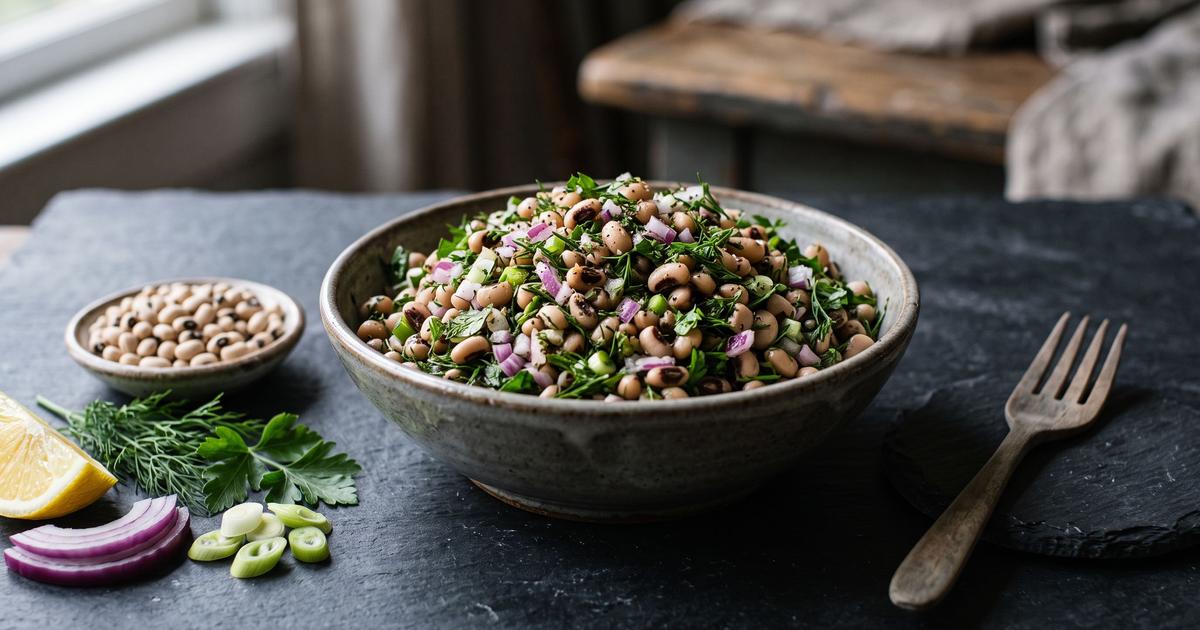
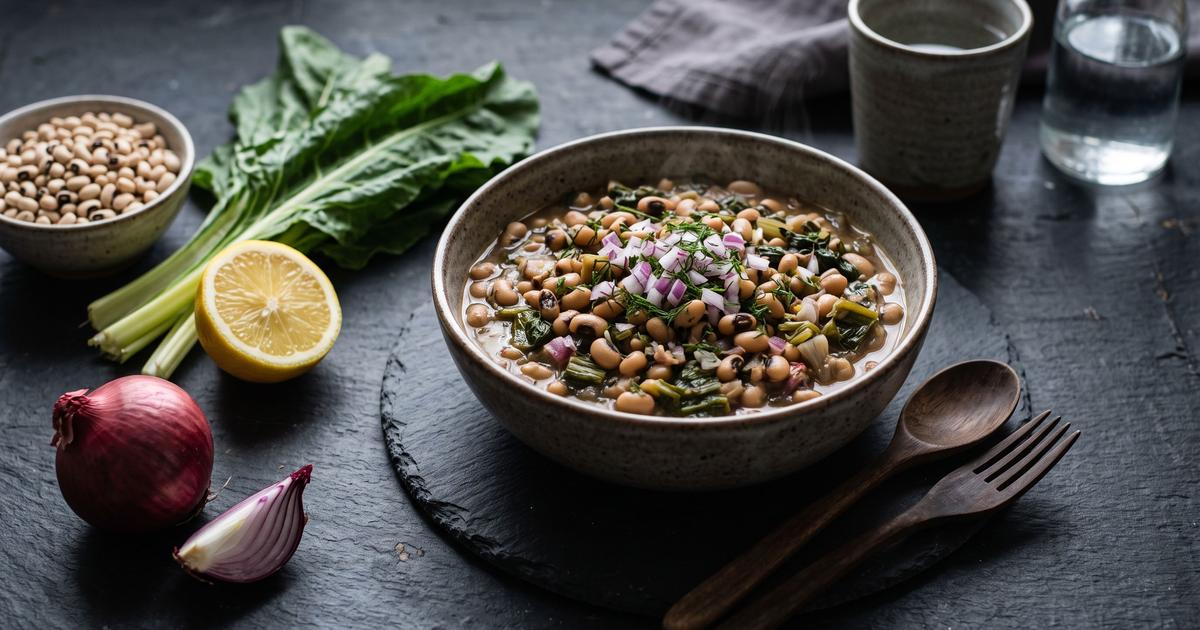
Mavromatika, black-eyed peas, are a summer staple across Greece, boiled soft and turned into a cold salad loaded with herbs. The dish is mostly beans and greenery, which makes it cheap and high in fiber, and it improves as it sits, so it is built for making ahead. There is no oil here, just lemon and a little red wine vinegar carrying a generous amount of dill, parsley, scallion, and raw red onion. Dressing the beans while they are warm is the one trick that matters, because it lets the acid soak in rather than pooling at the bottom of the bowl. Serve it as a meze or alongside a grain.
Ingredients
- 1 cup Black-eyed peas, dried, or 3 cups cooked
- 2 wholes Bay leaves
- 1/2 whole Red onions, finely diced
- 3 wholes Scallions, thinly sliced
- 1/2 cup Dill, chopped
- 1/2 cup Flat-leaf parsley, chopped
- 1 whole Fresh tomatoes, diced
- 3 tbsp Lemon juice
- 1 tbsp Red wine vinegar
- 1/2 tsp Black peppercorns, freshly ground
Method
- Rinse the black-eyed peas and simmer them with the bay leaves in plenty of unsalted water until tender but still whole, about 30 minutes, then drain. Black-eyed peas need no soaking, and cooking them without salt keeps the skins from splitting, so the beans hold their shape in a salad instead of going to mush.
- While the beans are still warm, tip them into a bowl with the diced red onion, scallion, lemon juice, and vinegar. Warm beans drink up acid the way warm potatoes do, so dressing them now means the flavor goes into the bean, not just onto it.
- Let the beans cool to room temperature, then fold in the dill, parsley, tomato, and black pepper. Adding the soft herbs and tomato after cooling keeps the herbs green and the tomato from weeping into the bowl.
- Taste and add another squeeze of lemon if it needs lifting, then let the salad sit for at least 15 minutes before serving. The rest lets the acid and herbs work through the beans, which is what carries the dish in place of salt.
Nutrition
Estimated per serving: 200 calories, 9 g protein, 7 g fiber, 30 mg sodium. Computed from USDA FoodData Central reference values for the main ingredients. This is an approximation, not a laboratory measurement. How these are computed.
Cost per serving is estimated from US national-average retail prices for cheap staple forms, using BLS dried-bean prices and USDA produce prices. Prices vary by store and season, so treat it as a guide, not a receipt. How this is computed.