Oven-Roasted Ratatouille
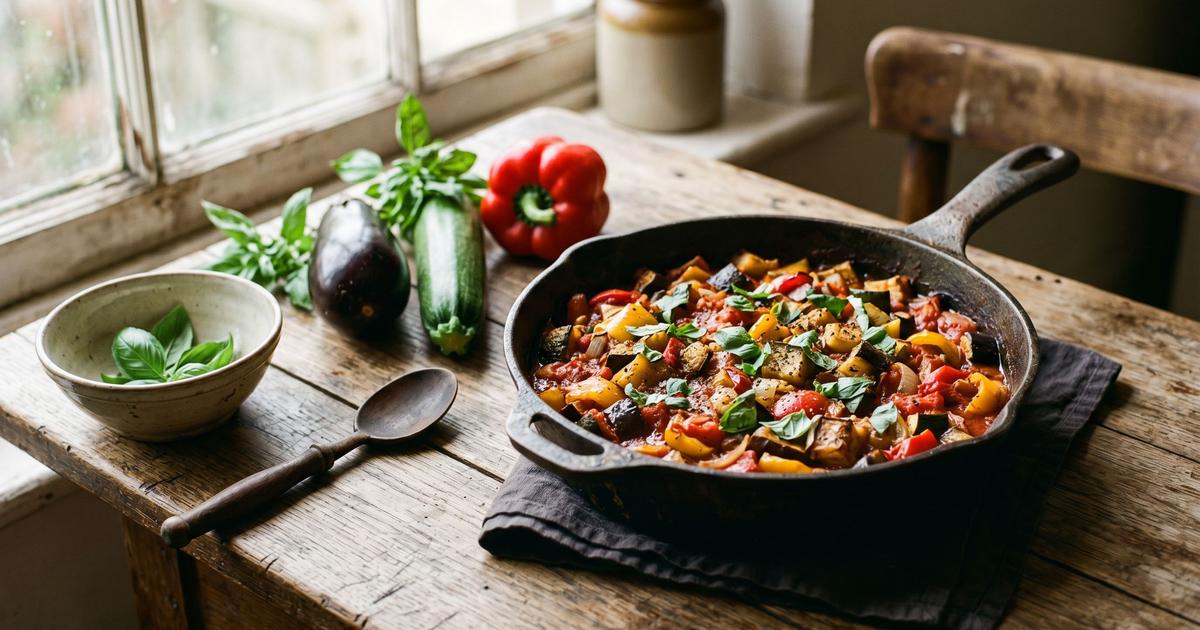
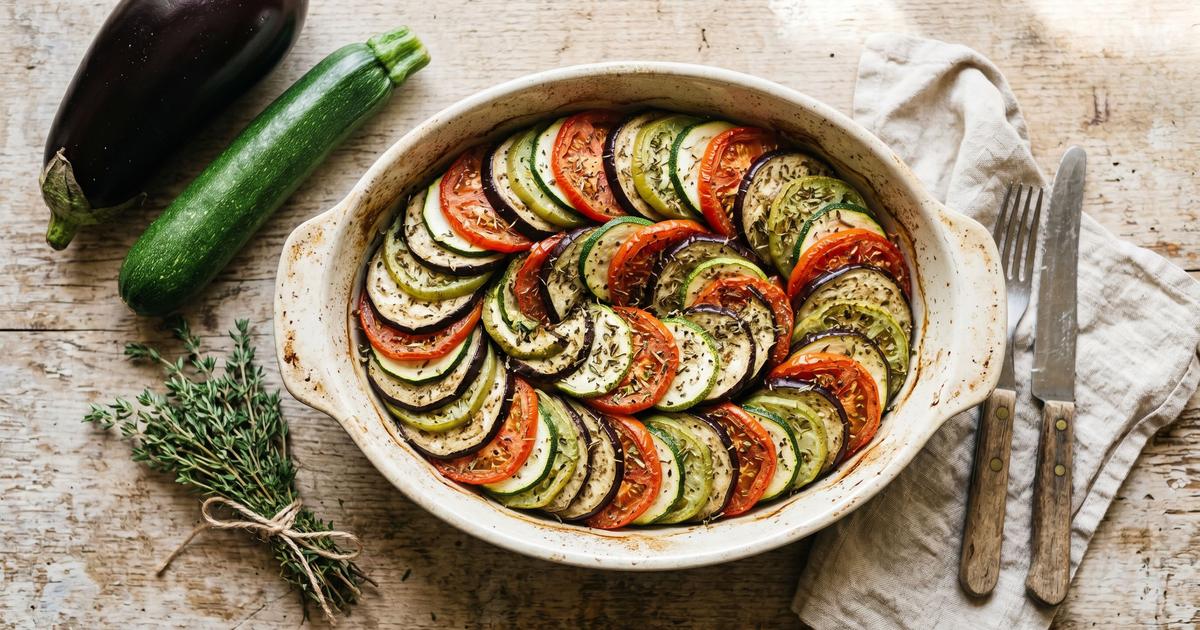
Ratatouille is usually a slow business of frying each vegetable in oil in turn. Roasting them hard and dry on sheet pans gets you the same browned, collapsed sweetness with none of the oil, and all at once. Building a quick tomato base separately keeps the vegetables from stewing into mush.
Ingredients
- 1 Eggplant, cut into 1 inch cubes
- 2 Zucchinis, cut into 1 inch half-moons
- 2 Bell peppers, cut into 1 inch pieces
- 1 Yellow onion, diced
- 5 cloves Garlic, minced
- 2 cups Canned crushed tomatoes
- 2 tsp Herbes de Provence
- 1 Bay leave
- 1 tbsp Red wine vinegar
- 1/4 cup Basil, torn
- 1/2 tsp Black peppercorns, freshly ground
Method
- Heat the oven to 450 F (230 C). Spread the eggplant, zucchini, and peppers on two parchment-lined sheet pans in a single layer, not touching. Crowding steams them, and you want them to roast.
- Roast for 25 to 30 minutes, turning once, until the edges are browned and the eggplant is fully soft. Eggplant is a sponge for oil, which is exactly why roasting it dry works better here: it browns instead of soaking.
- While the vegetables roast, sweat the onion in a wide pot with 3 tablespoons (45 ml) water until soft, about 8 minutes. Add the garlic and cook 1 minute more.
- Add the crushed tomatoes, herbes de Provence, bay leaf, and black pepper. Simmer for 10 minutes, until the sauce thickens and darkens.
- Fold the roasted vegetables into the tomato base along with any juices from the pans. Simmer together for 10 minutes so the flavors marry.
- Turn off the heat. Discard the bay leaf. Stir in the red wine vinegar, then most of the basil.
- Rest for at least 15 minutes before serving, or better, overnight. Ratatouille is a dish that improves with a night in the fridge. Finish with the last of the basil. Serve warm or at room temperature over intact grains or with a whole grain bread.
Nutrition
Estimated per serving: 120 calories, 5 g protein, 10 g fiber, 190 mg sodium. Computed from USDA FoodData Central reference values for the main ingredients. This is an approximation, not a laboratory measurement. How these are computed.
Cost per serving is estimated from US national-average retail prices for cheap staple forms, using BLS dried-bean prices and USDA produce prices. Prices vary by store and season, so treat it as a guide, not a receipt. How this is computed.