Mango Chow, Trinidadian Street Snack
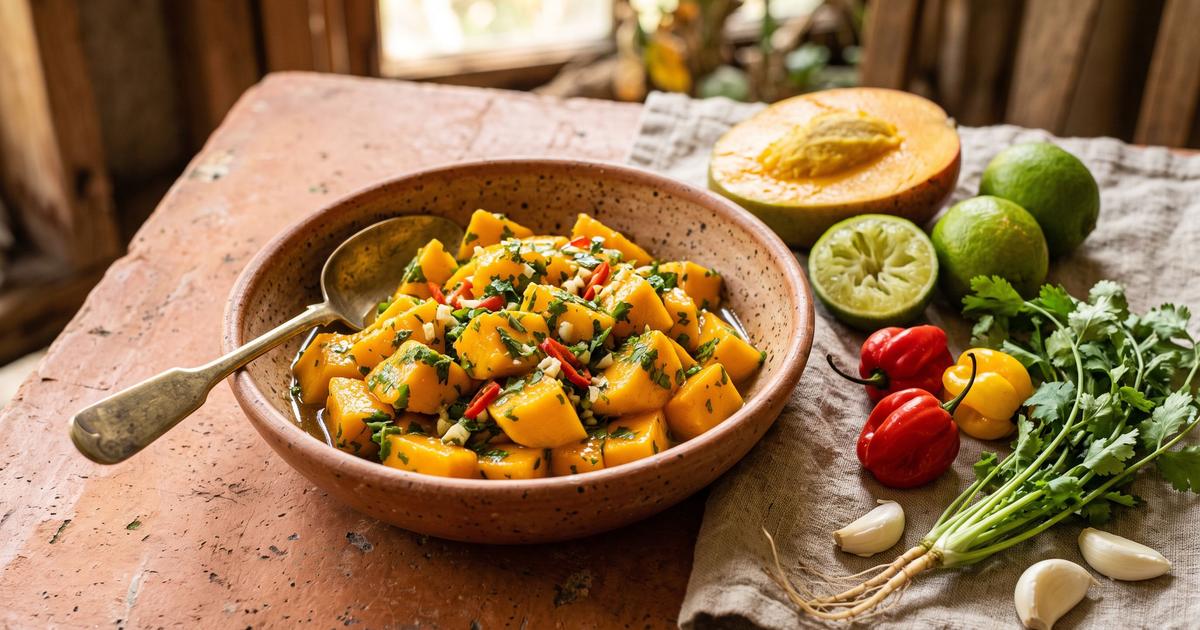
Chow is Trinidad's most democratic snack, sold from coolers outside schools and cricket grounds and made at home the minute the mango tree drops fruit. Any firm fruit can be chowed, green or ripe mango most of all, but also pineapple, plum, and even cucumber, all tossed with garlic, hot pepper, lime, and the wide-leafed herb called chadon beni, or bandania, for which cilantro is the everyday stand-in. It is sweet, sour, salty, and blazing hot all at once, and the salt is usually heavy. Left out, the garlic, lime, and pepper carry it easily, especially once the fruit has sat long enough to make its own dressing. Scotch bonnet is the authentic chile and habanero its close cousin; use a little and taste before adding more. This is fruit as a savory thing, and it belongs to the hottest afternoons of the year.
Ingredients
- 3 cups Frozen mango, thawed but still firm, in bite-size chunks
- 2 tbsp Lime juice
- 2 cloves Garlic, grated
- 1/4 Habanero, seeded and minced
- 1/3 cup Cilantro, chopped
- 1/2 tsp Black peppercorns, ground
Method
- Use fruit that is ripe but still firm, so the chunks hold their shape and stay in pieces rather than turning to pulp when you toss them. Thawed frozen mango works if you drain it and stop short of full softness.
- Grate the garlic to a paste so it disappears into the seasoning instead of leaving raw chunks. Chow is built on raw garlic, and grating keeps it sharp but even.
- In a bowl, combine the mango, lime juice, garlic, minced habanero, cilantro, and ground pepper. Toss well so every piece is coated. A quarter of a habanero is plenty: its heat is fierce, but the fruity, apricot side of it is what actually belongs with mango.
- Let the chow sit 15 minutes at room temperature before eating. This maceration is the point of the dish. The lime and salt-free seasoning pull juice from the fruit and turn it into a loose, spicy dressing the mango then soaks back up.
- Toss once more and serve in cups with a spoon or a toothpick. Eat it the day it is made, while the fruit still has bite.
Nutrition
Estimated per serving: 90 calories, 1 g protein, 3 g fiber, 5 mg sodium. Computed from USDA FoodData Central reference values for the main ingredients. This is an approximation, not a laboratory measurement. How these are computed.
Cost per serving is estimated from US national-average retail prices for cheap staple forms, using BLS dried-bean prices and USDA produce prices. Prices vary by store and season, so treat it as a guide, not a receipt. How this is computed.