Kisiel, Polish Berry Pudding
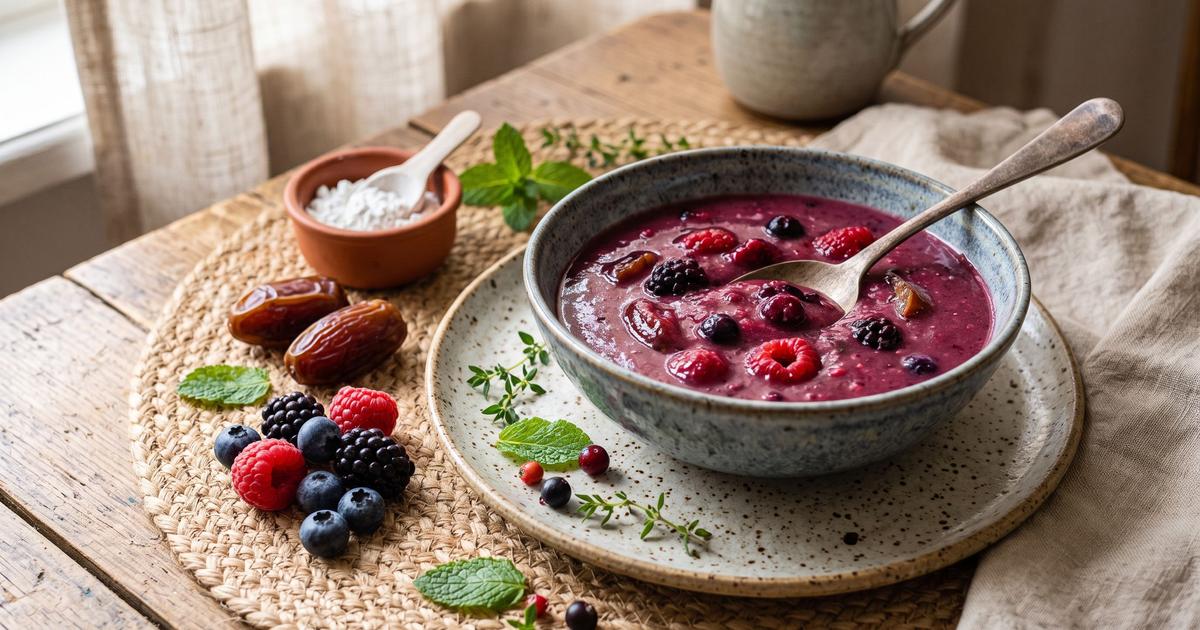
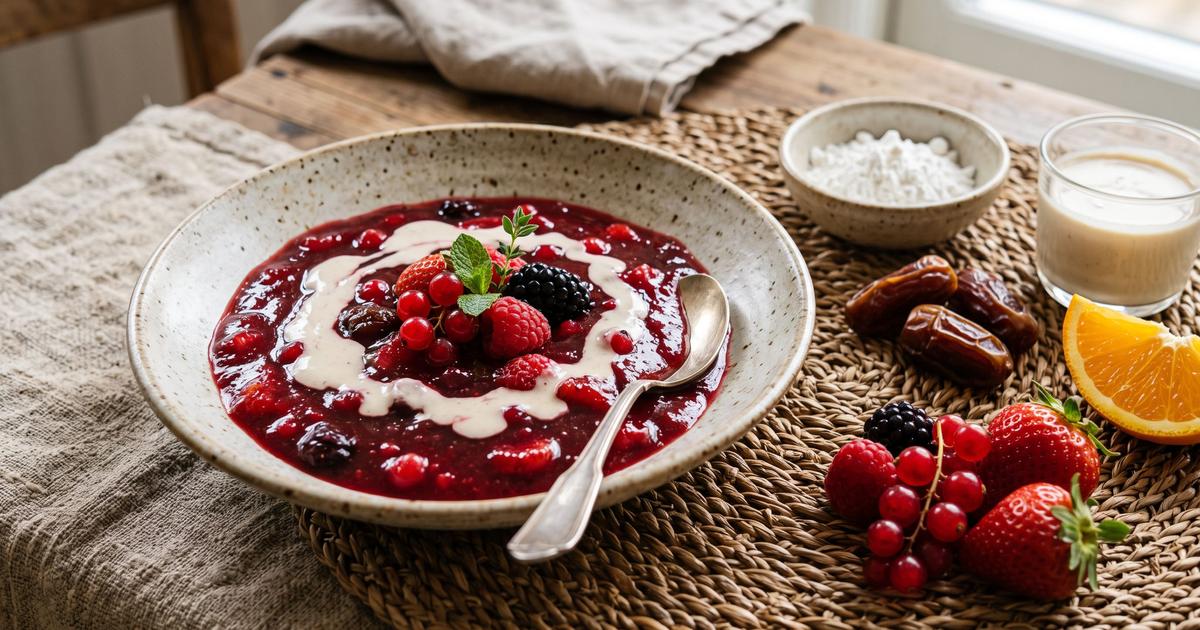
Kisiel is one of the oldest desserts in the Polish and wider Slavic kitchen, a fruit puree thickened just enough to eat with a spoon. It began as soured oat or rye starch, but the sweet berry version most people know today thickens with potato starch, which sets glossy and clear on contact with heat. This one skips the sugar entirely and leans on Medjool dates simmered right into the berries, so the sweetness arrives with fiber attached. Keep the pot at a gentle simmer once the starch goes in, stop the moment it turns clear, and finish with lemon to keep the fruit bright. Serve it cool, loose or firm to your taste.
Ingredients
- 1 lb Frozen mixed berries
- 4 wholes Medjool dates, pitted
- 3 tbsp Potato starch
- 1 tbsp Lemon juice, fresh
- 1/4 tsp Ceylon cinnamon
Method
- Simmer the berries with 2 cups (475 ml) water and the pitted dates until the fruit collapses and the dates soften, about 10 minutes. Cooking the dates right in the fruit lets them melt into the liquid so their sweetness spreads evenly, replacing the sugar the classic leans on.
- Blend the mixture smooth, or press it through a sieve if you want it seedless. A quick blend pulls the date flesh fully into the puree, which is what gives kisiel its body before any starch goes in.
- Stir the potato starch into 3 tablespoons cold water until it is a smooth slurry. Mixing the starch with cold water first prevents the lumps you would get by dumping dry powder into hot fruit.
- Return the puree to a gentle simmer, whisk in the slurry, and cook 1 to 2 minutes until it turns glossy and thick enough to coat a spoon. Potato starch sets almost on contact with heat, so stop as soon as it clears, since overcooking it thins the pudding back out.
- Stir in the lemon juice and cinnamon, pour into cups, and chill until set, about 2 hours. Kisiel firms as it cools into a soft, spoonable pudding, somewhere between a compote and a jelly, and the lemon keeps the berry flavor sharp.
Nutrition
Estimated per serving: 130 calories, 2 g protein, 5 g fiber, 10 mg sodium. Computed from USDA FoodData Central reference values for the main ingredients. This is an approximation, not a laboratory measurement. How these are computed.
Cost per serving is estimated from US national-average retail prices for cheap staple forms, using BLS dried-bean prices and USDA produce prices. Prices vary by store and season, so treat it as a guide, not a receipt. How this is computed.