Fennel and Orange Salad
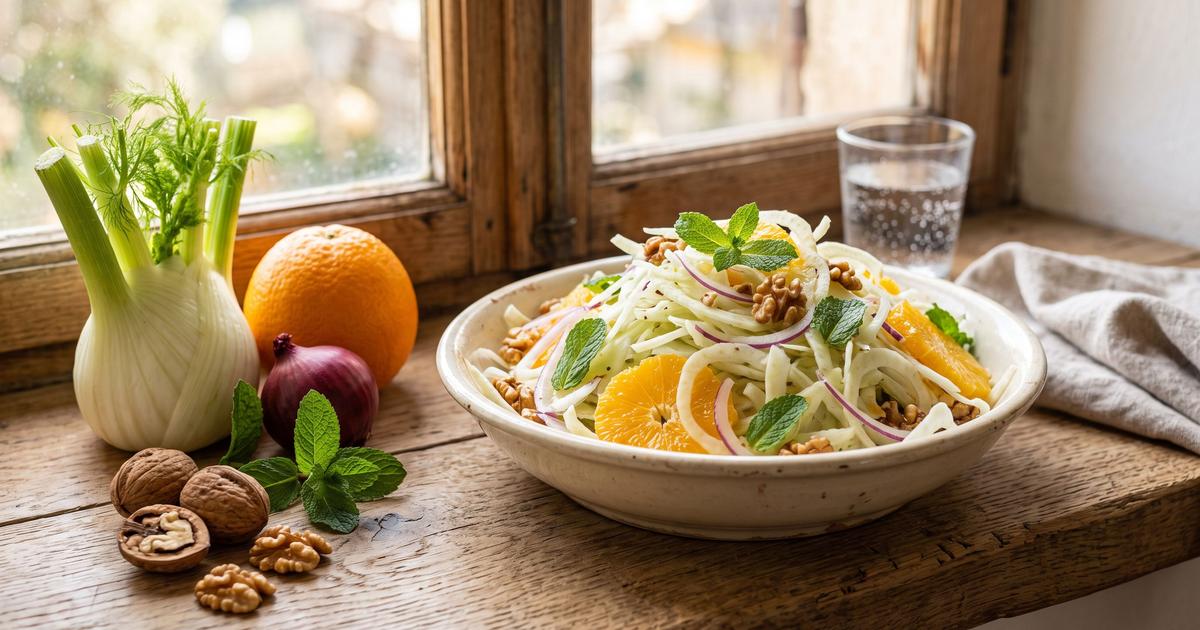
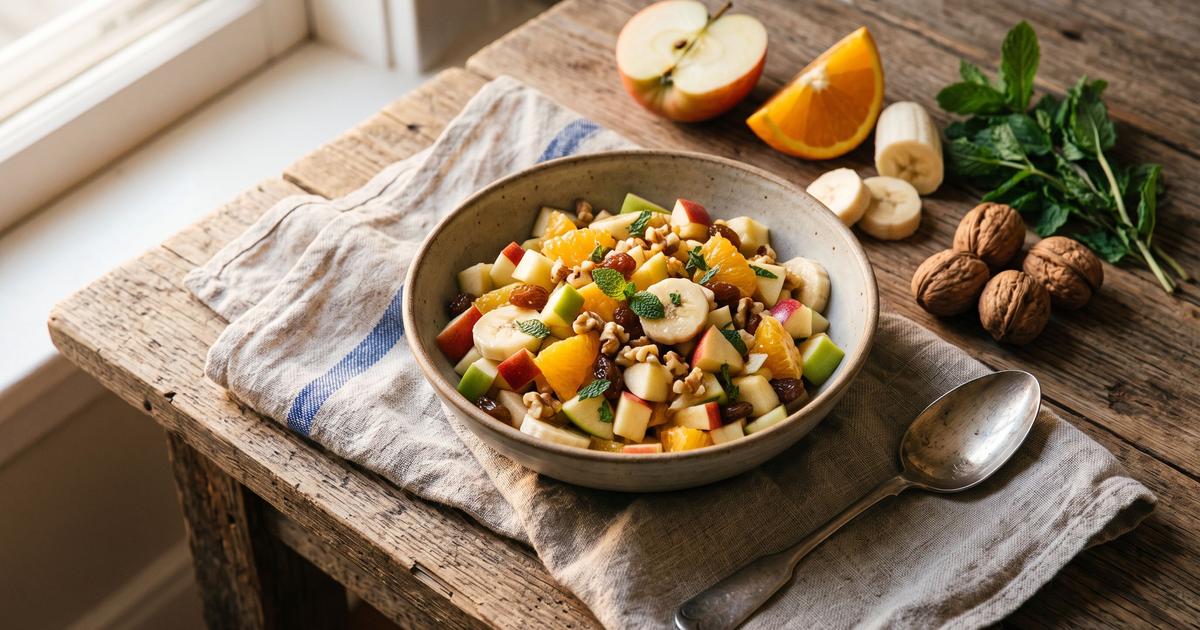
In Sicily this salad shows up in winter, when oranges are at their best and a plate of something raw and sharp cuts through heavy cold-weather food. The classic version leans on olive oil and sometimes olives; take the oil away and the orange juice steps in, its sweetness balancing the vinegar the way a good dressing should. A small handful of toasted walnuts adds the richness and crunch, used as an accent rather than a base. Everything can be prepped ahead and tossed at the last minute.
Ingredients
- 1 Fennel bulb, shaved paper-thin
- 2 Oranges
- 1/4 Red onions, sliced paper-thin
- 1/4 cup Walnuts, toasted and chopped
- 2 tbsp Mint, torn
- 1 tbsp Red wine vinegar
- 1/4 tsp Black peppercorns, freshly ground
Method
- Cut the fennel bulb in half through the root, then shave it as thin as you can with a knife or mandoline. Thin slices soften slightly in the dressing and lose the aggressive raw-anise crunch. Save a few of the feathery fronds.
- Cut the top and bottom off the oranges, stand each on a board, and slice the peel away in strips following the curve. Cut between the membranes to free the segments, working over a bowl to catch the juice. That juice is half the dressing.
- Soak the sliced red onion in cold water for 5 minutes and drain. This pulls out the harsh sulfur bite so the onion reads as sweet and sharp rather than hot.
- Toss the fennel, orange segments, and onion with the caught orange juice, the red wine vinegar, and the black pepper. The sweet juice against the vinegar is what stands in for a salted dressing here.
- Scatter the walnuts, mint, and reserved fronds over the top. Add the nuts last so they stay crisp, and serve right away while the fennel still has snap.
Nutrition
Estimated per serving: 120 calories, 3 g protein, 5 g fiber, 40 mg sodium. Computed from USDA FoodData Central reference values for the main ingredients. This is an approximation, not a laboratory measurement. How these are computed.
Cost per serving is estimated from US national-average retail prices for cheap staple forms, using BLS dried-bean prices and USDA produce prices. Prices vary by store and season, so treat it as a guide, not a receipt. How this is computed.