Cuscuz Nordestino, Brazilian Steamed Cornmeal
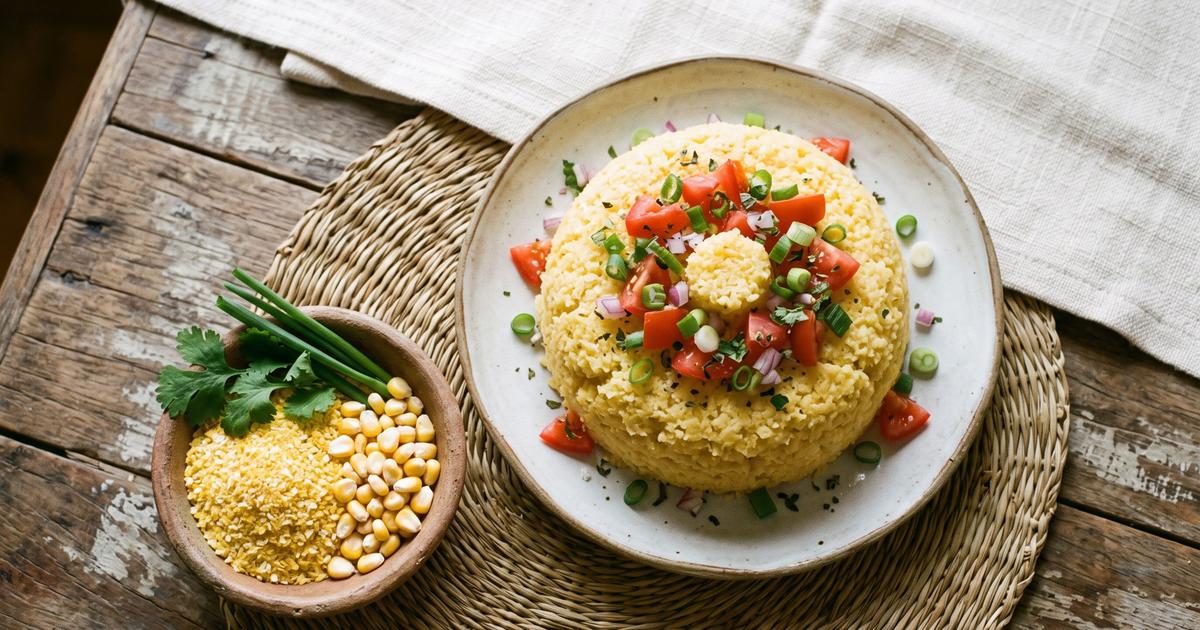
Cuscuz nordestino has nothing to do with the semolina couscous of North Africa. It is moistened cornmeal steamed into a soft, fluffy cake, and across the northeast of Brazil it is what breakfast looks like. Traditional cooks use a cuscuzeira, a two-part steamer, but any steamer basket works. The method is the message: the cornmeal is dampened just until it clumps, rested so the water soaks in, then steamed rather than boiled, which cooks each grain on its own and keeps the cake light instead of gluey. It is often enriched with coconut, left out here because the corn carries it on its own. Top it savory with tomato and scallion or sweet with banana and cinnamon. No salt, no sugar, no oil.
Ingredients
- 2 cups Polenta / coarse cornmeal
- 1 Fresh tomatoe, sliced, to serve
- 2 Scallions, sliced, to serve
- 2 Bananas, sliced, for the sweet version
Method
- Put the cornmeal in a wide bowl. Sprinkle in about 3/4 cup (180 ml) water a little at a time, tossing with your fingers, until the meal is evenly damp and clumps when you squeeze a handful but is not wet or pasty. Too little water and it crumbles; too much and it steams into glue.
- Rest the moistened meal for 10 to 15 minutes so the water hydrates every grain evenly.
- Rub the damp meal between your hands to break the clumps back into loose crumbs, then spoon it loosely, without packing, into a steamer basket lined with a thin cloth or with punctured parchment. Packing it tight makes it dense.
- Steam over boiling water for 15 to 18 minutes, until the cake holds together and looks set. Steam, not a boil, is the whole method: it cooks each grain separately, so the result is fluffy, like couscous, rather than a wet porridge.
- Turn the cake out and cut into wedges. Top savory with sliced tomato and scallion, or sweet with banana and a dusting of cinnamon. It is eaten warm, and leftover wedges re-steam in a minute.
Nutrition
Estimated per serving: 230 calories, 5 g protein, 5 g fiber, 15 mg sodium. Computed from USDA FoodData Central reference values for the main ingredients. This is an approximation, not a laboratory measurement. How these are computed.
Cost per serving is estimated from US national-average retail prices for cheap staple forms, using BLS dried-bean prices and USDA produce prices. Prices vary by store and season, so treat it as a guide, not a receipt. How this is computed.