Cuban Mojo, Garlic and Sour Orange Sauce
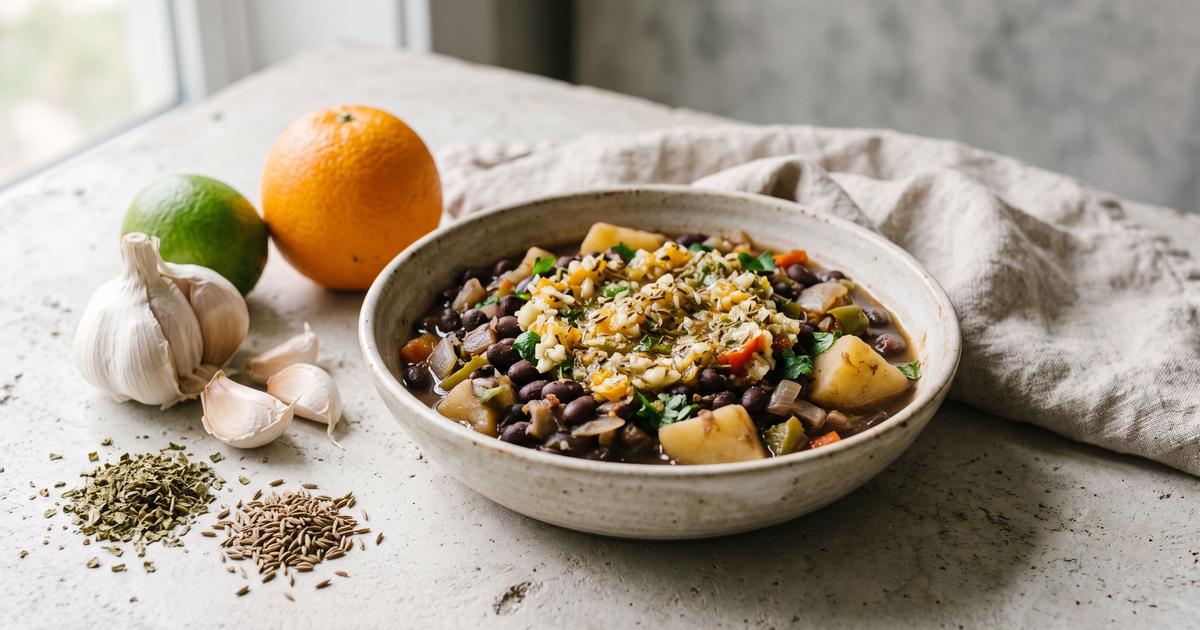
Mojo is the sauce that runs through Cuban cooking, a loud mix of garlic and sour orange used to marinate, dress, and finish nearly everything. The authentic base is naranja agria, the bitter Seville orange; a mix of sweet orange and lime juice stands in for it closely. Classic mojo blooms the garlic by pouring hot oil over it, but heating the citrus instead accomplishes the same thing and leaves the oil out entirely, so what you get is pure garlic, cumin, and bright acid. Toasting and grinding the cumin fresh is worth the minute it takes. Because it is all acid and aromatics, mojo seasons without salt: spoon it over a plain pot of beans, over potatoes, or over roasted vegetables and it wakes the whole plate up. It keeps for a week and sharpens as it sits.
Ingredients
- 8 cloves Garlic, crushed to a paste
- 2 Oranges, juiced
- 3 tbsp Lime juice
- 1 tsp Cumin seed, toasted and ground
- 1 tsp Dried oregano
- 1/2 tsp Black peppercorns, ground
- 2 tbsp Cilantro, chopped
Method
- Pound the garlic with the cumin and oregano into a rough paste, in a mortar or under the flat of a knife. Crushing rather than chopping releases the garlic's oils and starts to mellow its raw edge.
- Warm the orange and lime juice just to the edge of a simmer, then pour it over the garlic paste. Traditional mojo pours hot oil over the garlic to bloom it; hot citrus does the same job and keeps the sauce oil-free, waking the garlic without cooking it to bitterness.
- Stir in the black pepper and cilantro and let it steep at least 15 minutes so the flavors marry.
- Spoon it over black beans, boiled or roasted potatoes, or vegetables, wherever you want a bright, garlicky hit in place of salt. It keeps about a week in the fridge, and the acid only deepens it.
Nutrition
Estimated per serving: 30 calories, 1 g protein, 1 g fiber, 5 mg sodium. Computed from USDA FoodData Central reference values for the main ingredients. This is an approximation, not a laboratory measurement. How these are computed.
Cost per serving is estimated from US national-average retail prices for cheap staple forms, using BLS dried-bean prices and USDA produce prices. Prices vary by store and season, so treat it as a guide, not a receipt. How this is computed.