Bissara, Moroccan Fava Puree
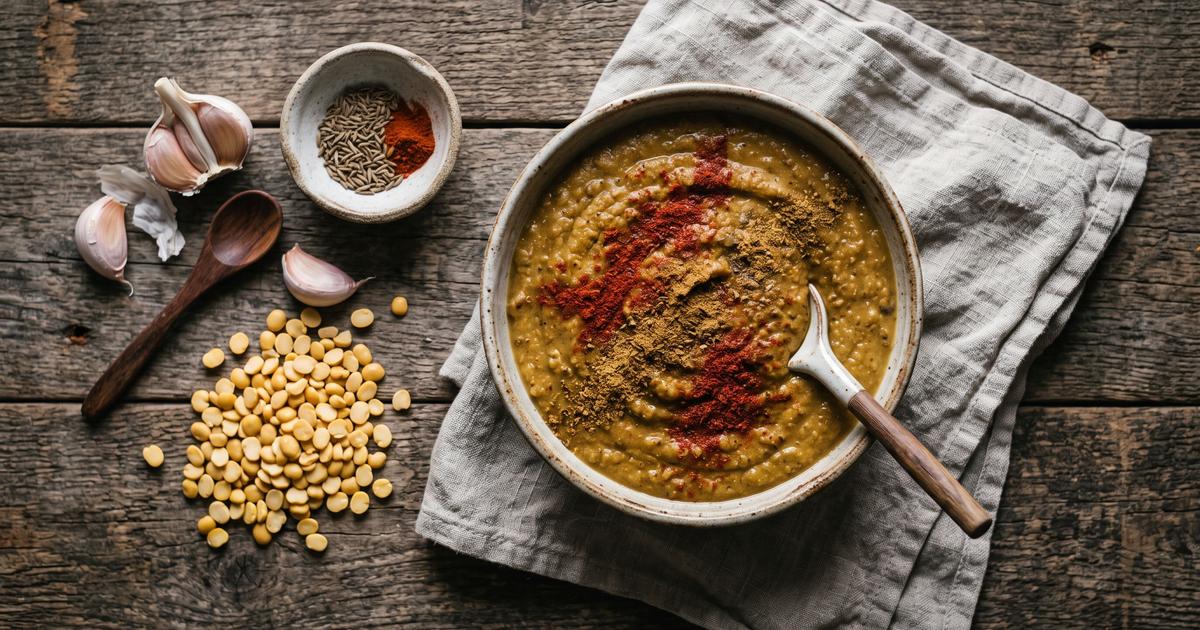
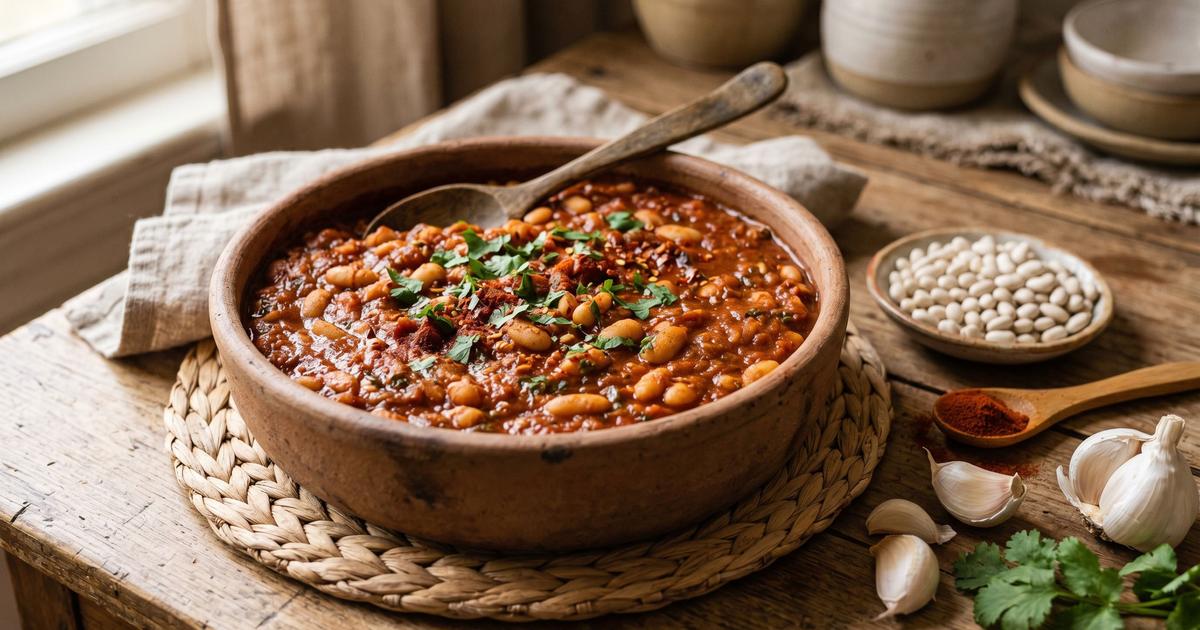
Bissara is Moroccan winter food, a hot bowl of pureed dried favas sold from street stalls before dawn and ladled thick into bowls at home. Cooking whole garlic cloves right in the pot mellows them into sweetness, so the puree tastes deep without needing much beyond cumin and lemon. Keep it looser than seems right while it is hot, because it firms as it sits. A dusting of paprika and cumin over the top does the finishing work that a drizzle of oil usually claims. Eat it with bread for breakfast or a light supper.
Ingredients
- 1 1/2 cups Fava beans, dried and split, peeled, soaked overnight and drained
- 4 cloves Garlic, peeled, left whole
- 1 1/2 tsp Cumin seed, ground, plus more to finish
- 1 tsp Sweet paprika, to finish
- 1/4 tsp Cayenne, to finish
- 2 tbsp Lemon juice, fresh
Method
- Put the soaked favas and whole garlic cloves in a pot with water to cover by 2 inches (5 cm). Bring to a boil, skim the foam, then simmer for 45 to 60 minutes, until the beans break apart at a touch. The garlic softens and sweetens in the pot, losing its raw bite.
- Blend the beans and garlic smooth with enough of the cooking water to make a pourable puree, looser than you think you want. Bissara thickens sharply as it cools, and a stiff puree turns to paste on the plate.
- Return the puree to low heat and stir in the ground cumin and lemon juice. Cumin is the defining flavor here, so add it with a heavy hand.
- Serve hot in bowls. Dust the surface with paprika, more cumin, and the cayenne. In Morocco a well of olive oil goes in the center, and the spice dusting plus the lemon are what carry the bowl in its place.
- Thin any leftovers with hot water when you reheat them, since the puree sets firm in the fridge. It keeps for four days and doubles easily for the week.
Nutrition
Estimated per serving: 195 calories, 12 g protein, 9 g fiber, 25 mg sodium. Computed from USDA FoodData Central reference values for the main ingredients. This is an approximation, not a laboratory measurement. How these are computed.
Cost per serving is estimated from US national-average retail prices for cheap staple forms, using BLS dried-bean prices and USDA produce prices. Prices vary by store and season, so treat it as a guide, not a receipt. How this is computed.