Vinagrete, Brazilian Tomato and Onion Salad
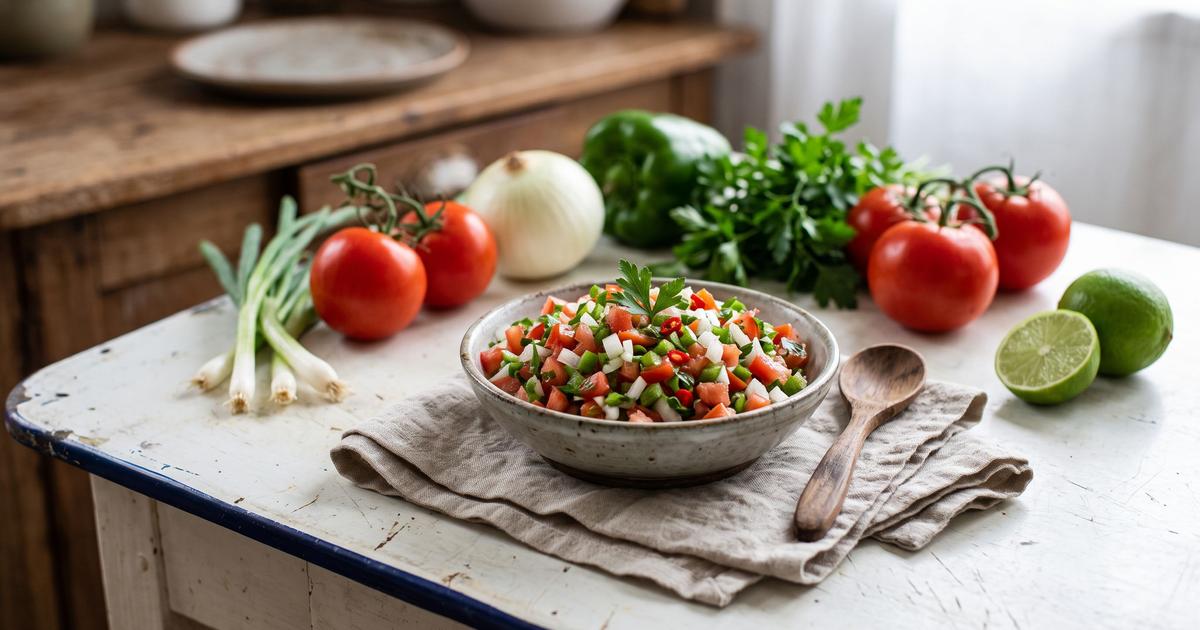
Vinagrete, also called molho a campanha, is the fresh chopped salad that shows up at every Brazilian barbecue, spooned over grilled food and mixed into rice and beans. It is essentially a loose salsa of raw summer vegetables held together by vinegar, and stripping out the oil that some cooks add changes almost nothing, because the point was always the sharp, crunchy contrast to rich grilled food. The one technique worth the extra ten minutes is soaking the raw onion in cold water, which tames its bite so it reads sweet rather than sharp, the same trick that lets the dish skip salt. Use the ripest tomatoes you can find, seed them so the salad stays crisp, and let it rest a few minutes before serving so everything mingles.
Ingredients
- 3 Fresh tomatoes, ripe, seeded and diced small
- 1 Red onion, diced small
- 1 Bell pepper, green, diced small
- 2 Scallions, thinly sliced
- 1/2 cup Flat-leaf parsley, chopped
- 3 tbsp Red wine vinegar
- 1 tbsp Lime juice, fresh
- 1/4 tsp Black peppercorns, freshly ground
Method
- Soak the diced red onion in cold water for 10 minutes while you chop everything else, then drain. A cold soak pulls out the raw onion's harsh sulfur bite, leaving the sweetness, which matters more here than in a cooked dish because the onion stays raw.
- Seed the tomatoes before dicing. The jelly and seeds are where the water is, and draining them keeps the salad crisp instead of soupy after it sits.
- Combine the tomatoes, drained onion, bell pepper, scallions, and parsley in a bowl. Pour over the red wine vinegar and lime juice and grind in the black pepper. The two acids do all the seasoning that oil and salt would in a standard vinaigrette.
- Toss and let it stand 10 minutes before serving so the vegetables trade flavors and the vinegar softens the pepper. Serve it cool, spooned over grilled vegetables, beans, or rice, the way it tops a plate at a Brazilian churrasco.
Nutrition
Estimated per serving: 45 calories, 2 g protein, 2 g fiber, 10 mg sodium. Computed from USDA FoodData Central reference values for the main ingredients. This is an approximation, not a laboratory measurement. How these are computed.
Cost per serving is estimated from US national-average retail prices for cheap staple forms, using BLS dried-bean prices and USDA produce prices. Prices vary by store and season, so treat it as a guide, not a receipt. How this is computed.