Tuscan White Bean and Kale Soup
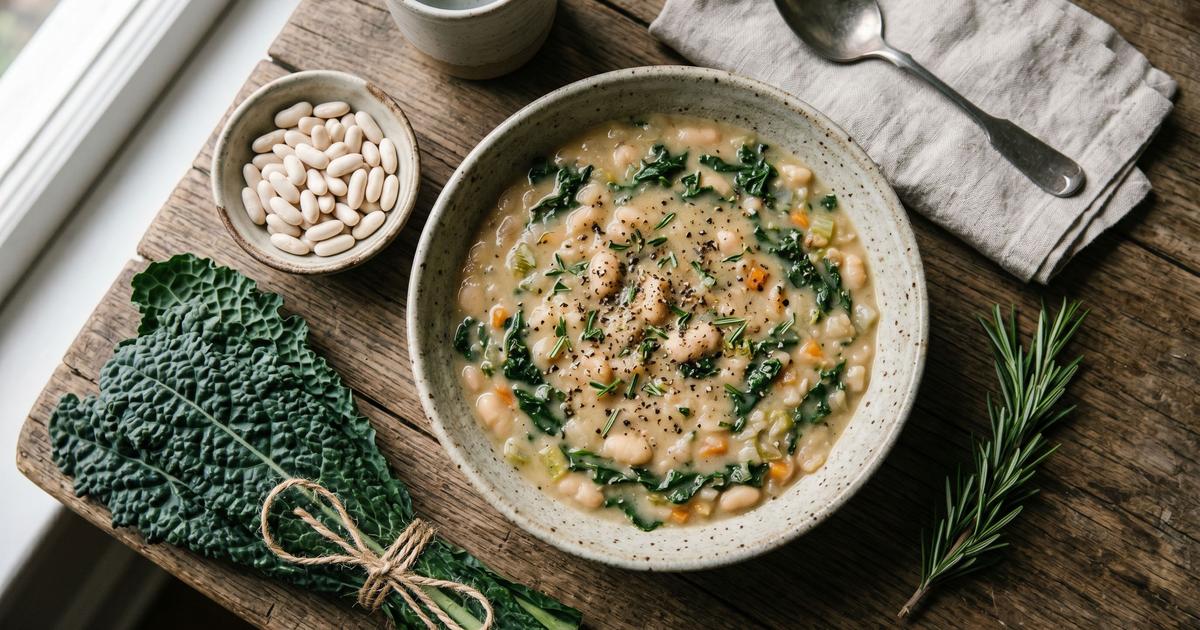
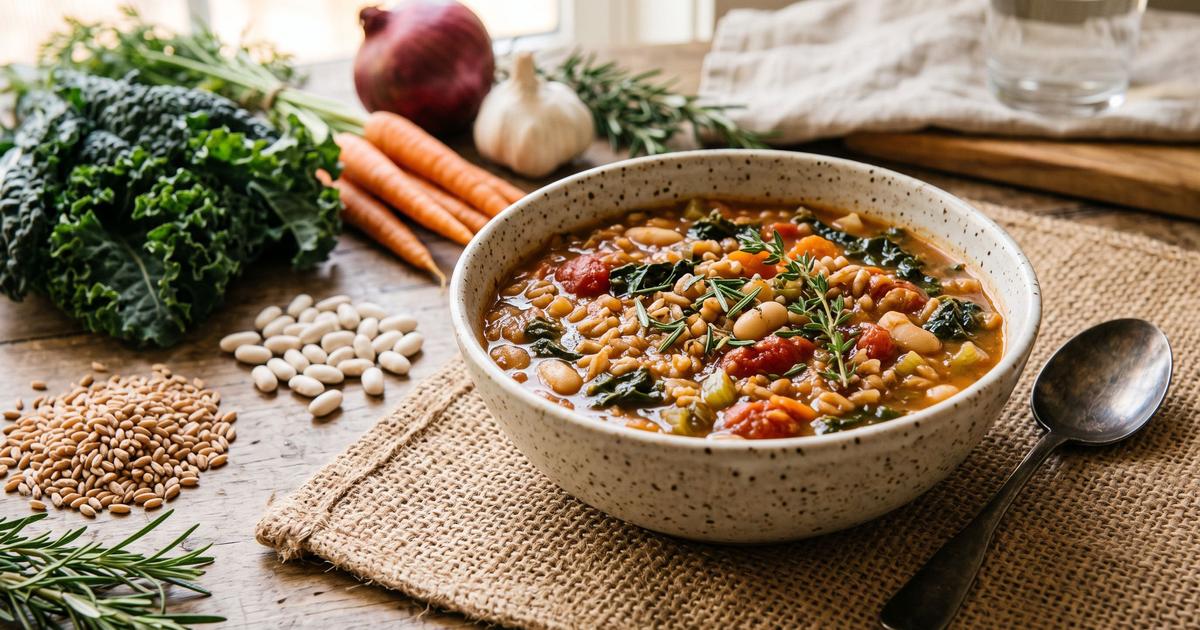
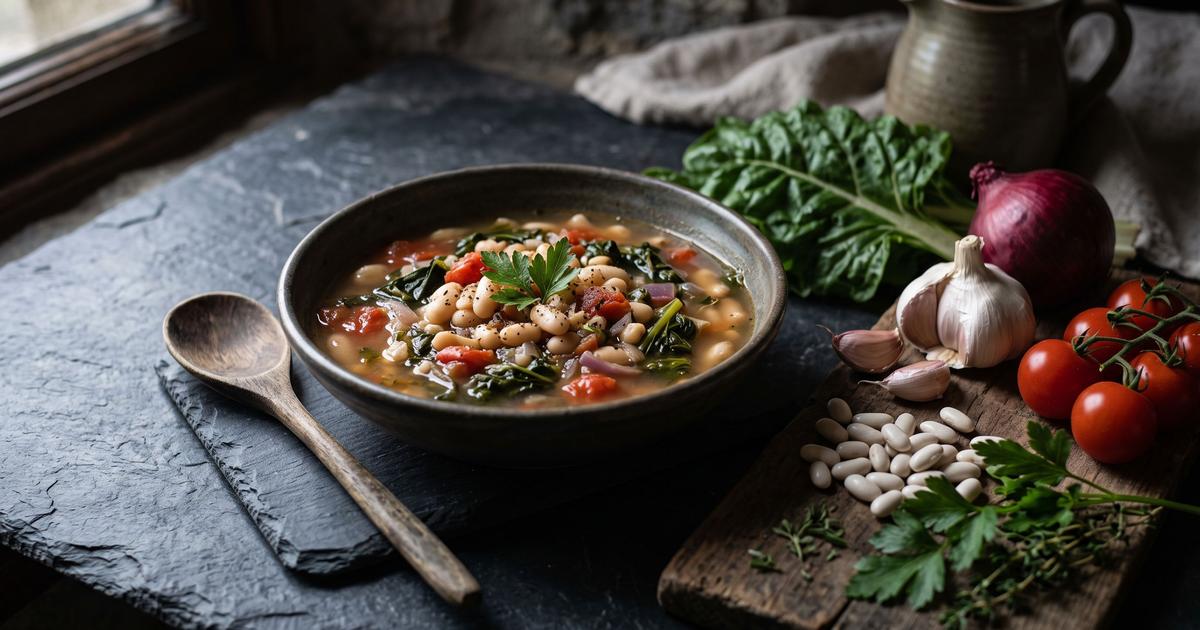
Ribollita, the Tuscan bean and vegetable soup, is thickened with day-old bread and finished with oil. This version blends a couple of ladles of the beans to get the same silken body, and leans on a long, slow soffritto sweated in water for depth. A hard cabbage like Tuscan kale holds up to the simmer.
Ingredients
- 1 Yellow onion, diced
- 2 Carrots, diced
- 2 stalks Celery, diced
- 4 cloves Garlic, sliced
- 1 sprig Rosemary
- 4 leafs Sage
- 2 Bay leaves
- 1/2 tsp Red pepper flakes
- 1 cup Canned crushed tomatoes
- 3 cups Cannellini beans, cooked, or two 15 oz cans, drained
- 1 tsp no-salt vegetable bouillon
- 1 bunch Kale, stemmed and torn
- 1 tbsp Red wine vinegar
- 1/2 tsp Black peppercorns, freshly ground
Method
- Sweat the onion, carrot, and celery in a large pot with 1/4 cup (60 ml) water over medium heat until soft and beginning to stick, about 10 minutes. Add a splash of water whenever the pot looks dry. This slow soffritto is the whole base, so give it the time.
- Add the garlic, rosemary, sage, bay leaves, and red pepper flakes. Cook for 1 minute, until fragrant.
- Stir in the crushed tomatoes and cook for 3 minutes, until they darken slightly and lose their raw smell.
- Add 1 cup of the beans, the no-salt bouillon, and 5 cups (1.2 L) water. Simmer for 15 minutes to build the broth.
- Scoop out about 2 cups of the soup, beans and liquid, and blend it smooth, then stir it back in. This is what thickens the pot in place of the traditional bread. Add the remaining beans.
- Fold in the kale and simmer until tender, 8 to 10 minutes. Fish out the bay leaves and the rosemary stem.
- Turn off the heat and stir in the red wine vinegar and black pepper. Taste. The vinegar is doing the job salt usually does, so add a few more drops if the soup tastes flat. It is better the next day.
Nutrition
Estimated per serving: 245 calories, 15 g protein, 13 g fiber, 140 mg sodium. Computed from USDA FoodData Central reference values for the main ingredients. This is an approximation, not a laboratory measurement. How these are computed.
Cost per serving is estimated from US national-average retail prices for cheap staple forms, using BLS dried-bean prices and USDA produce prices. Prices vary by store and season, so treat it as a guide, not a receipt. How this is computed.