Som Tam
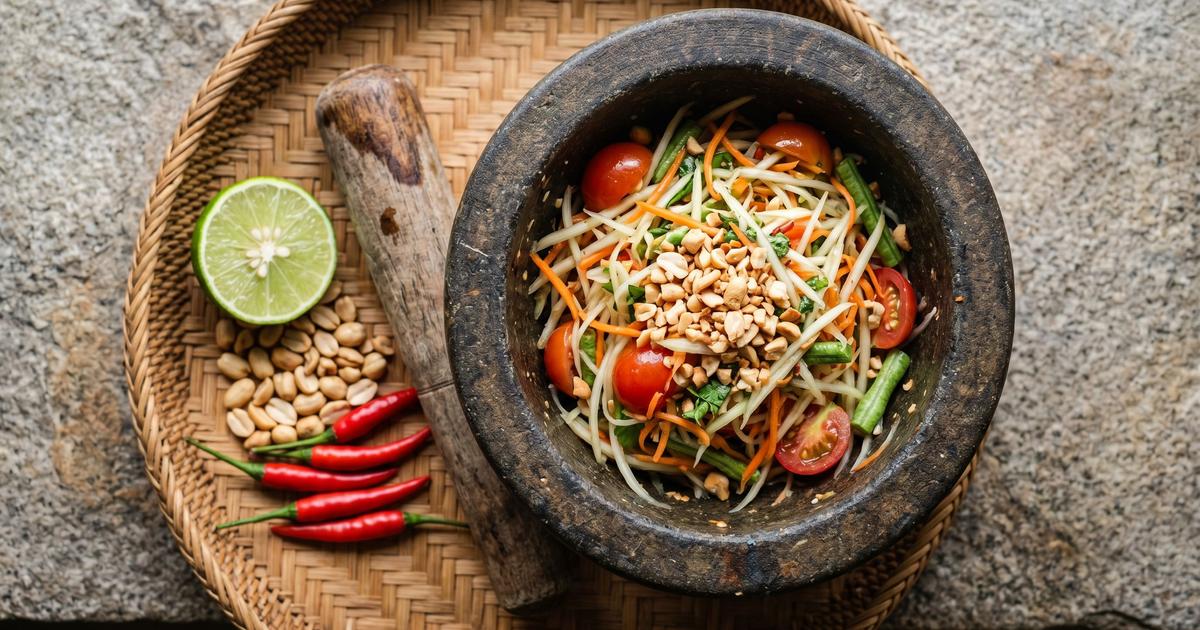
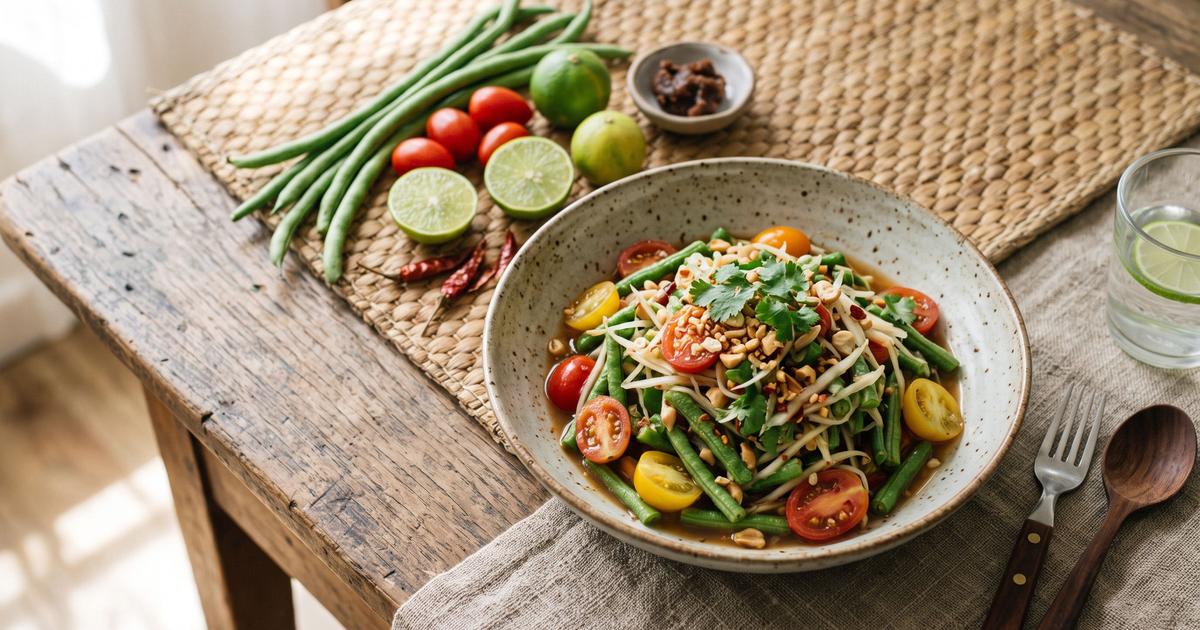
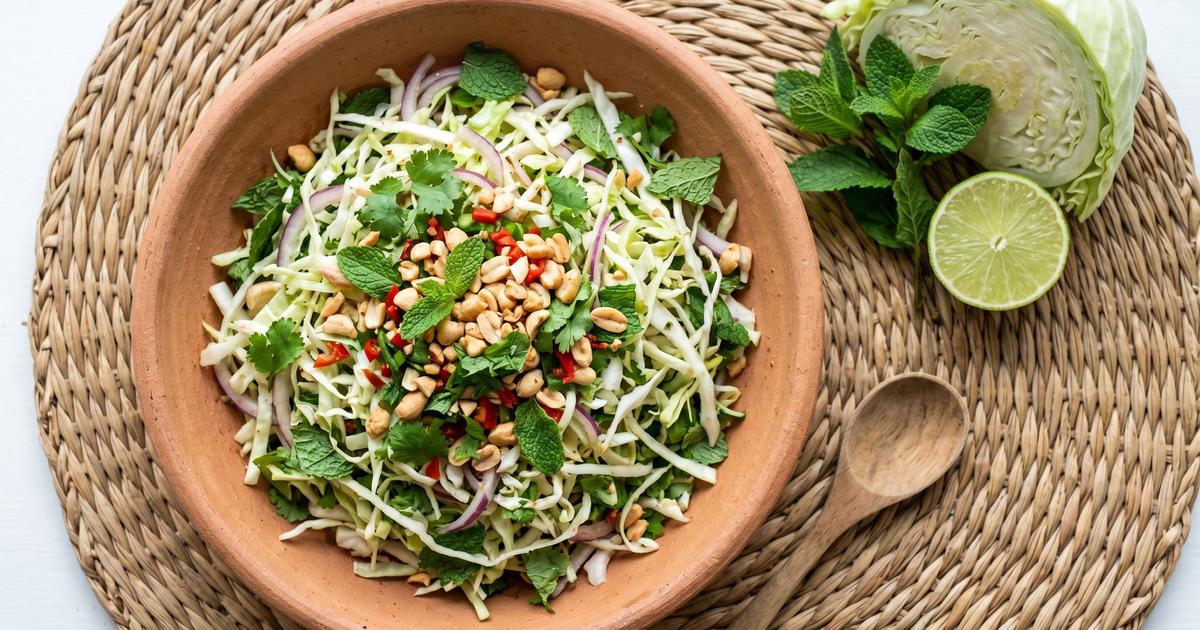
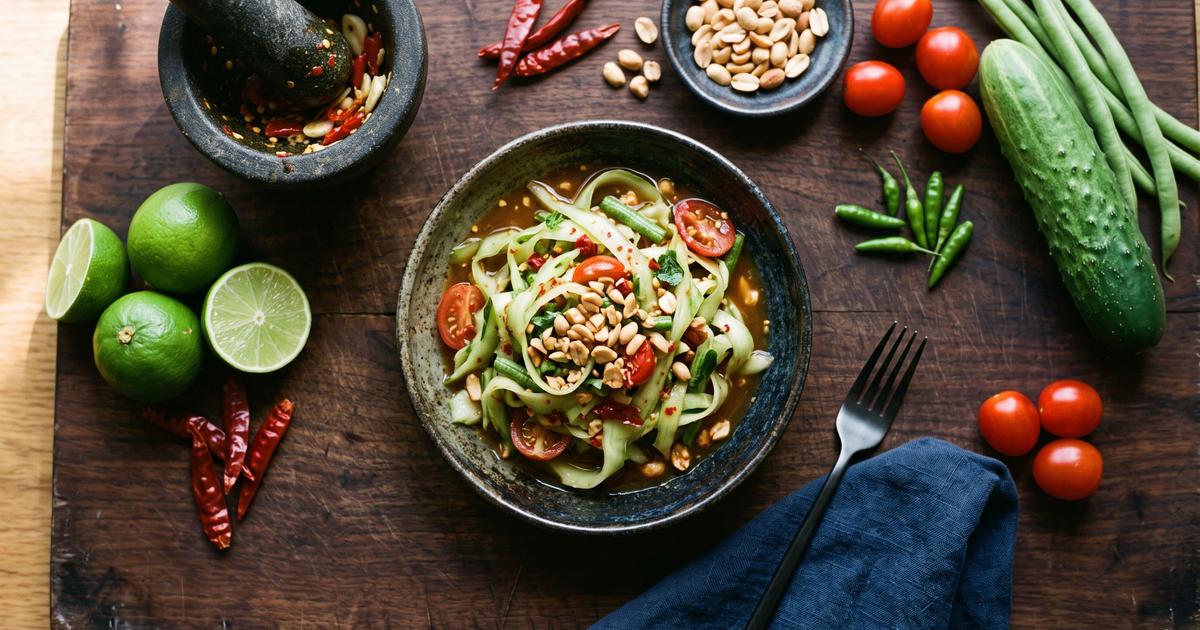
Som tam gets its character from bruising, not tossing: a mortar and pestle crush garlic and chile into the vegetables so their own juices carry the seasoning, which is how the salad stays vivid without the fish sauce, palm sugar, and fistful of salt most versions lean on. Pounding the green beans and tomato first releases their liquid to form the base of the dressing, tamari stands in for the sea-forward funk fish sauce usually supplies, and a single mashed date rounds out the sourness without tipping the salad sweet. If green papaya isn't sold nearby, shred equal parts cucumber and green cabbage instead: the crunch and neutrality carry the same dressing just as well.
Ingredients
- 3 cups Green papaya, peeled and shredded
- 1 cup Carrots, shredded
- 1/2 cup Green beans, cut into 1-inch pieces
- 1 cup Fresh tomatoes, cut into wedges
- 3 cloves Garlic, smashed
- 2 pieces Thai bird chile, stemmed
- 1/4 cup Peanuts, dry-roasted and roughly chopped
- 2 pieces Limes, juiced
- 1 tbsp Low-sodium tamari
- 1 piece Medjool dates, pitted and mashed with 1 tbsp water
- 2 tbsp Cilantro, chopped
For no added salt, leave out the tamari. More lime and chile keep the dressing sharp and balanced.
Method
- Pound the garlic and chiles in a mortar (or crush with the flat of a knife in a bowl) into a rough, fragrant paste, about 30 seconds. Bruising instead of mincing lets the oils release slowly, so the heat builds through the salad instead of hitting all at once.
- Add the green beans and tomato wedges. Pound and press just until the beans dent and the tomato skins split. The juice that escapes becomes the base of the dressing, standing in for the fish sauce most versions of this salad use.
- Stir the lime juice, tamari, and mashed date into the mortar. Taste: it should hit sour first, faintly savory, and only just sweet. Add more lime before reaching for anything else.
- Add the shredded papaya and carrot in two batches, pounding lightly and folding between additions so the dressing coats every strand instead of pooling at the bottom of the bowl.
- Turn the salad out onto a plate, scatter the peanuts and cilantro over the top, and serve within the hour. Without salt to draw out and hold moisture, the vegetables weep fast once dressed, so pound this to order rather than ahead of time.
Nutrition
Estimated per serving: 160 calories, 5 g protein, 5 g fiber, 150 mg sodium. Computed from USDA FoodData Central reference values for the main ingredients. This is an approximation, not a laboratory measurement. How these are computed.
Cost per serving is estimated from US national-average retail prices for cheap staple forms, using BLS dried-bean prices and USDA produce prices. Prices vary by store and season, so treat it as a guide, not a receipt. How this is computed.