Salata Baladi, Egyptian Chopped Salad
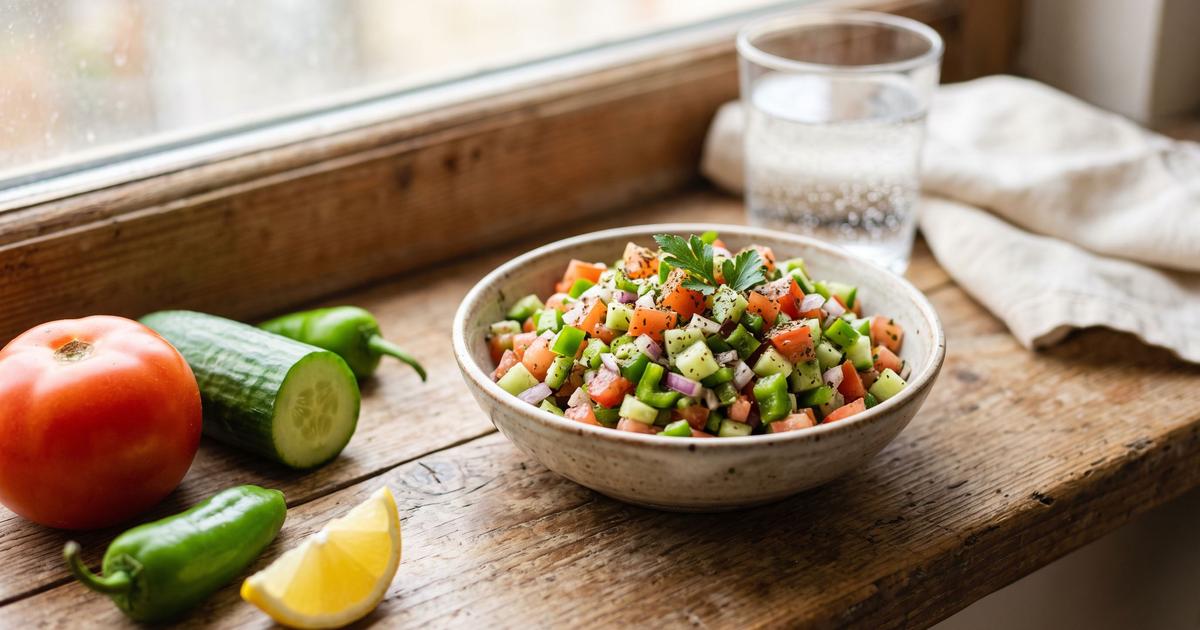
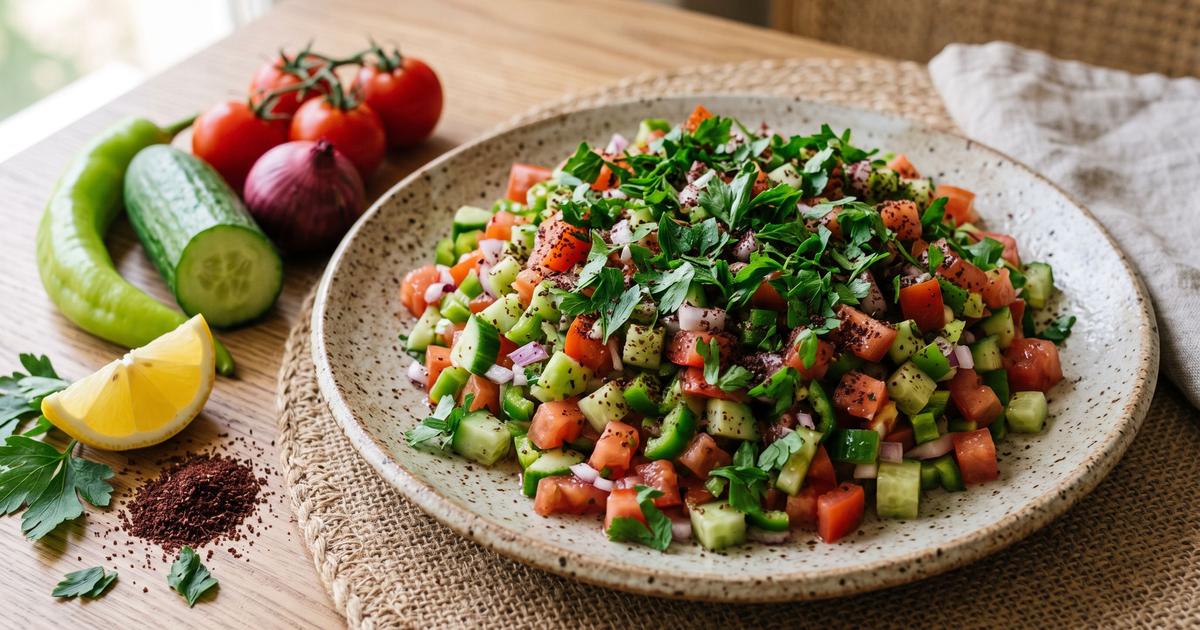
Salata baladi means country salad, and it is the plate of chopped vegetables that turns up next to almost every Egyptian meal. It is nothing more than tomato, cucumber, green pepper, and onion cut small and dressed with lemon, but the details carry it: a soak to tame the raw onion, cumin and dried mint for the specifically Egyptian scent, and enough lemon to season it with no salt or oil at all. Letting it rest a few minutes draws out the vegetables' own juices into a light brine. It is a fresh, sharp counterweight to a bowl of ful or lentils.
Ingredients
- 3 wholes Fresh tomatoes, diced small
- 1 whole Cucumber, diced small
- 1 whole Bell peppers, green, diced small
- 1/2 whole Red onions, finely diced
- 1/2 cup Flat-leaf parsley, chopped
- 3 tbsp Lemon juice
- 1/2 tsp Cumin seed, toasted and ground
- 1 tsp Dried mint
- 1/4 tsp Black peppercorns, freshly ground
Method
- Dice the tomato, cucumber, pepper, and onion into small, even pieces, roughly a quarter inch. Salata baladi is a fine-cut salad, not a wedge one, and the small dice matters: it lets every forkful carry all four vegetables and lets the lemon coat far more surface than big chunks would.
- Soak the diced onion in cold water for 5 minutes, then drain. This quick rinse pulls out the harsh sulfur bite so the raw onion reads sweet and sharp rather than aggressive, without needing to be cooked.
- Rub the dried mint between your palms as you add it, along with the parsley, cumin, and black pepper. Crushing the dried mint just before it goes in releases its oils, and dried mint, not fresh, is the traditional and stronger choice for this salad.
- Pour over the lemon juice and toss well. With no salt and no oil, the lemon is the entire dressing, so use all of it and let the salad sit for 10 minutes; the vegetables weep a little juice that mixes with the lemon into a light brine.
- Toss once more before serving and taste for lemon. Serve cold, alongside beans or grains, where its acid and crunch cut through anything heavier on the plate.
Nutrition
Estimated per serving: 55 calories, 2 g protein, 3 g fiber, 20 mg sodium. Computed from USDA FoodData Central reference values for the main ingredients. This is an approximation, not a laboratory measurement. How these are computed.
Cost per serving is estimated from US national-average retail prices for cheap staple forms, using BLS dried-bean prices and USDA produce prices. Prices vary by store and season, so treat it as a guide, not a receipt. How this is computed.