Radieschensalat, German Radish and Chive Salad
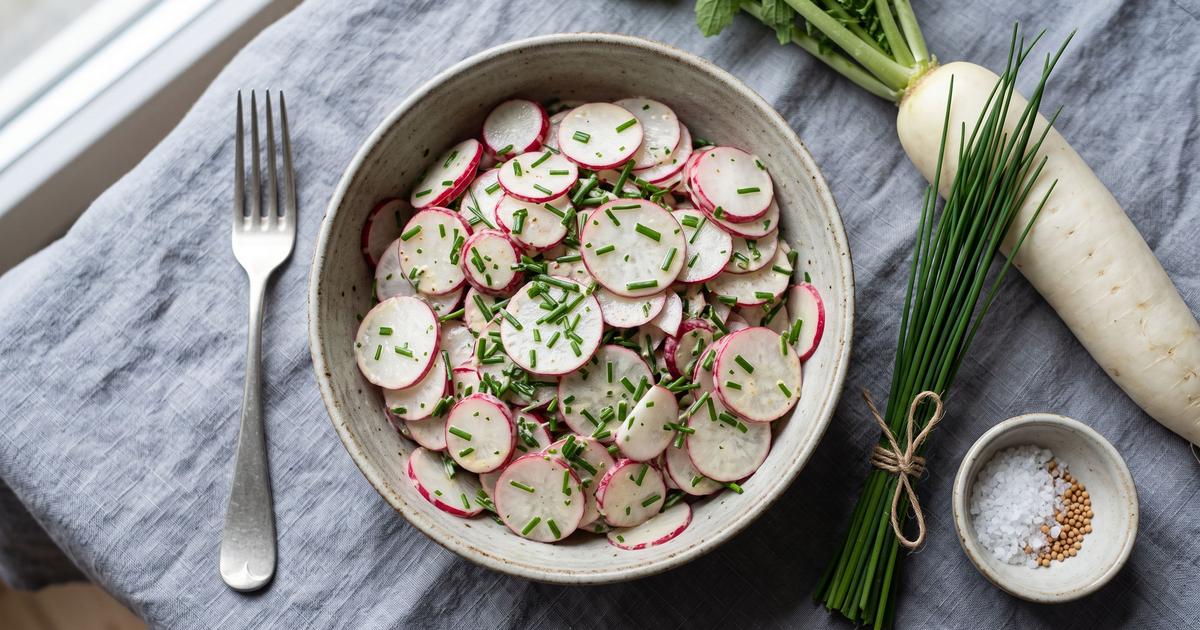
The German breakfast and supper table almost always has a bowl of something raw and sharp on it, and in spring that is often Radieschensalat. Radishes are cheap, crisp, and peppery enough to carry a dish with no salt. Sliced paper-thin and dressed in a light mustard and plant-yogurt dressing, they soften just enough during a short rest to soak up the coating and lose their raw bite. Chives add a second, gentler allium note, and black pepper does the seasoning. It takes minutes, wants no oil, and is best eaten the day it is made, while the radishes still snap.
Ingredients
- 1 lb Radishes, trimmed and sliced paper-thin
- 1/3 cup Plain plant yogurt
- 1 tsp Dijon mustard
- 2 tsp White wine vinegar
- 1/4 tsp Black peppercorns, freshly ground
- 3 tbsp Chives, snipped
Method
- Slice the radishes as thin as you can, ideally on a mandoline. Thin slices are the point: they bend and soak up dressing where thick coins would just rattle around, and they take the peppery edge off a raw radish.
- Whisk the yogurt, mustard, vinegar, and black pepper together in a bowl until smooth. The mustard does two jobs, adding its own sharpness and emulsifying the dressing so it clings with no oil at all.
- Fold the radishes through the dressing and let them sit for 10 minutes before serving. The short rest is what makes the salad: the slices release a little water, soften slightly, and mellow from sharp to gently peppery, while the dressing thins to just the right coat.
- Stir in most of the chives, then scatter the rest over the top. Chives echo the radish's mild bite without cooking, and a salad this plain leans on them and the pepper to carry it in place of salt. Serve cold, the same day.
Nutrition
Estimated per serving: 70 calories, 3 g protein, 2 g fiber, 90 mg sodium. Computed from USDA FoodData Central reference values for the main ingredients. This is an approximation, not a laboratory measurement. How these are computed.
Cost per serving is estimated from US national-average retail prices for cheap staple forms, using BLS dried-bean prices and USDA produce prices. Prices vary by store and season, so treat it as a guide, not a receipt. How this is computed.