Poached Figs in Orange and Cinnamon
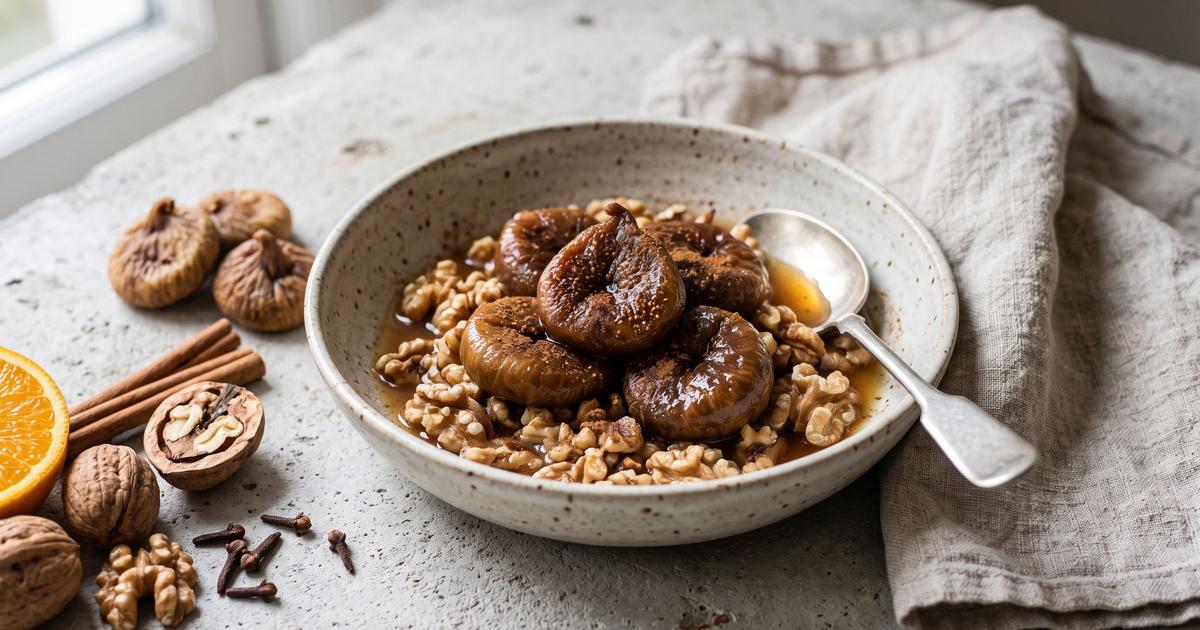
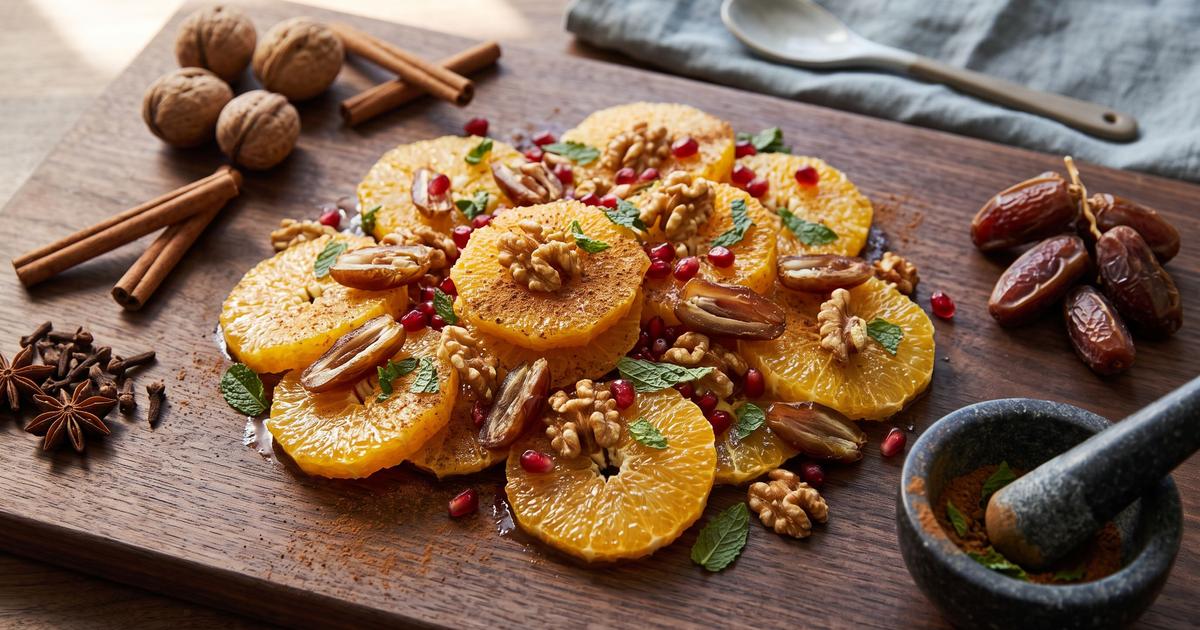
Poaching dried fruit in spiced juice is an old Mediterranean way to make a dessert out of the pantry in the cold months, when fresh fruit is scarce and figs, dates, and prunes fill the shelf. Here dried figs soften in orange juice scented with cinnamon and clove, then the juice is boiled down into a glossy syrup, no sugar required, since the orange and figs bring all the sweetness. Toasted walnuts are stirred in at the end for the richness and crunch that keep it from being one-note. It is the kind of dessert that improves overnight, so make it ahead, keep it in the fridge, and spoon it over oats or plant yogurt if any survives to breakfast.
Ingredients
- 12 Dried figs, stems trimmed
- 2 Oranges, 1.5 cups juice plus a strip of zest
- 1 stick cassia cinnamon
- 3 Cloves
- 1/2 Lemons, juiced
- 1/3 cup Walnuts, toasted and chopped
Method
- Warm the orange juice, a strip of orange zest, the cinnamon stick, and cloves in a small pot until it simmers. Whole spices steeped in the juice perfume it far more gently than ground spice would, and the sugars in the orange are the only sweetener the dish uses.
- Add the figs, cover, and poach gently for 15 to 20 minutes until they are plump and soft. Dried figs are dense and need the time to draw the liquid back into their centers; rushing leaves them chewy.
- Lift out the figs and boil the liquid hard for about 5 minutes until it reduces to a light syrup. This concentrates the orange and spice into a glaze without any added sugar to thicken it.
- Stir the lemon juice into the syrup off the heat. A little acid keeps the reduced juice from tasting flat and one-note.
- Spoon the figs and syrup over the toasted walnuts and serve warm or cold. The walnuts add the fat and crunch that turn poached fruit into a dessert, and a night in the fridge only deepens it.
Nutrition
Estimated per serving: 210 calories, 4 g protein, 7 g fiber, 8 mg sodium. Computed from USDA FoodData Central reference values for the main ingredients. This is an approximation, not a laboratory measurement. How these are computed.
Cost per serving is estimated from US national-average retail prices for cheap staple forms, using BLS dried-bean prices and USDA produce prices. Prices vary by store and season, so treat it as a guide, not a receipt. How this is computed.