Kachumbari
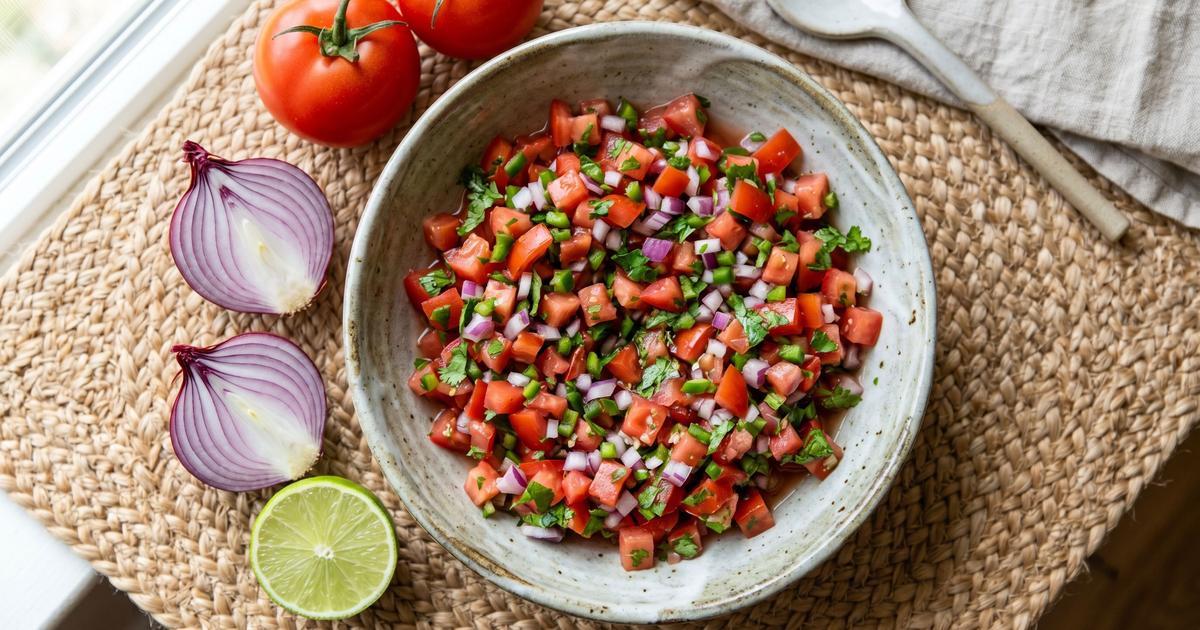
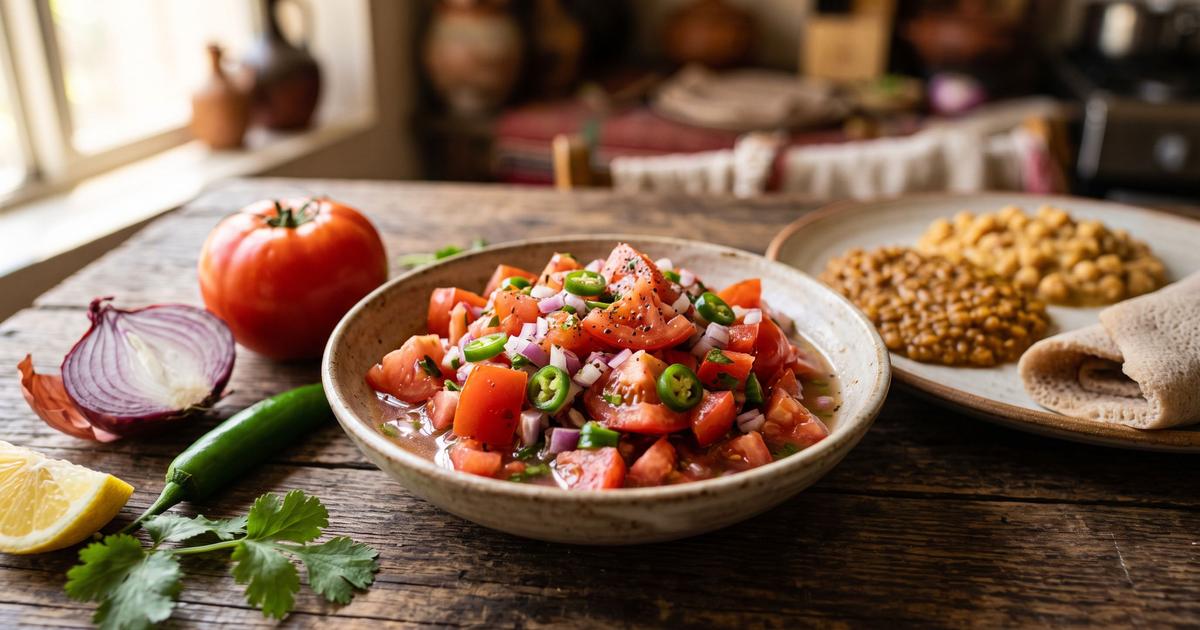
Kachumbari is the everyday salad of Kenyan and Tanzanian kitchens, a plate of diced tomato and onion that shows up next to pilau, ugali, or grilled skewers, cutting through anything rich with sharp acid and heat. Classic versions salt the onion to soften its raw edge before mixing; the technique that does the same job without salt is macerating the sliced onion in lemon juice first, since the acid pulls water out of the onion's cells the way salt does and mellows the bite in minutes. Serve it the day it is made. Tomatoes keep throwing off water as they sit, and by the next day the crunch is gone and the balance goes with it.
Ingredients
- 4 Fresh tomatoes, diced small, juice and seeds kept
- 1 Red onion, halved and sliced paper thin
- 1 Serrano, minced
- 1/4 cup Cilantro, chopped
- 1 Lemon, juiced
Method
- Dice the tomatoes into small, even pieces, about 1/4 inch (6 mm), keeping every bit of the seeds and juice that spill out on the cutting board. That liquid becomes the base of the dressing.
- Halve the red onion and slice it paper thin, then toss it right away with the lemon juice. Onion needs something to mellow its raw bite, usually salt; lemon juice pulls water out of the onion's cells the same way and does the job without any.
- Mince the chile fine. Leave the seeds and ribs in for real heat, or scrape them out for warmth without the burn.
- Combine the tomatoes, the onion with its lemon juice, the minced chile, and the chopped cilantro in a bowl and toss well.
- Let the salad sit at room temperature for 10 minutes before serving. The tomato juice and lemon juice pool at the bottom and turn into a light dressing that needs nothing else.
Nutrition
Estimated per serving: 50 calories, 2 g protein, 3 g fiber, 10 mg sodium. Computed from USDA FoodData Central reference values for the main ingredients. This is an approximation, not a laboratory measurement. How these are computed.
Cost per serving is estimated from US national-average retail prices for cheap staple forms, using BLS dried-bean prices and USDA produce prices. Prices vary by store and season, so treat it as a guide, not a receipt. How this is computed.