Cabbage Mallung
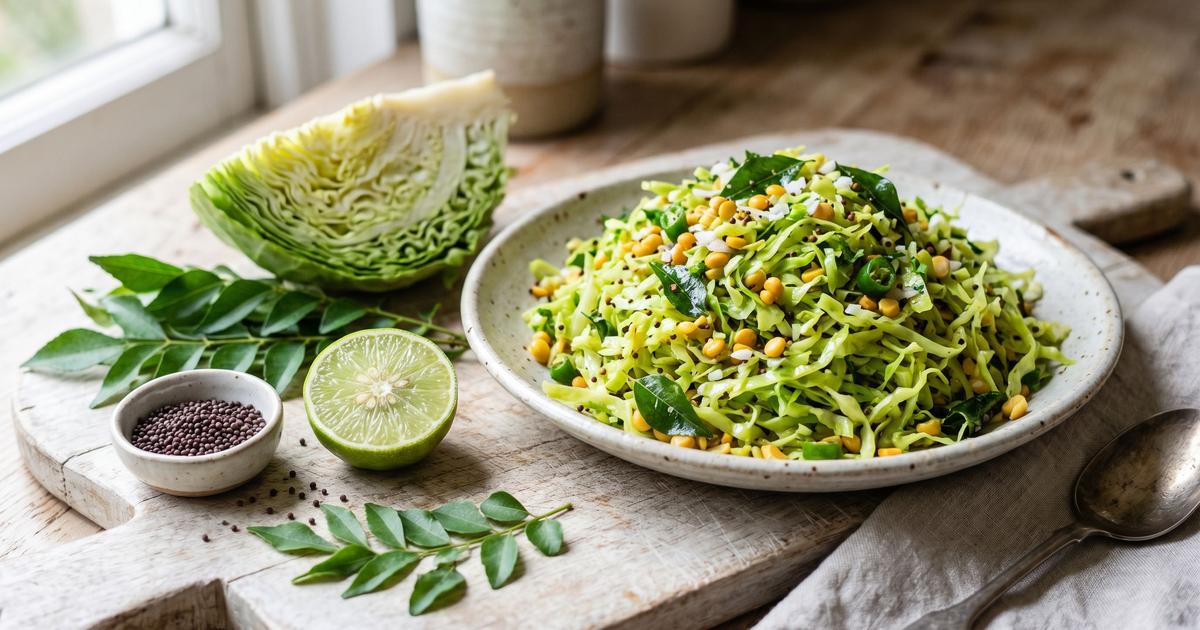
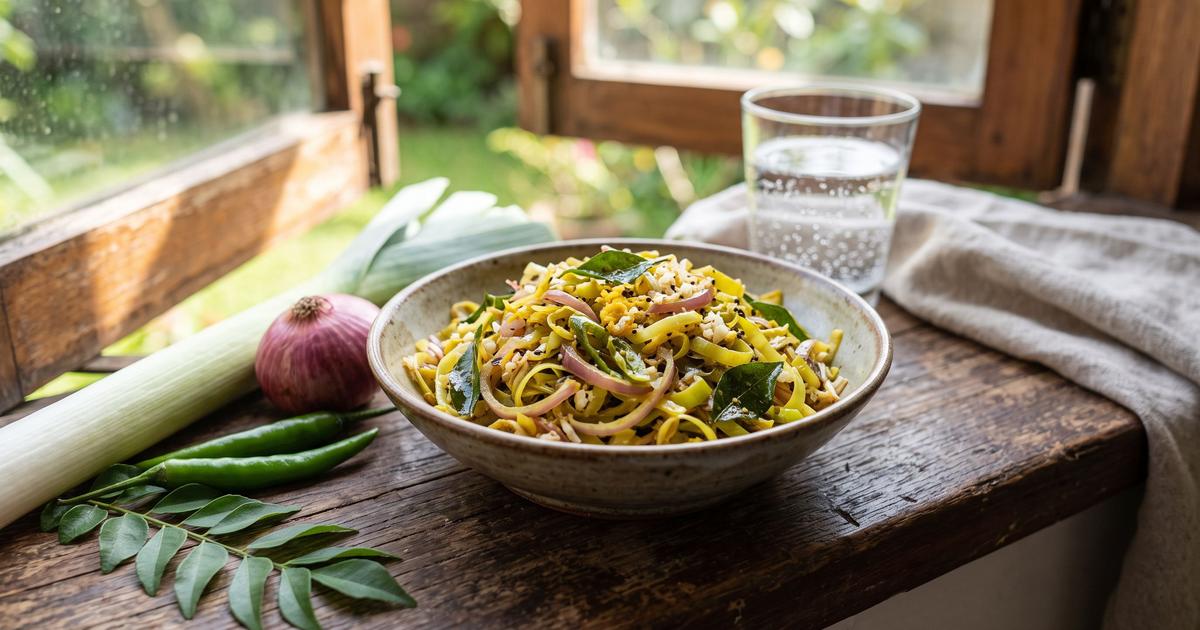
Mallung is Sri Lanka's way of turning a cheap wedge of cabbage into a bright side: shredded fine, tempered with popped mustard seed and curry leaf, then sharpened with lime. The grated coconut that usually carries the fat and fine texture is left out here, so a spoon of hemp hearts stirred in at the end does that job instead. The rule that matters is heat: toss the cabbage hard over a high flame so its water flashes off before it can stew, which keeps the color green and the bite intact.
Ingredients
- 1 lb green cabbage, finely shredded
- 3 Shallots, thinly sliced
- 2 Indian green chiles, slit lengthwise
- 2 cloves Garlic, minced
- 1 tsp Brown mustard seed
- 1/2 tsp Cumin seed
- 1/2 tsp Turmeric
- 15 leafs Curry leaves
- 1 Lime, juiced
- 3 tbsp Hemp hearts
Method
- Shred the cabbage as fine as you can, aiming for 1/8 inch (3 mm) ribbons. The thinner the cut, the faster it wilts and the more surface the turmeric and lime have to grab.
- Warm a wide dry pan over medium heat. Add the brown mustard seeds and cumin seeds and wait for the mustard to pop and jump, about 45 seconds. Popping is what turns the seeds from raw and bitter to nutty, and it is the whole point of a Sri Lankan tempering.
- Add a splash of water so nothing catches, then the shallots, slit green chiles, garlic, and curry leaves. Sweat in a tablespoon or two of water until the shallots go soft and translucent, about 4 minutes.
- Stir in the turmeric and cook 30 seconds. Turmeric is bitter and dusty when raw, so bloom it in the pan moisture before the cabbage buries it.
- Add the cabbage and toss constantly over medium-high heat for 5 to 7 minutes. You want it collapsed but still bright green and with some bite, not stewed grey. High heat and steady tossing drive the water off fast enough to hold the color.
- Off the heat, fold in the hemp hearts and all the lime juice. The hemp hearts stand in for the grated coconut, adding the same nutty richness and fine texture. Taste and add more lime, not salt, to lift it.
Nutrition
Estimated per serving: 95 calories, 4 g protein, 4 g fiber, 25 mg sodium. Computed from USDA FoodData Central reference values for the main ingredients. This is an approximation, not a laboratory measurement. How these are computed.
Cost per serving is estimated from US national-average retail prices for cheap staple forms, using BLS dried-bean prices and USDA produce prices. Prices vary by store and season, so treat it as a guide, not a receipt. How this is computed.